

This article was originally published on August 25, 2013, and updated/revised on February 5, 2026.
Working from home doesn’t have to mean staying home. These 10 home-based businesses let you earn money out in the real world, with clear startup cost ranges, demand signals, and the practical steps that separate a side hustle from a steady income.
Key takeaways
- The best “out of the house” home businesses are built on recurring needs: safety, skills, space, time, and convenience.
- Pricing gets easier when you package services (minimums, bundles, retainers) instead of quoting everything from scratch.
- Trust signals matter more than you think: reviews, before/after photos, clear policies, and fast communication.
- If your page isn’t indexed, fix technical blockers (noindex, canonical, robots, soft 404) before assuming it’s just a content issue.
Working “from home” doesn’t have to mean being stuck at home. A lot of the most reliable home-based businesses are actually field businesses: you run operations from your home office, but you earn money by showing up in real life. That can be a great fit if you like people, you want variety in your day, and you’d rather build a business with relationships than sit behind a screen all week.
The key is choosing a business model that has three things:
- Recurring demand (not a one-time fluke)
- Clear pricing (so you can quote confidently)
- A path to repeat customers (so you’re not always hustling for the next job)
To make this list genuinely useful, each idea below includes: what it is, why demand is there, typical startup costs, and what you need to succeed.
Table of Contents

At a glance
| Business | Time to first customer | Repeat revenue potential | Startup cost (typical) |
|---|---|---|---|
| Workshops & corporate training | Medium | Medium–High | $300–$3,000 |
| IT & cybersecurity (on-site) | Medium | High | $500–$5,000 |
| Professional organizing | Fast | Medium | $200–$2,000 |
| Personal assistant / concierge errands | Fast | Medium | $300–$2,500 |
| Junk removal & hauling | Fast | High | $1,000–$15,000 |
| Pet sitting & dog walking | Fast | High | $300–$3,000 |
| Commercial cleaning (small accounts) | Medium | Very High | $300–$2,000 |
| Pressure washing / exterior cleaning | Medium | Medium–High | $800–$3,000+ |
| Mobile car detailing | Medium | High | $300–$2,500+ |
| Mobile notary / loan signing | Medium | Medium | $200–$1,500+ |
1) Workshops & corporate training
What it is
You teach a specific skill to a business audience, usually in a short, practical format: a half-day workshop, a 4-week cohort, or a team training day. This works best when your topic is tied to a business outcome (sales, customer retention, leadership, productivity, compliance, software adoption).
Why this is a good business (demand)
Organizations keep spending heavily on training, and there’s a meaningful shift toward outsourced products and services. One widely cited industry report put total U.S. training expenditures around $98B in 2024, with outside products/services rising sharply.
How much to start
$300–$3,000 if you keep it lean:
- A clean landing page + checkout link
- Slides + one workbook or checklist
- Email list tool and scheduling
- A small budget for outreach and/or local sponsorships
What you need to succeed
The biggest mistake is making this “a talk.” Make it a transformation:
- Tight promise: “In 90 minutes, your team will be able to do X.”
- Proof: testimonials, before/after metrics, case examples.
- Productized offer: 3 tiers (basic workshop, workshop + follow-up, workshop + implementation support).
- Distribution: HR leaders, associations, chambers, industry meetups.
Practical pricing reality: It’s easier to sell one company package than 20 individual tickets. Start with a “pilot workshop” price that gets you in the door, then raise rates after you have 3–5 strong case results.
Read the article How to Make Money from Seminars and Workshops

2) IT & cybersecurity consulting
What it is
You help small businesses install, fix, and secure their tech in the real world: Wi-Fi/network reliability, backups, device setup, account security, phishing prevention, and “someone has to handle this” troubleshooting. You can also offer a monthly “keep us safe” plan.
Why this is a good business (demand)
Security needs aren’t slowing down. Employment for information security analysts is projected to grow 29% from 2024–2034 (a strong demand signal for security spending and services).
How much to start
$500–$5,000, depending on your tool stack:
- Basic diagnostic kit + network tools
- Password manager setup, backup drives
- Liability insurance (recommended)
- Contracts + invoicing system
What you need to succeed
You don’t win by being the “smartest.” You win by being the most trusted and clear:
- Write plain-English reports: “Here’s what’s risky, here’s what we fixed, here’s what to do next.”
- Sell packages (example): Stabilize (1x) → Protect (monthly) → Improve (quarterly)
- Build recurring revenue: patching, monitoring, backups, security awareness refreshers.
Quick-start move that works: Pick one niche (dentists, law offices, CPAs, construction companies) and learn their common stack. A specialist gets referrals faster than a generalist.
>> READ: the article How to Start a Computer Repair Business
3) Professional organizing (homes, garages, moving, home offices)
What it is
You help people reduce clutter and install systems they can keep up with: kitchens, closets, garages, paperwork, home offices, move-in/move-out organizing, and “we need this handled before company comes.”
Why this is a good business (demand)
Organizing demand is powered by life transitions: moving, downsizing, kids, caregiving, and home sales. In a national staging report, many seller’s agents said they recommended decluttering even when homes weren’t staged. That’s a real-world signal that decluttering is a common step in preparing a home for market.
How much to start
$200–$2,000:
- Bins/labels/basic supplies, PPE, step stool
- Phone camera for before/after photos
- Simple website + local marketing
What you need to succeed
This business becomes profitable when you stop selling “hours” and start selling outcomes:
- Use a repeatable method: intake → purge → zones → labeling → maintenance rules.
- Build “job types” with flat-fee ranges (pantry reset, paper detox, garage zone build).
- Create recurring touchpoints: seasonal reset, quarterly “keep it that way” visit.
Common pitfall: Being too nice about decision-making. Clients hire you for momentum. You need kind, confident scripts that keep the job moving.

4) Personal assistant/concierge errands business
What it is
You run errands and handle “life admin” tasks for people who are busy, overwhelmed, traveling, caring for family, or simply value time. Think: returns, pickups, waiting for repair techs, grocery runs, appointment coordination, vendor scheduling, gift shopping, donation drop-offs.
Why this is a good business (demand)
Convenience is the product. Even in traditional concierge roles, there are thousands of annual job openings, reflecting ongoing demand for “handle it for me” help.
How much to start
$300–$2,500:
- Reliable transportation + phone
- Scheduling + invoicing
- Insurance/bonding is strongly recommended if you handle keys/homes/purchases
What you need to succeed
This business lives or dies on trust and boundaries:
- Create clear packages: “10 hours/month,” “weekly support,” “VIP urgent requests.”
- Have written policies for reimbursements, cancellations, and what you don’t do.
- Build referral loops with: estate attorneys, senior move managers, busy-family networks, and local businesses.
>> READ: How to Become a Celebrity Assistant
5) Junk removal & hauling
What it is
You remove bulky items and junk, do garage/estate cleanouts, rental turnovers, light demolition debris removal, and donation runs. You can also add paid labor (loading, carrying, sorting) as a profit lever.
Why this is a good business (demand)
People create a lot of stuff and a lot of waste. The U.S. Environmental Protection Agency reports U.S. municipal solid waste generation in the hundreds of millions of tons (EPA’s materials and waste figures are a strong indicator of constant disposal needs).
How much to start
$1,000–$15,000 (depends on whether you already have a truck/trailer):
- Dump fees, straps, dollies, PPE, tarps
- Insurance (important)
- A simple quoting system
What you need to succeed
- Speed: same-day/next-day service is a massive advantage.
- Pricing system: minimum pickup + volume tiers + heavy item fees + dump fee transparency.
- Partnerships: realtors, property managers, landlords, storage facilities.
Make it less seasonal: Add recurring commercial pickups for small offices, property managers, or contractors. Predictable routes beat random one-offs.
>> READ: Starting a Junk Removal Business? 7 Things to Consider
6) Pet sitting & dog walking
What it is
You walk dogs, do drop-in visits, overnight sitting, and travel coverage. The best operators build routes and recurring clients, then hire part-time help once demand is steady.
Why this is a good business (demand)
People spend a lot on pets and keep doing it. The American Pet Products Association reports $151.9B in U.S. pet industry expenditures for 2024 and projects $157B for 2025.
How much to start
$300–$3,000:
- Leashes, supplies, basic first-aid kit
- Insurance/bonding (recommended)
- Scheduling + client communication system
What you need to succeed
- Reliability is your brand.
- Clear policies for keys, emergencies, cancellations, and aggressive/escape-prone pets.
- Route density: dominate one neighborhood before expanding.
Smart add-ons: medication administration, puppy visits, “vacation prep” visits, and premium holiday coverage.
>> READ: Marketing and Branding a Pet Sitting Business
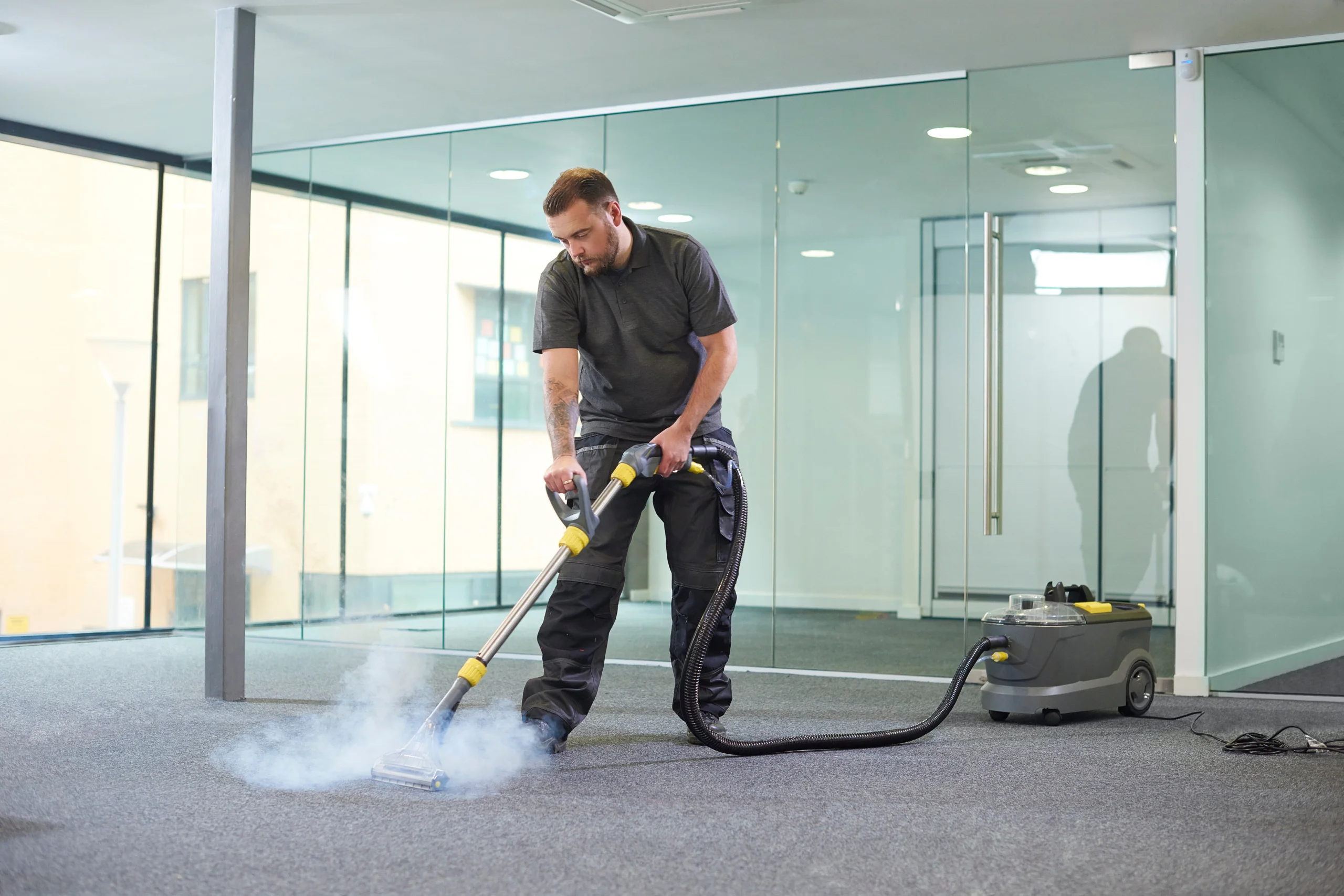
7) Commercial cleaning (small offices, studios, clinics)
What it is
Recurring after-hours cleaning for offices, salons, studios, small medical practices, daycares, and multi-tenant spaces. This is one of the most “boring but beautiful” cashflow businesses because it’s contract-based.
Why this is a good business (demand)
Even with modest growth rates, there are massive annual openings in building cleaning work, signaling steady ongoing demand and turnover in the category.
How much to start
$300–$2,000:
- Basic commercial supplies + vacuum/mop setup
- Insurance
- Simple checklist system + inspection routine
What you need to succeed
- Productize: “Small Office,” “Standard,” “High-Touch/Restroom-heavy,” with optional add-ons.
- Quality control: a checklist plus a quick photo log solves many issues.
- Client acquisition: property managers, dentists/clinics, small franchises, coworking spaces.
Where profits show up: When you stop being the cleaner and become the operator. The path is: land 3–5 accounts → systemize → hire help → keep selling.
>> READ: Commercial Cleaning Business: Pros and Cons
8) Pressure washing / exterior cleaning
What it is
Driveways, siding, patios, decks, fences, plus add-ons like gutter cleaning and soft washing. It’s easy to show value because results are visual and immediate.
Why this is a good business (demand)
Two demand drivers: homeowners care about curb appeal, and businesses need clean entrances/sidewalks for appearance and safety. On the equipment side, market researchers project steady growth in pressure washer demand, reflecting broad usage across residential and commercial contexts.
How much to start
$800–$3,000+:
- Washer, hoses, nozzles, surface cleaner
- Chemicals/soft wash setup (if you go that route)
- Insurance and basic safety gear
What you need to succeed
- Know what you’re cleaning. Wrong technique can damage surfaces.
- Quote fast with clear pricing (by surface type or square footage bands).
- Before/after content drives leads better than almost anything.
Best upsell ladder: driveway → walkway → siding → deck → annual maintenance plan.
>> READ: How to Start a Pressure Washing Business
9) Mobile car detailing
What it is
You detail vehicles at the customer’s home or workplace. Strong operators keep a tight menu, deliver consistent results, and build repeat plans (monthly/seasonal).
Why this is a good business (demand)
Auto detailing is a large, established category. IBISWorld estimates the U.S. car wash and auto detailing industry in the tens of billions of dollars annually (market size estimates vary by year, but the category itself is clearly large and durable).
How much to start
$300–$2,500+:
- Core supplies, vacuum, extractor (optional at first)
- Waterless/rinseless methods if you want to start lean
- Insurance (recommended)
What you need to succeed
- A simple menu: 2–3 packages, not 15.
- Tight workflow and time targets so jobs stay profitable.
- Route planning: minimize travel and stack appointments.
Repeat revenue move: Offer a maintenance plan at the end of every detail: “I can keep it like this for $X/month.”

10) Mobile notary/loan signing
What it is
General notary work (common documents, IDs, signatures) and, if allowed in your state and you’re trained, loan signing work for real estate transactions.
Why this is a good business (demand)
Loan signings exist because closings need a last-mile, document-handling step. National Notary Association explains that signing agents are notaries trained to handle loan documents for real estate transactions and are hired by title companies and lenders for that final step.
How much to start
$200–$1,500+ depending on your state:
- Notary commission + supplies
- Optional: background screening, training, printer/scanner setup
What you need to succeed
- Professionalism: punctual, calm, accurate.
- A clear travel fee policy and service radius.
- Relationships with title companies, signing services, local attorneys.
Reality check: This isn’t “get rich quick,” but it can become steady if you treat it like a system: availability windows, rapid response, and flawless execution.
For more ideas, check out other “Go Out of Your House” home business ideas:
- Janitorial or Cleaning Service Business
- Catering Business
- Handyman Business
- Wedding Photography Business
- Mystery Shopping Business
- Real Estate Agency Business
- Home Repair Service Business
- Mobile Food Truck Business
- Home Staging Business
- Wedding Planning Business
FAQs
What is the most profitable home-based business that gets you out of the house?
It depends on your skill set and how you package the offer. In many markets, the highest profit potential comes from services where clients pay for expertise and outcomes, such as workshops/corporate training, IT and cybersecurity consulting, and business brokerage. Those models can support premium pricing because the client is paying to reduce risk or increase revenue, not just to “get a task done.” That said, hands-on services like junk removal and professional organizing can be very profitable too when you have efficient systems, minimum fees, and steady lead sources like property managers or realtors. Your profitability usually comes down to (1) charging enough, (2) keeping travel time low, and (3) building repeat business instead of living job to job.
What home business can I start with very little money if I want to work locally?
Professional organizing, pet sitting/dog walking, and coaching are often the lowest-cost options because you can start with basic supplies and a simple marketing setup. The tradeoff is that you must be consistent about lead generation early on. The easiest way to make “low startup cost” work is to pre-sell a small package (for example, a 4-visit dog-walking plan or a 6-hour organizing bundle) so you’re not paying for supplies and marketing while waiting weeks to get paid. Keep your service area tight, ask every happy client for a review, and build your first 10 customers in one neighborhood before expanding.
Do I need a license or insurance for these businesses?
Sometimes yes, and it varies by state and city. Businesses that involve entering homes, handling keys, transporting items, or doing hauling work should strongly consider liability insurance (and sometimes bonding). Junk removal can involve local permitting and disposal rules. Business brokerage can involve licensing depending on the structure of the transaction and what you’re brokering. The safest approach is to check your city/county requirements, then call an insurance broker and describe exactly what you do so you are not underinsured. Having proper coverage also makes selling easier because it signals professionalism and reduces client anxiety.
How do I find my first clients fast for a local service business?
Start with “where referrals already flow.” Instead of trying to go viral, plug into existing local networks: realtors, property managers, cleaning companies, senior centers, local Facebook groups, chamber of commerce meetups, and neighborhood apps. Offer a simple first-time package that is easy to say yes to, and make it easy to book. After each job, ask for one specific thing: a short review, a referral, or permission to use before/after photos. Do that consistently and you’ll build momentum faster than you think, especially in services where trust matters.
How should I price services when I’m just starting?
Avoid hourly-only pricing if it makes clients nervous. A simple structure works best: set a minimum service fee, then add clear increments (per hour after minimum, per bag/yard for hauling, per visit for pet care, per session or program for coaching). The goal is to protect your time, especially travel and admin time that new owners often undercharge for. As you learn your real costs and how long jobs take, shift more pricing into packages and retainers. Packages also make your business feel more professional and help you predict income.

Yes! Finally something about extra money money from home cash from home.