

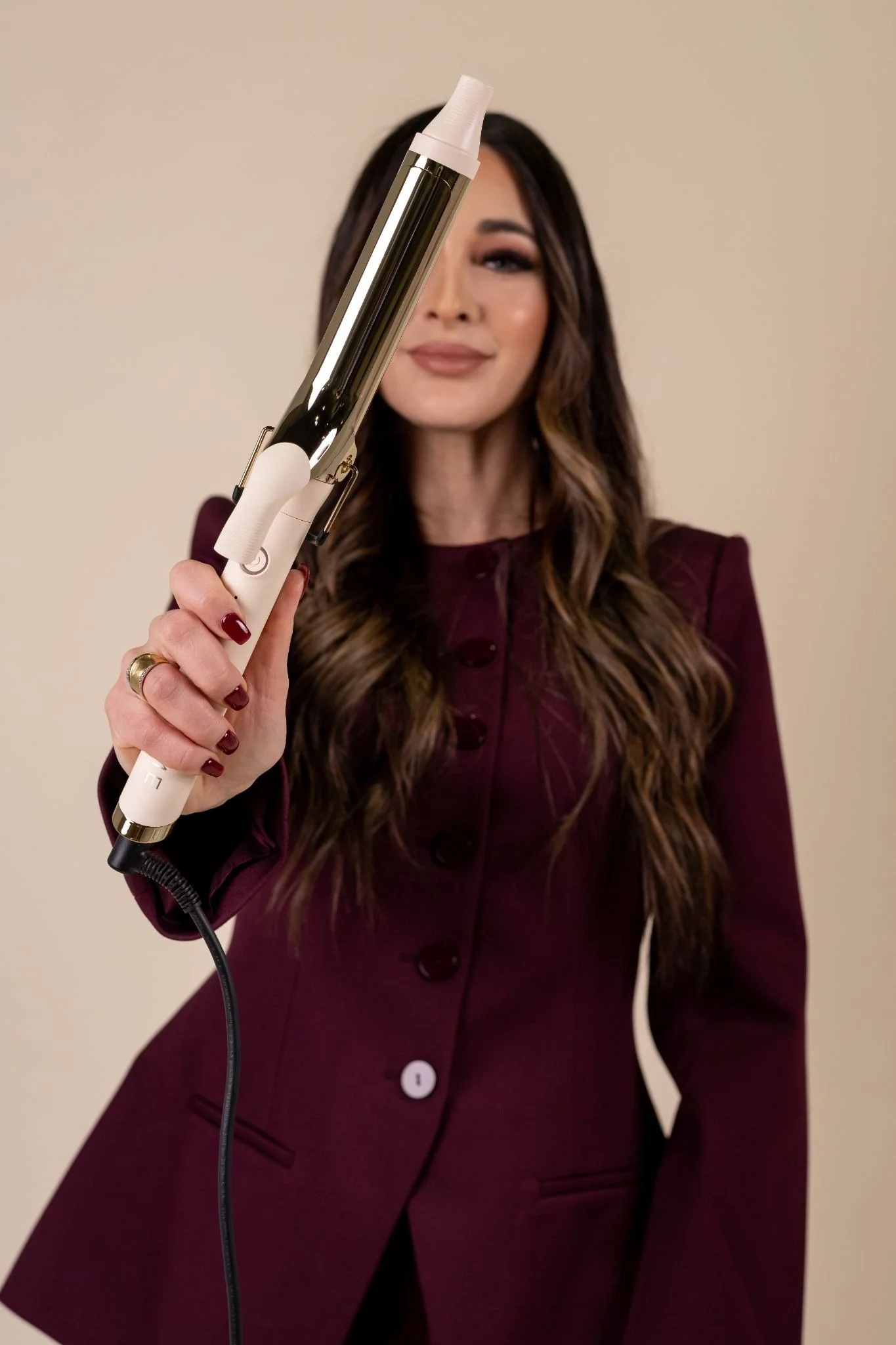
Lauren Ashtyn Guest, CEO of TYME Style, is rethinking high-heat styling tools by focusing on controlled heat, long-term hair integrity, customer education, and beauty products designed to earn trust rather than rely on instant-result hype.
Key Takeaways
- Lauren Ashtyn Guest acquired TYME Style after learning the brand was preparing to shut down.
- Her experience working with women experiencing thinning hair, breakage, hair loss, and extension-related damage shaped her approach to TYME’s relaunch.
- TYME is shifting from being known primarily as a styling tool company into a broader beauty and hair-health brand.
- The company is focusing on controlled, consistent heat rather than maximum heat.
- Lauren believes beauty brands need to think beyond dramatic before-and-after transformations and consider how hair looks and feels after months of regular use.
- TYME’s new strategy emphasizes intentional temperature management, even heat distribution, long-term reliability, and customer education.
- The brand is paying closer attention to fragile, thinning, chemically treated, extension-wearing, and hair-loss-prone hair.
- Lauren uses the term “thermal thinning” to describe the cumulative loss of hair quality, density, appearance, strength, and resilience caused by repeated exposure to excessive styling heat over time.
- Her leadership shows how entrepreneurs can challenge profitable industry norms when those norms may not actually serve the customer.
- The biggest small business lesson: listen to customers more than competitors, especially when the same frustration comes up again and again.
Lauren Ashtyn Guest has spent years listening to women talk about their hair — not just how they wanted it styled, but how it affected their confidence, identity, and sense of self. As the founder of The Lauren Ashtyn Collection, a luxury hair brand serving women experiencing hair loss and thinning hair, she has sat across from women dealing with postpartum shedding, autoimmune-related hair loss, breakage, extension damage, and fragile hair.
Those conversations shaped the way she thinks about beauty. They also shaped the way she now leads TYME Style.
When Ashtyn Guest acquired TYME, she saw an opportunity to rethink what a styling tool company could be. Instead of focusing only on quick, dramatic transformations, she wanted to build the brand around a more careful question: how can women get polished, professional styling results while protecting the long-term integrity of their hair?
“My perspective comes from spending years working directly with women who were experiencing thinning hair, hair loss, breakage, and damage,” Ashtyn Guest says. “At The Lauren Ashtyn Collection, I wasn’t just seeing hair on a styling appointment. I was hearing the emotional stories behind it.”
That customer insight is now at the center of TYME’s repositioning. Under her leadership, TYME is shifting from being known primarily as a styling tool company into a broader beauty and hair-health brand focused on controlled heat, intentional temperature management, even heat distribution, long-term reliability, and customer education.
For small business owners, her TYME story offers a powerful lesson: some of the strongest opportunities come from questioning the assumptions an industry has accepted for too long.
Table of Contents
Seeing the Problem Behind the Product
The beauty industry has long rewarded fast results. A dramatic before-and-after video can sell a styling tool quickly, especially on social media. But Ashtyn Guest believes the industry has too often overlooked what happens after months or years of repeated heat styling.
“Social media naturally rewards immediate results,” she says. “A 15-second transformation video is incredibly compelling because viewers can instantly see the outcome.”
The problem, she says, is that the marketing usually stops there.
“The challenge is that most consumers never see what happens after months or years of repeated styling habits,” she explains. “Marketing tends to focus on the first use rather than the thousandth use.”
That difference — the first use versus the thousandth use — is central to TYME’s new direction. Ashtyn Guest is not dismissing performance. Women still want tools that curl, smooth, straighten, and style effectively. But she believes brands must think beyond the first visual result.
“As an industry, we’ve become very good at showcasing instant gratification,” she says. “I think the next evolution is helping consumers understand long-term hair health as well.”
For entrepreneurs, this is a reminder that a product’s immediate appeal is not always the same as its long-term value. Businesses that want repeat customers and strong word-of-mouth need to deliver not just a great first impression, but reliable value over time. That is one reason customer trust is so important in building a sustainable business. PowerHomeBiz’s guide on how to provide good customer service emphasizes that long-term loyalty comes from consistently meeting customer needs, not just making the sale.
From Instant Results to Long-Term Hair Integrity
One of the biggest shifts at TYME is the company’s focus on what Ashtyn Guest calls a hair-health-first approach. Rather than assuming hotter is better, the brand is asking more questions about heat consistency, heat distribution, usability, materials, and how customers actually use styling tools in real life.
“When I acquired TYME, I saw an opportunity to build a styling tool company through a different lens,” she says. “Instead of asking, ‘How can we create the fastest transformation?’ I wanted us to ask, ‘How can we help women achieve beautiful results while protecting the integrity of their hair over time?’”
TYME is now centering its product and education strategy around controlled, consistent heat instead of maximum heat. The brand is also paying closer attention to fragile, thinning, chemically treated, extension-wearing, and hair-loss-prone hair rather than designing as if all hair is equally resilient.
This shift matters because customers do not buy a styling tool for one day. They buy it to use repeatedly.
“A single styling session tells you whether a tool can create a curl or smooth a section of hair,” Ashtyn Guest says. “Six months of use tells you whether that same tool supports healthy hair over time.”
That long-term mindset is guiding the company’s product development and messaging.
“When I think about product development, I want us to evaluate durability, consistency, heat management, and overall hair condition after months of regular use,” she says, “not just whether we can create an impressive before-and-after photo.”
For business owners, this is a lesson in product strategy. It is easy to design around what sells quickly. It is harder, but often more valuable, to design around what keeps customers loyal. Entrepreneurs building products in competitive categories can learn from this kind of positioning. Differentiation is not only about being louder or flashier. Sometimes it comes from solving the part of the problem others ignore. PowerHomeBiz’s article on smart marketing strategies for the solo entrepreneur explains why standing apart requires understanding the deeper value customers are seeking.

Challenging an Industry Standard
High heat has long been associated with fast styling. Many consumers have been taught, directly or indirectly, that the hotter a tool gets, the better it performs. TYME’s new direction challenges that assumption.
“One of the biggest shifts is that we’re evaluating decisions through a hair-health lens,” Ashtyn Guest says. “Instead of automatically assuming hotter is better, we’re asking more questions about consistency, heat distribution, usability, and long-term performance.”
That is not always the easiest message to market. A dramatic transformation is simple to show. Long-term hair integrity requires more explanation, more education, and more trust.
“The biggest risk is that immediate results are easy to sell,” she says. “Long-term benefits require more education, more trust, and more patience.”
But Ashtyn Guest believes consumers are changing. They are more informed, more skeptical, and more willing to question beauty claims that sound impressive but may not support long-term hair health.
“I believe consumers are becoming increasingly sophisticated,” she says. “They’re asking better questions. They’re researching ingredients, materials, temperatures, and long-term outcomes.”
That shift creates an opportunity for companies willing to educate instead of simply advertise. For entrepreneurs, this is a useful reminder: when customers become more informed, brands have to become more transparent.
What TYME Is Changing
Since the acquisition, TYME has begun repositioning itself as a broader beauty and hair-health brand. The company is focusing on professional-grade performance, long-term reliability, and styling tools that support what it calls “thermal thinning” prevention.
TYME uses the phrase “thermal thinning” to describe the cumulative loss of hair quality, density appearance, strength, and resilience that can occur when vulnerable hair is repeatedly exposed to excessive styling heat over time. The term reflects Ashtyn Guest’s years of experience working with women who were dealing with thinning hair, fragile hair, heat damage, extensions, toppers, and confidence-impacting hair concerns.
The company’s current focus includes controlled, consistent heat; intentional temperature management; even heat distribution; and tools designed with fragile, chemically treated, extension-wearing, and hair-loss-prone hair in mind.
Ashtyn Guest says the brand is also thinking more carefully about real-life usage.
“We’re also spending more time thinking about how customers actually use these tools in real life rather than just how they perform in a controlled demonstration,” she says.
That distinction is important for any product-based business. A product may work beautifully in a controlled environment, but customers use products imperfectly, quickly, repeatedly, and under everyday conditions. The more a company understands real-world behavior, the better it can design, educate, and support its customers.

Balancing Performance and Hair Health
One of the challenges in repositioning TYME is that customers still want efficient styling. They want tools that help them look polished without spending too much time. Ashtyn Guest does not believe hair health and performance should be treated as competing priorities.
“Consumers should never have to choose between performance and hair health,” she says. “Our goal is to engineer tools that deliver professional-quality results while being mindful of the cumulative effects that styling can have over time.”
That means the conversation cannot be only about temperature.
“It means looking at factors such as heat consistency, material quality, user technique, and overall design,” she says, “not simply increasing temperature and hoping for the best.”
This philosophy gives TYME a clearer business position. It is not saying women should avoid styling. It is saying styling tools should be designed and used with more awareness of long-term hair condition.
“Performance matters. Hair health matters,” Ashtyn Guest says. “The future belongs to brands that can deliver both.”
For entrepreneurs, this is an important lesson in product evolution. Customers often want more than one benefit. They want convenience and quality. Speed and safety. Affordability and reliability. Beauty and long-term care. The opportunity is in building a product and message that does not force customers into a false choice.
Learning from Women Experiencing Hair Loss and Damage
Ashtyn Guest’s leadership at TYME is heavily influenced by her work with women experiencing hair loss, breakage, thinning, and damage. She says those conversations changed her understanding of the emotional weight hair carries.
“I’ve learned that hair is incredibly emotional,” she says. “People often assume hair is a vanity issue until they experience losing it themselves.”
The stories she heard were not superficial. Women told her about avoiding photos, stepping away from dating, canceling plans, and feeling disconnected from the person they saw in the mirror.
“I’ve had women cry in consultations,” she says. “I’ve had women tell me they stopped dating, stopped taking photos, or stopped going to social events because they didn’t feel like themselves anymore.”
That experience changed the way she thinks about product responsibility.
“When you hear those stories over and over again, it changes your perspective,” she says. “You realize that the products you create have a real impact on how people feel about themselves.”
For business owners serving customers in vulnerable categories, this is a crucial point. A product is not always just a product. It may be connected to health, identity, confidence, family, finances, or emotional well-being. Businesses that understand that deeper customer context can build stronger relationships and more responsible marketing.
This is also why listening matters. Entrepreneurs who want to build better products should not rely only on competitor analysis. They need to understand the customer’s lived experience. PowerHomeBiz’s article on how to successfully start and run a service business highlights how important it is to build a business around the actual needs of the people being served.
Education as Part of the Product
A major part of TYME’s pivot is customer education. Ashtyn Guest says customers do not need exaggerated promises. They need clear, honest information that helps them make better choices.
“A good product matters,” she says. “It’s made me much more focused on the customer’s entire journey.”
That journey includes understanding the difference between hair loss, hair breakage, and heat-related damage. Ashtyn Guest says many people use those terms interchangeably, even though they describe different issues.
“Hair loss usually starts at the scalp and can be connected to hormones, genetics, health conditions, medications, or stress,” she says. “Breakage happens when the hair strand itself becomes weak and snaps. Heat damage can contribute to breakage and can make hair appear thinner even when the follicles are healthy.”
For TYME, education is part of trust-building. Customers who understand what is happening to their hair are better equipped to choose the right tools, techniques, and routines.
“Sometimes the biggest difference comes from technique, expectations, and education,” Ashtyn Guest says. “I’ve found that customers appreciate honesty. They don’t need exaggerated promises. They want clear information that helps them make good decisions.”
That kind of honesty can become a competitive advantage. Many brands overpromise in order to win attention. But in categories where customers have already experienced disappointment or damage, trust is earned through accuracy, transparency, and consistency.
“You earn it by listening, by being transparent, and by delivering on what you promise,” Ashtyn Guest says. “You also have to be willing to have honest conversations, even when the answer isn’t what someone wants to hear.”

Responsible Marketing in Beauty
Beauty marketing often walks a fine line. It can inspire and educate, but it can also create insecurity, fear, or unrealistic expectations. Ashtyn Guest believes responsible brands must remember the person behind the sale.
“I think brands need to remember that there’s a real person on the other side of every marketing campaign,” she says.
That philosophy is especially important in a category tied to appearance and confidence. Consumers may come to the brand after experiencing damage, thinning, hair loss, or frustration with previous tools and products. Marketing to those customers requires care.
“The brands I respect most are the ones that help customers make informed decisions instead of creating insecurity just to drive sales,” she says.
For small business owners, this is a valuable branding lesson. Trust-based marketing does not mean avoiding persuasion. It means persuading through clarity, usefulness, and credibility rather than fear. Businesses that make customers feel respected can build stronger long-term loyalty than those that rely only on urgency and hype.
Word-of-mouth is especially powerful when a brand has earned trust in a sensitive category. Customers are more likely to recommend a company when they feel genuinely helped, not pressured. PowerHomeBiz’s ultimate guide to word-of-mouth marketing for small businesses offers additional ideas for turning customer satisfaction into organic growth.
The Entrepreneurial Lesson: Question the Norm
One of the strongest lessons from TYME’s repositioning is that entrepreneurs should not assume industry norms are automatically good for customers.
“Just because something is common doesn’t mean it’s right,” Ashtyn Guest says. “One of the biggest mistakes entrepreneurs make is assuming that an industry standard exists for a good reason.”
Sometimes, she says, the standard does make sense. But sometimes it simply reflects the way things have always been done.
“The best opportunities often come from questioning assumptions that everyone else has accepted,” she says.
That lesson applies far beyond beauty. In any industry, businesses can become trapped by conventions: how products are priced, how services are delivered, how customers are marketed to, how quality is measured, or how success is defined. A founder who listens closely to customer frustrations may find that the “standard practice” is actually the opening for a better business model.
Ashtyn Guest’s advice is clear.
“Listen to your customers more than your competitors,” she says. “Most of the important decisions I’ve made in business came from paying attention to what clients were telling me, not from watching what everyone else was doing.”
For small businesses, this is one of the most practical takeaways from TYME’s relaunch. Competitor research has value, but customer frustration is often more revealing. If people keep describing the same pain point, there may be a business opportunity hidden inside it.
“If you’re hearing the same frustration over and over again, that’s usually worth paying attention to,” she says. “The easiest path is often following the industry. The better path is usually solving the problem your customers actually have.”
Building a Beauty Brand for the Next Consumer
TYME’s pivot reflects a broader shift in consumer expectations. Ashtyn Guest believes today’s beauty customers are more thoughtful than they were a decade ago. They still want results, but they are also paying attention to ingredients, materials, methods, and long-term outcomes.
“People still want products that perform well,” she says, “but they’re also asking whether those products align with their broader wellness goals.”
That shift is pushing beauty brands to think differently. The future may belong to companies that can combine performance with transparency, styling with care, and marketing with education.
As CEO of TYME Style, Lauren Ashtyn Guest is positioning the company around that future. Her approach is rooted in the same philosophy that built her first company: listen to women, solve real problems, and earn loyalty through performance rather than hype.
For entrepreneurs, the message is simple but powerful. The best business opportunities are not always found by following what the industry rewards today. Sometimes they come from asking what customers will need tomorrow — and having the courage to build in that direction.
FAQ
Who is Lauren Ashtyn Guest?
Lauren Ashtyn Guest is a professional stylist, entrepreneur, founder of The Lauren Ashtyn Collection, and CEO of TYME Style. She has spent more than a decade working with women experiencing thinning hair, hair loss, breakage, and other confidence-impacting hair concerns.
What is TYME Style?
TYME Style is a beauty and hair styling tool brand now led by Lauren Ashtyn Guest. Under her leadership, TYME is being repositioned around professional-grade performance, controlled heat, long-term hair health, customer education, and trust.
Why did Lauren Ashtyn Guest acquire TYME?
Lauren Ashtyn Guest acquired TYME after learning that the company was preparing to shut down. She saw an opportunity to preserve the brand while bringing a new perspective to the styling tool industry based on her years of working with women experiencing hair loss, breakage, and fragile hair.
How is TYME changing under Lauren Ashtyn Guest’s leadership?
TYME is shifting toward a hair-health-first approach that emphasizes controlled, consistent heat, intentional temperature management, even heat distribution, long-term performance, and tools designed for fragile, thinning, chemically treated, extension-wearing, and hair-loss-prone hair.
What does “hair-health-first” mean?
A hair-health-first approach means designing, marketing, and educating around styling tools with long-term hair integrity in mind. Instead of focusing only on dramatic first-use transformations, the goal is to help customers achieve beautiful results while protecting the condition of their hair over time.
What is thermal thinning?
Thermal thinning is the term TYME uses to describe the cumulative loss of hair quality, density appearance, strength, and resilience that can occur when vulnerable hair is repeatedly exposed to excessive styling heat over time.
Why is TYME moving away from maximum-heat messaging?
Lauren Ashtyn Guest believes hotter is not always better. TYME is focusing on heat consistency, even distribution, material quality, usability, and long-term hair condition rather than simply promoting the highest possible temperature or fastest transformation.
What can small business owners learn from TYME’s relaunch?
Small business owners can learn the value of questioning industry norms, listening closely to customer frustrations, building products around long-term value, and creating trust through transparency and education rather than hype.
How can beauty brands market more responsibly?
Beauty brands can market more responsibly by helping customers make informed decisions, avoiding fear-based or shame-based messaging, setting realistic expectations, and remembering that there is a real person behind every purchase.
What is the main business lesson from Lauren Ashtyn Guest’s TYME strategy?
The main lesson is that entrepreneurs should listen to customers more than competitors. If customers keep expressing the same frustration, that frustration may reveal a better business opportunity than simply following the industry’s standard practice.
