

For years, eCommerce SEO followed a familiar playbook. Brands focused on ranking product pages, optimizing category pages, targeting commercial keywords, and building backlinks to increase search visibility. That approach still matters, but the search landscape surrounding eCommerce has changed so dramatically that many businesses are asking a fair question: Is traditional eCommerce SEO dead?
Not exactly. But it has evolved to the point where older tactics by themselves no longer deliver the same results. To improve eCommerce SEO rankings in 2026, brands must adapt to Generative Engine Optimization (GEO), optimize for visual and conversational search, and align strategies with how users actually click and buy. Let’s explore this further!
Search now looks very different from what it did even a few years ago. Google now presents more AI-generated summaries, shopping experiences are more visually driven, community platforms like Reddit frequently appear near the top of search results, and many shoppers get part of the information they need without ever clicking through to a website. For eCommerce businesses, that means visibility is no longer just about ranking in the top three organic spots. It is about being present wherever searchers evaluate products, compare options, build trust, and make buying decisions.
This is where modern eCommerce SEO becomes more strategic. Brands now need to think about traditional optimization, structured product information, AI-readable content, forum influence, visual search, and the growing importance of trust signals. In other words, search success today is no longer only about being found. It is about being useful, credible, and easy to surface across a much more fragmented digital buying journey.
Table of Contents
Why Traditional eCommerce SEO Feels Less Effective in 2026
One reason many businesses think eCommerce SEO is “dead” is because the old playbook feels less predictable. Rankings alone do not guarantee the same traffic they once did, and even when pages rank well, the search results page may now include AI summaries, shopping modules, product carousels, review snippets, forum results, videos, and other features that compete for attention.
This does not mean SEO has stopped working. It means that search behavior has changed faster than many SEO strategies have. A product page that is technically optimized but thin, generic, or lacking trust signals may struggle, even if it checks traditional boxes. Likewise, content that ranks but does not match how shoppers research products may fail to convert.
The practical takeaway is that brands should stop asking whether SEO is dead and start asking whether their approach still reflects how search and shopping work today.
Table: Traditional eCommerce SEO vs What Works in 2026
| Traditional Focus | What Matters More in 2026 | Why It Matters |
|---|---|---|
| Ranking blue links | Earning visibility across AI Overviews, shopping modules, and organic search | Search visibility now happens in multiple formats, not just standard listings |
| Keyword-heavy product copy | Clear, structured, user-focused product content | Search engines and shoppers both reward clarity and usefulness |
| Backlinks alone | Authority, trust, product data quality, reviews, and content depth | Search engines need more signals to decide what to surface |
| Brand-owned website only | Brand presence across site, forums, video, reviews, and community discussion | Consumers now discover and evaluate products across many surfaces |
| Traffic as the main KPI | Visibility, qualified clicks, assisted conversions, and conversion quality | Click volume alone does not tell the full story in a zero-click environment |
The Shift From Search Engine Optimization (SEO) to Generative Engine Optimization (GEO) in eCommerce
One of the biggest changes shaping search in 2026 is the rise of Generative Engine Optimization, often shortened to GEO. Traditional SEO focused primarily on helping pages rank in search results. GEO goes a step further by making content easier for AI-powered search systems to interpret, summarize, and cite.
That distinction matters. More search experiences now involve AI-generated answers that synthesize information from several sources. Instead of simply returning a list of links, search platforms increasingly try to answer the question directly. For eCommerce businesses, this means the goal is no longer just to rank for a keyword. It is also to become a trusted and structured source that AI systems can confidently use when presenting product recommendations, comparisons, and answers.
In practical terms, GEO favors content that is clear, original, specific, and supported by a useful structure. Product descriptions that explain real differentiators, comparison content that helps shoppers evaluate options, FAQ sections that answer likely buying questions, and structured product data all help strengthen this visibility. For online stores, the brands that win will often be the ones whose content is easiest to interpret and most helpful to summarize.
This does not replace traditional SEO. It builds on it. A strong eCommerce strategy in 2026 needs both technical foundations that help pages rank and content architecture that helps AI systems understand why those pages deserve attention.
Why Product Detail Pages Matter More Than Ever
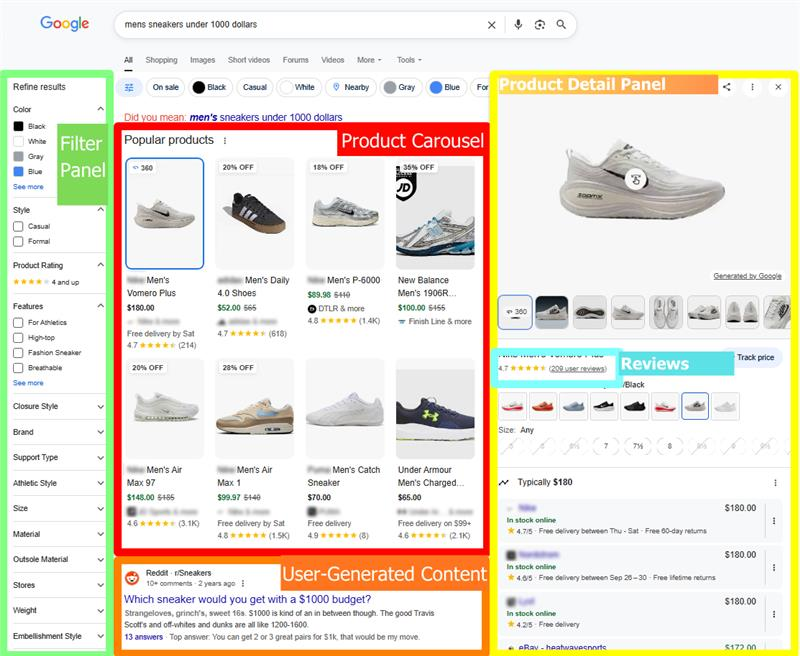
If there is one part of an eCommerce site that deserves more attention in 2026, it is the product detail page. Product pages are no longer just the final destination after a search click. In many cases, they are the core asset that determines whether a brand can earn visibility in shopping results, convert traffic efficiently, and support trust across the entire buying journey.
A strong product detail page does more than repeat manufacturer specs or insert keywords. It helps the shopper make a decision. That means clear product titles, accurate pricing, high-quality images, strong product descriptions, structured specifications, review signals, availability information, and answers to common pre-purchase questions. For competitive categories, it also means helping the shopper understand why this product is the better fit.
As search becomes more visual and AI-driven, these pages need to serve both humans and systems. Search engines rely on structured signals and content clarity. Shoppers rely on proof, confidence, and ease of comparison. The brands that build product pages with both audiences in mind are better positioned to earn visibility and convert the traffic they do receive.
Table: What High-Performing Product Pages Need in 2026
| PDP Element | Why It Matters | What Good Looks Like |
|---|---|---|
| Clear product title | Helps both users and search engines understand the item immediately | Specific, readable product naming without unnecessary stuffing |
| Accurate price and availability | Supports trust and shopping visibility | Up-to-date price, stock status, and shipping expectations |
| Strong product description | Helps explain value beyond specs | Benefit-led copy that answers likely buyer concerns |
| Structured specifications | Supports comparison and AI interpretation | Clean specs for dimensions, materials, compatibility, and use cases |
| High-quality visuals | Important for visual discovery and conversion | Multiple images showing product details and real-world use |
| Customer reviews | Builds trust and supports buying confidence | Authentic, recent, and product-specific feedback |
| FAQ content | Reduces friction and supports long-tail visibility | Answers on fit, quality, shipping, setup, returns, and compatibility |
| Schema markup | Helps search engines interpret the page | Product, review, price, and availability schema where appropriate |
Are Forums the New Authority? Reddit, Quora, and Community Search Signals
One of the most noticeable shifts in recent search results is the growing presence of forums and community-generated content. Reddit, Quora, and niche communities often rank prominently for product comparisons, troubleshooting questions, brand reputation searches, and “best of” queries. This trend reflects a broader shift in how people make online buying decisions.
When shoppers are close to a purchase, they often want something more candid than polished brand messaging. They want real experiences, honest pros and cons, and advice from other users who have already spent the money. Forums fill that gap. As a result, search engines increasingly surface community discussions because they often align better with the authenticity and nuance that searchers are looking for.
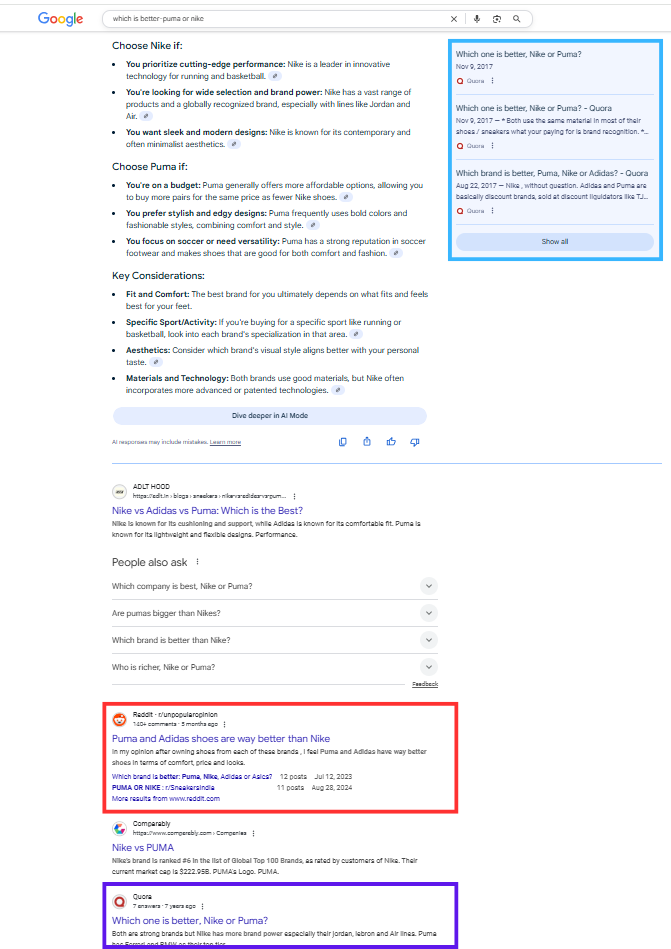
For eCommerce brands, this creates both pressure and opportunity. The pressure is obvious: brands no longer control all of the conversation. Potential customers may form opinions through forum threads before they ever reach a product page. The opportunity is that these conversations reveal exactly how real buyers think, compare, hesitate, and choose. That insight can be used to improve product pages, FAQs, guides, and content strategy.
In 2026, forum visibility is not just a reputation issue. It is part of a modern search strategy. Brands that monitor these conversations and learn from them are better equipped to create content that matches real buyer language and intent.
Table: How Forums Influence eCommerce Search Visibility
| Community Type | What Shoppers Look For | Brand Opportunity | Main Risk |
|---|---|---|---|
| Honest opinions, comparisons, complaints, recommendations | Learn customer language, identify objections, discover content ideas | Brand overreach or spammy participation | |
| Quora | Direct answers to product and category questions | Find recurring pre-purchase questions and answer them on-site | Thin or overly promotional replies |
| Niche forums | Detailed category expertise and long-term user experience | Build authority through deeper educational content | Ignoring specialized communities that shape buyer decisions |
| Social comment threads | Quick reactions, trend validation, product sentiment | Identify emerging concerns and content gaps | Treating comments as low-value rather than insight-rich data |
Zero-Click Search Is Changing How Shoppers Discover Products
Another reason traditional eCommerce SEO feels weaker is the rise of zero-click behavior. In many cases, users now get part of the answer directly on the search results page through AI Overviews, featured snippets, knowledge panels, reviews, or shopping features. That means a search can influence a buying decision even if it does not immediately send a click to the brand’s site.
For eCommerce businesses, this changes how success should be measured. A brand can be visible, influential, and even conversion-assisting before a user ever visits the site. At the same time, it also means competition for actual clicks becomes tighter. To win those clicks, brands need to show value quickly and appear trustworthy at the exact moment a user is deciding whether to continue the journey.
Zero-click behavior also varies by product category. A shopper researching a laptop or mattress may still click through to long-form comparisons and detailed reviews. A shopper browsing accessories or lower-cost household items may rely more heavily on price snippets, star ratings, or image-driven shopping surfaces. Beauty, fashion, and lifestyle categories often blend search, social proof, and video before conversion happens.
The important point is that content and visibility strategy must now reflect how the product is researched. A one-size-fits-all SEO approach will miss too much nuance.
Table: Search Behavior by Product Type in 2026
| Product Type | Typical Shopper Behavior | What They Want to See | Best Content Strategy |
|---|---|---|---|
| Electronics | Heavy comparison and research | Specs, comparisons, reviews, troubleshooting | Detailed buying guides, comparison tables, strong PDPs |
| Furniture | Longer consideration cycle | Dimensions, visuals, materials, delivery info | Visual explainers, room context, robust specs |
| Accessories | Fast decisions and price sensitivity | Price, style, reviews, quick validation | Clean shopping visibility, concise PDPs, strong imagery |
| Beauty | Trust and social proof driven | Reviews, tutorials, before-and-after proof | Video content, FAQs, user-generated content |
| Fashion | Style validation and inspiration | Photos, fit guidance, influencer validation | Visual search readiness, fit content, review-rich product pages |

What eCommerce Brands Should Do Now
The brands most likely to grow through search in 2026 are not the ones chasing every new platform. They are the ones building a more complete visibility system around how modern buyers actually search, evaluate, and convert.
The first priority is strengthening product detail pages. These pages need to be clearer, more persuasive, and more structured than before. Thin, duplicated, or generic product copy is not enough.
The second priority is building supporting content around the buying journey. That includes buying guides, comparisons, how-to content, FAQ pages, troubleshooting content, and educational resources that answer real buyer questions before and after the click.
The third priority is treating trust as a search asset. Reviews, community sentiment, product accuracy, shipping clarity, and consistency across channels all influence whether users and platforms trust your brand enough to surface it.
The fourth priority is expanding measurement. Brands should still care about rankings and traffic, but they should also look at impression visibility, conversion quality, assisted conversions, shopping feature performance, and the content themes most likely to earn citation or influence.
The final priority is adaptability. Search is changing quickly, and eCommerce businesses that treat SEO as a fixed checklist will struggle. The businesses that continue testing, observing user behavior, and improving the full search-to-conversion experience will be better positioned to stay visible.
Table: Practical Priorities for eCommerce SEO in 2026
| Priority Area | What to Improve | Why It Matters |
|---|---|---|
| Product pages | Copy, visuals, reviews, FAQs, schema, clarity | Better visibility and stronger conversion performance |
| Supporting content | Buying guides, comparisons, how-tos, category education | Captures higher-funnel and research-stage search demand |
| Forum awareness | Monitor community questions, brand mentions, objections | Reveals trust gaps and content opportunities |
| Performance tracking | Rankings, impressions, feature visibility, assisted conversions | Gives a fuller picture than clicks alone |
| Trust signals | Reviews, policies, shipping transparency, return clarity | Supports both search visibility and buyer confidence |
| Content adaptability | Refresh outdated content and test new formats | Keeps strategy aligned with evolving search behavior |
Traditional eCommerce SEO Is Not Dead. It Has Grown Up.
Declaring SEO “dead” makes for a strong headline, but the truth is more useful than the headline. Traditional eCommerce SEO still matters. Search engines still need clear site architecture, crawlable pages, relevant content, internal links, and technically sound product pages. But those fundamentals are no longer enough on their own.
In 2026, eCommerce visibility is broader, more competitive, and more influenced by trust, structure, and content quality than ever before. Brands need to think beyond rankings and ask a more important question: are we building the kind of content, product experience, and authority that modern search systems and shoppers both want to surface?
That is the real shift. SEO has not died. It has matured into a more complex form of digital visibility in which content, trust, structure, and buyer understanding work together. The eCommerce brands that recognize that shift early will be the ones best positioned to grow.
Frequently Asked Questions
Is traditional eCommerce SEO dead in 2026?
No. Traditional eCommerce SEO is not dead, but it is much less effective when used in isolation. Businesses still need strong technical SEO, optimized product pages, clean site structure, and relevant keyword targeting. However, those basics now sit inside a much more complex search environment. AI Overviews, shopping modules, review signals, forums, and zero-click search behavior all influence visibility. That means brands need to think more broadly about how they appear in search, how useful their product content really is, and whether they are building trust across the full buying journey rather than simply chasing rankings.
What is GEO in eCommerce?
GEO stands for Generative Engine Optimization. In eCommerce, it refers to optimizing content so AI-powered search systems can better understand, summarize, and cite it. This includes creating clearer product descriptions, building strong FAQ sections, improving structured data, and publishing content that answers real buyer questions. The goal is not just to rank in a traditional results page, but to become a source that generative search systems view as credible and easy to interpret. For online stores, this matters because more search experiences now involve AI-generated summaries that shape what users see before they ever click.
Why are Reddit and forums important for eCommerce SEO now?
Forums matter because they reflect real buyer language, real objections, and real decision-making behavior. Search engines increasingly surface forum discussions when users look for comparisons, troubleshooting advice, or authentic opinions about products and brands. For eCommerce companies, that means community conversation now affects discoverability and trust. Even if a forum mention does not send direct traffic, it can influence a buyer’s perception before they visit your site. It can also reveal what your content is missing. Smart brands use these conversations to improve product pages, build better FAQ content, and understand how customers actually talk about the category.
How does zero-click search affect online stores?
Zero-click search means users often get part of the information they need directly on the search results page without visiting a website. In eCommerce, that can happen through AI summaries, featured snippets, product carousels, review previews, pricing modules, and other search features. This can reduce click-through rates for some queries, especially informational and comparison searches. However, it does not mean search has lost value. It means visibility now has to be measured more carefully. A brand may influence awareness, trust, and purchase decisions even before a click happens. The challenge is to make the eventual click worth earning through stronger product pages and clearer value.
What should eCommerce brands prioritize to stay visible in 2026?
Brands should prioritize product page quality, structured product data, high-quality visuals, review generation, buying guides, comparison content, and FAQ coverage tied to real user intent. They should also pay closer attention to community forums, user-generated feedback, and how their brand appears across the search ecosystem. In addition, measurement needs to go beyond rankings and traffic to include impression visibility, shopping feature performance, assisted conversions, and the quality of search-driven sessions. The brands that perform best are the ones that understand visibility, trust, and conversion as connected parts of the same strategy.
