

As venture capital becomes harder to access for many founders, crowdfunding is drawing renewed interest. Nin Desai of NIN Ventures argues that a more disciplined, professionally managed version of crowdfunding could help startups raise capital while improving investor protection and long-term support.
Startup founders have no shortage of advice when it comes to raising capital. Bootstrap as long as possible. Go after angel investors. Pitch venture capital firms. Apply for grants. Explore loans. Build traction first. Raise later. For many entrepreneurs, crowdfunding used to sit somewhere in that mix as an exciting alternative path. It offered the promise of opening startup investing to more people while giving founders a way to raise money outside the usual institutional gatekeepers.
But crowdfunding’s first big wave also came with baggage. Too many founders treated it as a quick capital solution. Too many investors entered early-stage deals without enough information, diversification, or protection. And too often, the money raised did not come with the expertise, governance, or long-term support that many growth-stage companies actually need.
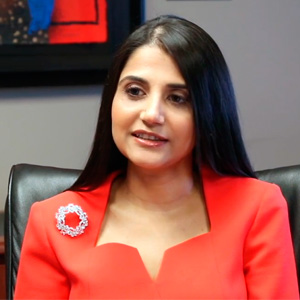
That is why Nin Desai believes crowdfunding deserves another serious look, but with a different mindset. Desai, founder and CEO of NIN Ventures, argues for what she sees as a more mature version of the model: one that shifts away from scattered direct startup investing and toward professionally managed venture funds built for broader participation, stronger discipline, and better alignment between investors and founders.
For small business owners and startup founders trying to make sense of today’s funding environment, that perspective is worth paying attention to. Venture capital has become more concentrated, many founders feel shut out of traditional channels, and raising money in 2026 often requires more creativity than it did just a few years ago. In that kind of market, crowdfunding is starting to look less like a novelty and more like a financing option founders may want to evaluate with fresh eyes.
As she put it,
Nin Desai“The best time to Crowdfund was 2013-2015. The second best time is NOW!”
Table of Contents

What Nin Desai Means by Crowdfunding 2.0
When people hear the word crowdfunding, they often think of founders launching campaigns online and inviting a large number of people to invest directly in a company or back a product idea. Desai is talking about something more structured than that.
She contrasts crowdfunding with traditional venture capital, where capital typically comes from institutional players such as pension funds, endowments, family offices, and other large limited partners. In her framing, crowdfunding widens the investor base, but the real innovation is not simply letting more people participate. It is allowing those investors to choose a professionally managed venture fund and fund manager rather than trying to evaluate startups on their own.
Desai argues that the next phase of crowdfunding should be more structured and professionally managed. As she put it,
“Crowdfunded Venture Capital Fund gives Investors the ability to pick a fund and the fund manager(s) of their choice based on their personal investment strategies.”
That distinction matters. A professionally managed crowdfunded venture capital fund can offer diversification, oversight, and a decision-making process that looks far more like traditional venture investing than a one-off campaign ever could. Instead of turning every investor into their own mini venture capitalist, the fund structure places responsibility in the hands of an experienced manager who can evaluate opportunities, negotiate terms, and support portfolio companies over time. Desai sees that as the more durable path forward for crowdfunding.
Why the First Crowdfunding Wave Fell Short
The original excitement around crowdfunding was understandable. It felt more open, more democratic, and more modern than the traditional venture model. But the same openness that made it appealing also exposed its weaknesses.
One of Desai’s biggest criticisms is that many investors crowdfunded directly into individual companies.
“Last time majority of the people crowdfunded their money in companies directly.”
That may have expanded access, but it also increased risk. Early-stage companies are inherently uncertain, and ordinary investors often lacked the expertise, information, and governance rights needed to protect themselves. A low minimum investment made participation easier, but it did not give investors a board seat, strategic input, or much control if things went wrong.
She also argues that many crowdfunding portals were not set up to give founders what good investors often bring beyond money. Entrepreneurs do not just need a check. They often need help with recruiting, PR, marketing, domain expertise, follow-on financing, valuation questions, and long-term growth strategy. In Desai’s view, that broader support system was often missing in the first crowdfunding wave.
“Entrepreneurs require lot more than just financing, they need guidance and domain expertise, help with PR and marketing, recruiting, a viable exit strategy, and more often follow up financing, which Crowdfunding Portals are not able to support.
This is where her argument becomes especially useful for founders. The lesson is not that crowdfunding failed because people were wrong to try it. The lesson is that access to capital, by itself, is not enough. Startups usually need smart capital, not just available capital.
Why Crowdfunding Is Becoming Relevant Again for Startups
The timing of Desai’s argument is not accidental. She ties crowdfunding’s return to the reality of today’s venture market, where raising money has become more uneven and more selective.
“In 2024, 30 firms raised 75% of all capital raised by VC funds in the US with majority of them investing in AI. What about other sectors? Do they not have any potential?”
In her response, she points to a sharp drop in venture fundraising from pandemic-era levels. She cites PitchBook figures showing that $66.1 billion was raised by 537 funds in 2025, compared with $222.9 billion raised by 1,777 funds in 2022. At the same time, she notes that the market still holds a record $311.2 billion in dry powder. The issue, then, is not that all the money has disappeared. The issue is where it is going and who can actually access it.
Desai also points to concentration in venture fundraising. In 2024, she says, 30 firms raised 75% of all capital raised by VC funds in the United States, with much of that money flowing into AI. That leaves a clear question hanging over the rest of the startup market: if investors are clustering around a narrow set of firms and sectors, what happens to promising companies outside that center of gravity?
That is why crowdfunding is back in the conversation. For founders who are building outside the hottest categories, or who are struggling to break into increasingly selective funding networks, crowdfunding can start to look less like a fringe path and more like a practical alternative worth evaluating.
What Types of Startups May Benefit Most
Not every startup is equally suited for crowdfunding, and Desai is clear that market conditions matter. Her view is that crowdfunding may have the strongest opportunity where traditional venture capital is becoming more concentrated and leaving funding gaps behind.
She suggests that because mainstream venture firms are investing heavily in AI, crowdfunding may be able to help support companies that do not sit neatly inside those same patterns. At the same time, she acknowledges a real limitation: current restrictions on crowdfunded venture funds can make it harder for them to participate meaningfully in larger, capital-intensive sectors if they need to preserve ownership, influence, and governance.
She specifically mentions areas such as AI, 3D printing, Industry 4.0, robotics, and space technology as major sectors reshaping the technological landscape. But these are also sectors that often require larger checks and sustained support over time. That means founders should not assume that crowdfunding is automatically the best fit just because a market is exciting. The better question is whether the type of crowdfunding available matches the company’s actual financing needs.
For founders, that is an important mindset shift. The right funding path is not the one that sounds the most innovative. It is the one that best supports the business you are actually trying to build.
Why Professional Management Matters More Than Hype
One of the strongest threads running through Desai’s comments is that crowdfunding becomes much more compelling when it is paired with professional management. That may sound less exciting than the original “democratize everything” pitch, but from a founder’s perspective, it is probably the more useful idea.
A professionally managed crowdfunded venture capital fund can do many of the things a founder hopes an experienced investor will do. It can evaluate opportunities more rigorously. It can take a board seat. It can help think through dilution and follow-on financing. It can bring discipline to valuation conversations and provide support that goes beyond a campaign launch. Desai argues that these are exactly the areas where a managed fund improves on the portal-driven crowdfunding model many people became familiar with during the first wave.
She also warns that inconsistent deal flow and weak portal incentives can lead to less rigorous due diligence, inflated valuations, poor terms, and inadequate risk assessment. That kind of environment is risky for investors, but it is not great for founders either. Smart founders benefit when capital comes from structures that can evaluate companies carefully and support them responsibly.
In other words, the strongest version of crowdfunding may be the one that feels less like a public campaign and more like a professionally run financing channel.
Which Rules Desai Says Are Holding Crowdfunding Back
Desai does not think crowdfunding’s limitations are only about execution. She also believes regulation is part of the problem.
“Currently, in order to raise a Crowdfunded Venture Capital Fund using general solicitation and general advertising… one is restricted to 250 accredited investors and a maximum fund size of $12 million.”
She points specifically to the restrictions tied to Rule 506(c), Title II of the JOBS Act, and Regulation D of the U.S. Securities Act of 1933 when fund managers use general solicitation and general advertising to raise a crowdfunded venture capital fund. According to her response, that path restricts managers to 250 accredited investors and a maximum fund size of $12 million.
In her view, that cap limits scale at exactly the moment when many sectors require larger pools of capital. She notes that one workaround is to create a parallel fund, but doing so increases both cost and complexity because managers must spend time operating multiple structures. From her perspective, that makes the crowdfunding model harder to scale efficiently and reduces its ability to compete with more traditional capital channels.
For founders, the practical takeaway is simple: the structure of the funding market is not shaped only by investor appetite. It is also shaped by the rules governing how capital can be raised and deployed.
What Founders Should Do Before Choosing Crowdfunding
Crowdfunding can sound attractive when traditional funding feels slow, opaque, or out of reach. But Desai’s comments suggest that founders should pause before treating it as the obvious alternative.
The first step is to get clear on what the business actually needs. How much capital is required? Will the company likely need follow-on financing? Does the founder mainly need money, or do they also need strategic support, governance, and access to experienced operators? Is the business looking at direct crowdfunding into the company, or participation through a professionally managed fund structure? Those are not small differences. They shape everything from investor relationships to long-term flexibility.
Founders should also ask a more useful question than, “Can crowdfunding help us raise money?” They should ask, “Will this funding structure make the company stronger a year from now?” That is a much better filter for evaluating any financing option, whether the source is a bank, an angel, a VC, or the crowd.
Final Thoughts: Why This Conversation Matters Now
Nin Desai’s case for crowdfunding in 2026 is not built on nostalgia for the first crowdfunding boom. If anything, her argument depends on recognizing its shortcomings clearly. She is saying that crowdfunding may deserve another look precisely because founders, investors, and policymakers now understand more about what went wrong and what needs to improve.
That is what makes the idea of Crowdfunding 2.0 more interesting than a simple comeback story. It is really a conversation about structure, discipline, access, and fit. And for founders operating in a capital market that feels narrower, more crowded, and more selective, that conversation is arriving at the right time.
FAQ
What is Crowdfunding 2.0?
Nin Desai uses the term Crowdfunding 2.0 to describe a more structured approach to startup financing. Instead of having individuals invest directly into startups one by one, she favors a professionally managed venture fund model that allows investors to participate through a fund manager. Her argument is that this structure offers diversification, better discipline, and stronger oversight while also giving founders access to more meaningful support after the money is raised.
Why does Nin Desai think crowdfunding matters again in 2026?
Desai believes crowdfunding is becoming relevant again because today’s venture market is tighter and more concentrated than it was a few years ago. She points to lower venture fundraising totals, high dry powder, and the concentration of capital in a relatively small number of firms, particularly around AI. That creates challenges for founders in other sectors and makes alternative financing paths more important.
What went wrong with the first wave of crowdfunding?
According to Desai, many investors in the first crowdfunding wave invested directly into companies without enough knowledge, diversification, or governance protections. She also argues that many crowdfunding portals were unable to provide founders with the strategic support, recruiting help, PR guidance, and follow-on financing assistance that stronger venture investors often bring. In her view, the first wave expanded participation but did not always provide enough structure.
What kinds of startups may be a good fit for crowdfunding?
Desai suggests crowdfunding may be especially relevant for startups that are promising but not attracting the same level of attention from mainstream venture firms. She also notes that some sectors, including AI, robotics, 3D printing, Industry 4.0, and space technology, are reshaping the market but often need more capital than current crowdfunding structures can easily support. That means founders need to evaluate not just whether crowdfunding is available, but whether it fits their real financing needs.
What should founders do before deciding crowdfunding is right for them?
Founders should think carefully about the size of the raise, the support they need after funding, whether follow-on capital will be required, and what kind of investor relationship they want. Desai’s broader point is that crowdfunding should not be treated as a shortcut. It should be evaluated as a financing structure, with the same seriousness founders would bring to choosing any other source of capital.
About Nin Desai
Nin Desai is the founder and CEO of NIN Ventures, a Chicago-based firm she launched in 2013 to help pioneer crowdfunding and broaden access to venture capital. Her work has focused on opening venture investing to a wider audience while helping startups navigate a changing funding environment.
She began her career at Merrill Lynch in the private client group, where she managed portfolios for high-net-worth individuals. She later joined Pacific Crest Securities, a technology-focused investment bank now part of KeyBank, where her work deepened her interest in venture-backed companies and the path from startup financing to public markets. She later joined Alpha Capital Partners, where she managed approximately $135 million in assets.
After the 2008–2010 market downturn and the passage of the JOBS Act in 2012, Desai saw an opportunity to bring crowdfunding to venture capital in a more meaningful way. She went on to launch what her team describes as a first-of-its-kind technology venture capital fund that was marketed, raised, managed, and reported online. Over the years, she has received multiple honors, including being named CEO of the Year in Illinois in 2015 for innovation and contributions to the venture capital and private equity industry.
Editor’s Note
Editor’s note: This article is based on written responses provided by Nin Desai’s team in reply to questions from PowerHomeBiz about crowdfunding, startup funding, and the future of venture access.
