

Running a lawn care or landscaping business takes more than a mower and a truck. To succeed, you need to know your numbers, schedule smart, train your crew, and stay on top of equipment and cash flow. These 10 practical tips will help you build a reliable, profitable business that keeps customers coming back season after season.
Key Takeaways
- Profitable lawn and landscape businesses know their hourly costs, track labor closely, and price accordingly.
- Efficient scheduling (by route, frequency, and service type) is one of your biggest levers to protect margins.
- Right-sized, well-trained crews deliver consistent quality, which leads to repeat business and referrals.
- High-quality, well-maintained equipment saves money over time and keeps your schedule on track.
- Strong billing, collections, and cash-flow habits are just as important as stripes on a lawn.
Running a lawn care or landscaping business is more than mowing lawns and trimming shrubs. You are managing a real service business with equipment costs, payroll, weather delays, and demanding clients who want their yards to look perfect.
The companies that last are not always the ones with the fanciest mowers. They are the ones that know their numbers, schedule smart, train their crews, and treat each property like a long-term relationship instead of a one-time job.
Below is an updated, more detailed look at what it really takes to succeed in lawn care and landscaping today.
Articles in the Series:
- Starting a Lawn Care and Landscaping Business
- The Landscape and Lawncare Services Industry
- How to Start a Lawn Service Business
- Tools and Equipment Used for a Lawn Care and Landscaping Business
- Pricing Your Lawn Care and Landscaping Services
- Marketing and Promoting a Landscaping or Lawn Care Business
- Additional Services and Revenue Streams for a Landscaping or Lawn Care Business
- 10 Tips to Succeed in Lawn care and Landscaping Business
- Resources to Help Start a Landscaping or Lawn Care Business
Table of Contents
Tips to Succeed in Lawn Care and Landscaping Business
Here are some tips on how to succeed in the lawn care and landscaping business:
1. Treat Your Lawn Care Business Like a Real Business
Your success will depend on how prepared you are to do the work and execute consistently.
Set aside time every week or month to ask questions like:
- How can we do this job more efficiently next time?
- Are we meeting our revenue and profit goals for the year?
- Which services are most profitable – and which are barely breaking even?
- Do we know the cost per hour of running each piece of equipment?
- Do we know our overhead cost per hour (insurance, fuel, admin, shop rent)?
When you understand your true costs, you stop guessing on quotes. Instead of thinking, “This looks like a $250 job,” you can calculate:
Estimated hours × Fully loaded hourly cost + Target profit margin = Price
That mindset shift – from guessing to knowing – separates hobby operators from serious companies.
2. Know Your Cost Relative to Sales
It is easy to focus on top-line sales. The real question is: how much do you keep?
Industry benchmarks can help you see if your costs are in line. While numbers vary by market, here is a common breakdown lawn and landscape owners use as a starting point:
Table 1. Cost Benchmarks by Business Type
| Business Type | Cost Category | Typical Range of Sales |
|---|---|---|
| Maintenance | Labor | 35–40% |
| Materials | 5–10% | |
| Design/Build | Labor | ~20% |
| Materials | 30% or more (depending on project scope) |
If your labor for maintenance work is consistently at 50–55% of sales, you either:
- Are underpricing jobs
- Have crews working inefficiently
- Are overstaffed for the amount of work you have
Use simple reports (even a spreadsheet) to track:
- Total sales
- Labor cost (wages, payroll taxes, benefits)
- Material cost
- Fuel and equipment repair
- Overhead (office, insurance, marketing, rent)
Review these numbers monthly or at least quarterly. Small adjustments to pricing, route density, or crew size can make a big difference over a season.

3. Build a Smart Scheduling System
Scheduling can make or break your profit. You are juggling:
- Weekly mowing accounts
- Biweekly or monthly jobs
- Seasonal services (spring cleanups, fall leaf removal)
- Fertilizer visits (often 4–6 times a year)
- Shrub trimming and pruning
- One-time projects and landscape installs
Without a solid system, you end up backtracking all over town, wasting fuel and labor hours.
Table 2. Example Scheduling View
| Service Type | Frequency | Planning Tip |
|---|---|---|
| Lawn mowing | Weekly/biweekly | Route by neighborhood to reduce drive time |
| Fertilization | 4–6× per year | Group by area; schedule weather-dependent |
| Shrub trimming/pruning | 1–3× per year | Combine with fertilization or cleanup visits |
| Seasonal cleanups | Spring/Fall | Block days/weeks in calendar |
| Install projects | As needed | Avoid overbooking during peak mowing weeks |
Use a calendar, spreadsheet, or job management software – whatever fits your size and budget – but get it out of your head. A clear schedule protects your crews from burnout and keeps customers from slipping through the cracks.
4. Learn the Plant Production Cycle
Understanding how plants move through the supply chain helps you deliver better results and avoid delays.
The general cycle looks like this:
- Specialty growers – start plants from seed or cuttings.
- Wholesale “finish” growers – grow plants to saleable size.
- Retailers/garden centers – sell to homeowners and small contractors.
As a professional, you want to build relationships with wholesalers and reputable nurseries. When you understand bloom times, growth rates, and availability windows:
- You can recommend plants that will actually be available when needed.
- You can reserve high-demand varieties early in the season.
- You avoid scrambling at retail nurseries and paying higher prices.
This knowledge makes you more credible with clients and helps your design/build jobs run smoother.
5. Right-Size and Manage Your Crews
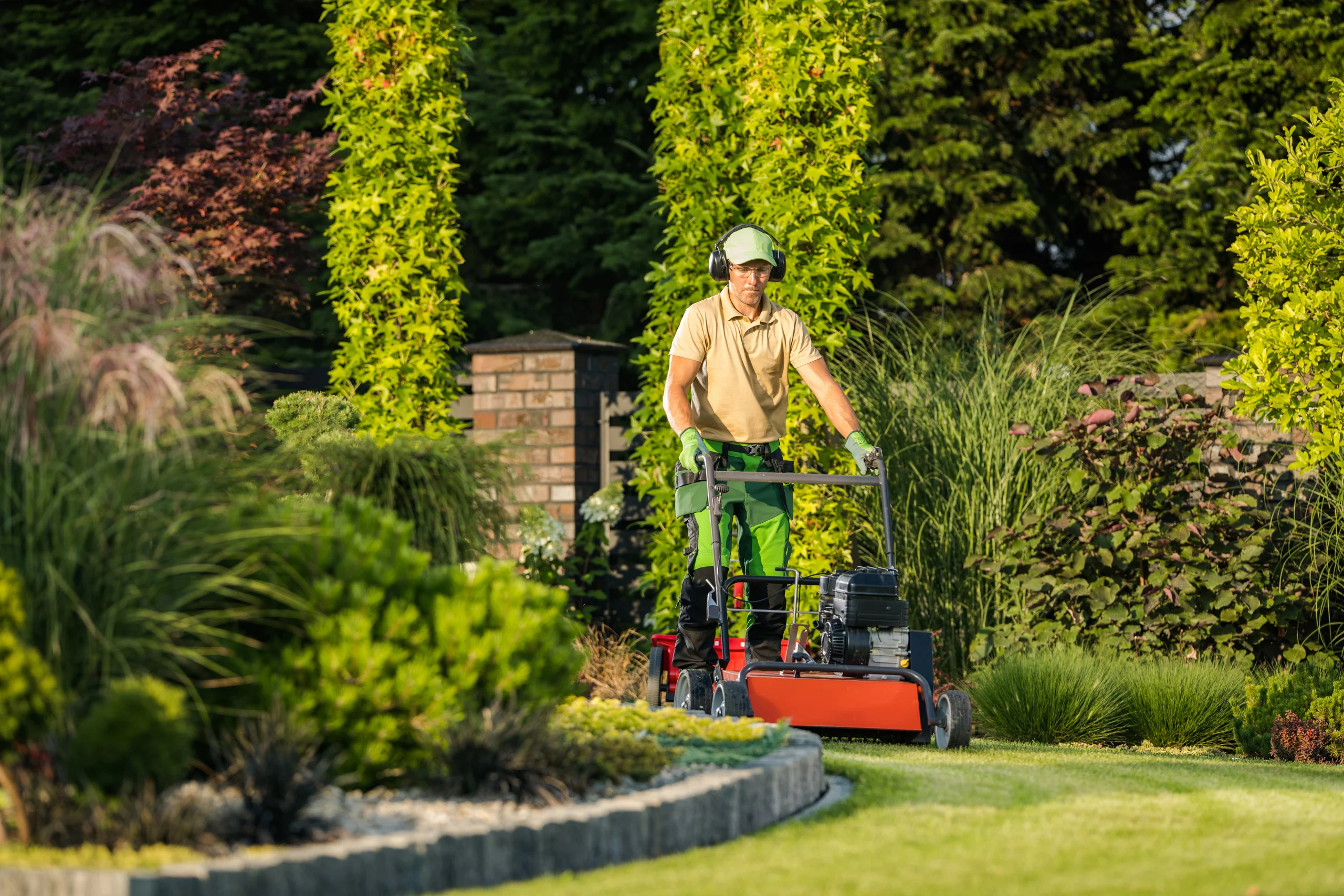
Your crew size should match your average workload and typical job size. Too many people standing around eats profit. Too few, and you fall behind and rush through jobs.
Think about:
- Average job size and duration – How many hours does a typical route take?
- Crew skill mix – Do you have a balance of experienced leads and newer workers?
- Travel time between jobs – Larger crews can overwhelm small jobs when drive time is high.
A simple way to think about it:
| Average Job Type | Typical Crew Size | Notes |
|---|---|---|
| Small weekly mow | 2–3 | One on mower, one on trimming, one on cleanup |
| Larger residential estate | 3–4 | More detail work; extra hand speeds up quality |
| Commercial property | 4+ | Depends on acreage and detail level |
Monitor productivity. If a 3-person crew is doing the same amount of work as a 2-person crew used to, you may need to retrain or resize.
6. Train Your Crew to Work – and Think – Like Pros
Untrained crews waste time and frustrate clients. Avoid the scenario where workers arrive at a job, stand around waiting, and ask “What should I do now?”
Good training covers:
- Roles and responsibilities – who mows, who trims, who blows, who checks details.
- Plant knowledge – basic identification, pruning rules, and what not to cut.
- Customer expectations – gates closed, toys and pots moved back, walkways blown clean.
- Job quality checks – quick walk-through before leaving each property.
You never want to hear that your crew pruned a client’s prized roses instead of the Crape Myrtle you mentioned. That is a training problem and a communication problem.
Make “friendly and thorough” part of the culture:
- Greet customers when they come outside.
- Double check that beds are weeded if included in the service.
- Make sure nothing looks half-finished or lopsided when you drive away.
Consistency and respect are what turn one-time customers into loyal accounts.

7. Invest in Quality Equipment and Maintain It
Cheap equipment may look like a bargain, but breakdowns in the middle of a route cost far more in lost time and frustration.
Aim for:
- Commercial-grade mowers suited to your typical property size
- Reliable trimmers, blowers, and edging tools
- Extra blades, trimmer line, and key spare parts in each truck
Before leaving the shop each day, inspect:
- Fluids and filters for larger equipment
- Blades (sharp or dull?)
- Fuel levels
- Obvious damage or loose parts
A basic equipment checklist can prevent:
- Crews sitting idle while someone runs back to the shop
- Jobs postponed due to breakdowns
- Frustrated customers wondering why you did not show up as promised
Also, how your team treats equipment usually reflects how they treat jobs. If tools are thrown around and left dirty, chances are the work will look the same way.
8. Maximize Production and Eliminate Waste
You only have so many daylight hours in a season. The goal is to use those hours wisely.
A few ways to increase production:
- Route density – Schedule as many jobs as possible in the same neighborhood on the same day.
- Batch quotes and visits – When quoting, try to visit several properties in the same area.
- Standardize services – Offer clearly defined packages (e.g., “Standard mow + trim + blow”) so crews know exactly what to do.
- Limit back-tracking – Avoid routes that have you crossing town repeatedly.
Think of waste in terms of:
- Unnecessary drive time
- Re-doing work because of poor quality or miscommunication
- Crews waiting for tools, materials, or instructions
Every bit of waste you remove adds directly to your bottom line.

9. Create a System for Equipment Issues
Broken tools are inevitable. What hurts your business is when no one reports them and the next crew discovers the problem at a job site.
Put a simple system in place:
- Designate a spot in the shop or truck for broken tools.
- Require crew members to tag broken items with their name and a brief description.
- Have a set time (end of each day or week) when someone checks and repairs or replaces items.
The goal is not to punish people for a trimmer breaking. The goal is to know about the problem quickly so it does not slow down the next crew or job.
When equipment issues are handled systematically, you protect productivity and prevent small problems from becoming full-day disruptions.
10. Stay on Top of Billing and Collections
You can have beautiful lawns and still go out of business if cash flow is a mess.
Basic habits that make a big difference:
- Leave a door hanger, text, or email note after each visit so clients know you came.
- Send invoices on a regular schedule (e.g., weekly or monthly – but consistently).
- Offer clear payment options (online payment, check by mail, card on file).
- Follow up quickly on overdue accounts with friendly but firm reminders.
Even a simple spreadsheet or basic invoicing software can help you:
- Track who has been billed
- See who has paid and who is overdue
- Spot any missed invoices
Healthy cash flow means you can pay employees on time, keep equipment in good shape, and invest in marketing and growth.
Next: Resources to Help Start a Landscaping or Lawn Care Business
Frequently Asked Questions (FAQ)
How much money can I realistically make with a lawn care or landscaping business?
Earnings vary widely, but many small lawn care businesses start with a few weekly routes and grow to full-time income within a couple of seasons. What you keep depends on your pricing, route efficiency, and cost control. Some owners are satisfied with a side-income of a few thousand dollars per month, while others build into companies generating six figures or more in annual profit. The key is to know your hourly costs and price accordingly, build dense routes, and avoid underbidding just to win jobs. Once your schedule fills with well-priced, repeat customers, revenue becomes more predictable and profits increase.
Do I need professional training to start a lawn care business?
You do not need a formal degree, but you do need professional skills. At a minimum, you should understand mowing patterns, trimming and edging, basic plant care, and how to avoid damaging turf and landscapes. Many new owners learn through online resources, short courses, manufacturer trainings, and hands-on practice. If you plan to apply fertilizers or pesticides, you may need licenses or certifications depending on your state or country, so be sure to check local regulations. Continuous learning about plants, soil, equipment, and safety will make you more confident and more credible with clients.
How can I compete with larger lawn care companies?
Smaller operators have advantages that big companies cannot easily copy. You can be more personal, more flexible, and more attentive. Focus on neighborhoods close to you to build route density and word-of-mouth. Offer reliable, on-time service and treat every yard as if the owner is watching – because many are. Communicate clearly, return calls and messages quickly, and follow through on what you promise. Over time, your reputation for consistency and friendliness can beat cheaper bids. You might not match the marketing budget of large companies, but you can outperform them in service and relationships.
What is the biggest mistake new lawn care and landscaping owners make?
One of the biggest mistakes is underpricing. New owners often look at what others seem to be charging, then go a little lower to “win” business. They forget to factor in fuel, equipment wear, insurance, travel time, and overhead. As a result, they stay busy but never really profitable. Another common mistake is sloppy scheduling – driving all over town instead of building tight routes. Both problems can be fixed by knowing your numbers, tracking time on jobs, and regularly reviewing which accounts and services are actually profitable. It is much easier to fix pricing early than to raise prices dramatically later.
How do I know when it is time to hire more crew members?
It is time to consider hiring when you consistently have more work than you can handle at a reasonable pace, you are turning down good jobs, or quality is slipping because you are rushed. Before hiring, make sure your pricing covers labor at realistic wage levels and that your schedule is organized enough to keep a new crew busy. Start by adding one person to your existing crew or building a small second crew rather than scaling too fast. Monitor productivity, job quality, and customer feedback closely. The right hire will relieve pressure, improve service, and allow you to grow sustainably.
This article was published on June 15, 2014 and updated on November 27, 2025.

Comments are closed.