In today’s sedentary lifestyle, finding ways to add more movement into our daily routine is crucial for our overall health and well-being. Incorporating standing into your daily activities can have numerous benefits, from improving posture and core strength to increasing calorie burn and productivity. Read on to learn practical tips and strategies to seamlessly integrate more standing into your day, whether at home or in the office.

Table of Contents
Why is regular standing so important?
Regular standing is essential for maintaining a healthy lifestyle, providing many benefits crucial to our overall well-being. In our modern society of office working, where extended periods of sitting have become prevalent, it’s important to recognize the negative impact this can have on our health.
Studies consistently associate excessive sitting with various health concerns, including obesity, cardiovascular disease, diabetes, and certain types of cancer.
On the other hand, incorporating standing into our daily routine can help counteract these risks. It improves posture, engages core muscles, enhances balance and stability, and promotes proper body alignment. Additionally, standing increases energy expenditure, aids in weight management, and boosts cognitive function, productivity, and focus.
By actively integrating more standing into our everyday lives, we can proactively improve our overall health and embrace a more active lifestyle.
How can people stand more?
Standing can have lasting benefits for your mental and physical health; there are many easy ways you can incorporate standing into your everyday routine:
1. Stand while answering calls
One easy and effective way to incorporate more standing into your routine is to stand while answering phone calls. Whether it’s a work-related conversation or a casual chat with a friend, take advantage of the opportunity to stand up and move around. Instead of remaining seated, simply stand up and stretch your legs while engaging in the conversation.
You can even consider using a hands-free device or a headset to keep your hands free while standing. Standing during phone calls not only promotes better posture and blood circulation but also provides a chance to break free from the sedentary trap of sitting and introduce more movement into your day.
2. Incorporate more walks into your break time
Another effective way to increase standing time is to incorporate more walks into your break time. Instead of staying seated during your breaks, take advantage of the opportunity to get up and go for a short walk.
Whether it’s a stroll around the office building, a walk in a nearby park, or even a few laps around the house when working from home, walking can provide numerous benefits. It helps improve circulation, boosts energy levels, and provides a refreshing change of scenery.
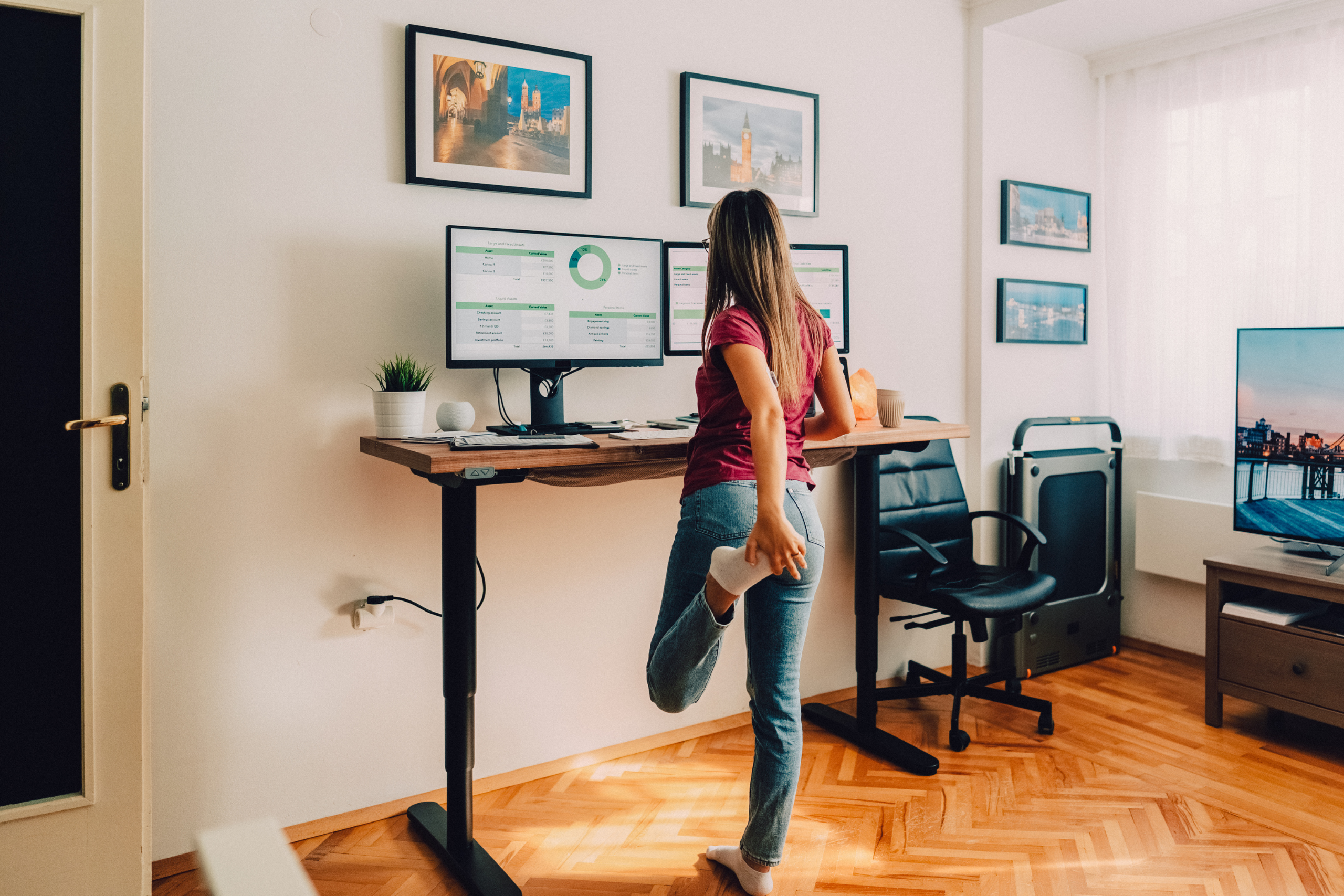
3. Invest in a standing desk
Incorporating a standing desk into your workspace can be a game-changer for promoting a more active and healthier lifestyle. By replacing your traditional seated desk with a standing desk, you create an environment that encourages upright posture and increased movement. Standing while working engages your core muscles, promotes better circulation, and helps alleviate the negative effects of prolonged sitting.
Additionally, a standing desk can boost energy levels, improve productivity, and enhance focus throughout the day. It also provides the flexibility to switch between sitting and standing, allowing you to find the balance that works best for you. Yo-Yo Desk offers a range of active desks, from standing desks to bike desks, and purchasing office furniture from them will help you to become more active in your everyday life.
4. Take the stairs instead of the lift
Opting for the stairs instead of the elevator is a simple yet impactful way to infuse more standing and physical activity into your daily routine. By bypassing the lift and taking the stairs, you engage major muscle groups, boost cardiovascular health, and increase calorie expenditure. This small change can contribute to improving your overall fitness levels over time.
Climbing stairs also provides an opportunity to break away from sedentary habits and add bursts of movement throughout the day. Not only does it improve physical well-being, but it also offers mental benefits by releasing endorphins and promoting a sense of accomplishment.
5. Walk to a colleague’s desk instead of emailing/calling
Instead of relying solely on emails or phone calls to communicate with your colleagues, consider taking a more active approach by walking to their desks. This simple change can significantly impact your daily movement and overall well-being.
By choosing to have face-to-face conversations instead of relying on electronic communication, you not only engage in physical activity but also foster better interpersonal relationships. Walking to a colleague’s desk allows for spontaneous interactions, encourages collaboration, and can even lead to more efficient and effective communication.