The article was originally published on June 13, 2013. Updated on March 2, 2026.
Starting a craft business requires more than creativity. This comprehensive startup checklist covers legal setup, permits, sales tax, financial systems, workspace planning, insurance, and operational structure so you can build a profitable handmade business with confidence.
Key Takeaways
- Talent alone doesn’t create a sustainable craft business — structure does.
- Validate demand before investing heavily.
- Clarify the hobby vs. business status for tax and compliance purposes.
- Register permits and sales tax properly.
- Separate business finances from personal accounts.
- Install bookkeeping systems before your first sale.
- Design a workspace for efficiency and safety.
- Protect your business with insurance.
- Scale only after structure is secure.
Starting a craft business is one of the most appealing paths into entrepreneurship. It allows you to turn something personal and enjoyable into something profitable. You control the pace. You work from home. You build around your schedule. On the surface, it feels refreshingly simple.
But simplicity at the beginning can be misleading. Here’s the reality that seasoned entrepreneurs learn quickly:
Talent creates products.
Structure creates businesses.
What often separates a thriving handmade business from one that quietly fades isn’t talent, passion, or even product quality. Its structure. Many talented makers jump straight into selling without building the underlying systems that support long-term growth. They open an Etsy shop before calculating real margins. They attend craft fairs before registering for sales tax. They mix personal and business finances. They price emotionally instead of strategically. And when orders increase, instead of feeling successful, they feel overwhelmed.
The truth is this: a craft business may begin with creativity, but it survives on organization.
Before you worry about branding, algorithms, or scaling to wholesale accounts, you need to establish the foundations that allow your business to function smoothly and legally. That means clarifying whether you’re building a hobby or a true income-generating venture. It means validating demand with real data. It means choosing the right legal structure, registering properly, setting up financial systems, designing an efficient workspace, and protecting yourself with insurance.
These steps aren’t glamorous — but they are powerful.
If you’ve already read our in-depth guide on How to Start a Successful Craft Business: A Complete Profit, Pricing & Growth Guide, you understand how to calculate real margins and build toward sustainable income. And if you’ve reviewed How to Choose the Right Craft Business Model and Sales Channels, you know that choosing the right platform — Etsy, wholesale, craft fairs, or your own website — dramatically affects profitability.
Build this foundation carefully, and everything that follows becomes easier. Skip it, and even strong sales can feel unstable.
Let’s start with the structure that supports success.
Table of Contents
Step 1: Define Your Intent — Hobby or Income Business?
Before you file paperwork, purchase supplies, or create an Etsy account, you need clarity about one fundamental issue: what are you actually building?
Are you:
- Selling occasionally to fund your supplies?
- Looking for supplemental income?
- Or building a scalable business model?
Many makers start casually. They sell a few items to friends, post on social media, and maybe test a craft fair. But without defining whether you are operating as a hobbyist or building an income-generating business, your decisions will lack direction.
This distinction affects:
- How you handle taxes
- Whether you can deduct expenses
- How seriously you track financial performance
- How much capital are you willing to invest
- Whether growth is intentional or accidental
From a regulatory standpoint, the IRS distinguishes between hobbies and businesses based on profit motive. According to IRS guidance on hobby vs. business classification (IRS Publication 535), a business must demonstrate a genuine profit motive and consistent effort toward profitability.
Operating without that intent can limit your ability to deduct expenses. Businesses are expected to operate with the intention of making money and generally show profit in at least three out of five years.
Why this matters:
- Only businesses can deduct legitimate expenses.
- Banks and lenders treat businesses differently.
- Insurance providers require formal classification.
- Marketplace platforms may request tax documentation.
From a strategic standpoint, the difference is even more important.
If your goal is income, you must treat this venture like a business from day one. That means tracking revenue, calculating margins, documenting expenses, and setting financial targets — not just hoping sales cover materials.
This means:
- Tracking revenue
- Tracking expenses
- Setting production targets
- Calculating real margins
- Planning for taxes
Once you’ve clarified whether you’re building a real income-generating business, the next logical question is this:
Is there proven demand for what you plan to sell?
Clarity about intent must be followed by clarity about market opportunity.
Step 2: Validate Demand with Modern Tools
Enthusiasm for your craft does not automatically translate into customer demand.
One of the most common reasons craft businesses struggle is because founders assume that “if I love it, others will too.” Unfortunately, markets don’t operate on personal preference — they operate on buying behavior.
Demand validation is about reducing risk before you invest time and money.
Instead of relying on outdated advice like casually browsing eBay, today’s craft entrepreneurs should analyze real data. Platforms such as Etsy, Amazon Handmade, Pinterest, and Google Trends provide insight into search behavior, competition levels, and seasonal interest. Local craft fairs offer offline data about pricing tolerance and buyer interest.
Proper validation helps you answer three critical questions:
- Are people actively searching for this product?
- Are they buying at profitable price points?
- Is the market oversaturated or underserved?
Skipping this step often leads to underpricing, overproduction, or pivoting after months of frustration. Demand validation isn’t about discouraging creativity. It’s about aligning creativity with market reality.
Now that you’ve confirmed there’s demand — and that customers are buying at viable price points — you’re no longer operating in theory. You’re preparing to operate in reality.
And operating in reality requires a legal structure.
Step 3: Choose Your Legal Structure Carefully
Choosing a legal structure isn’t just paperwork — it’s a strategic decision that affects how your craft business operates, grows, and protects you.
Many new makers delay this step because it feels technical or overwhelming. After all, you’re just selling handmade goods — maybe from your home studio. But the structure you choose determines:
- How you’re taxed
- Whether your personal assets are protected
- How seriously retailers and partners take you
- What type of insurance you can carry
- How easily you can scale later
In the early stages, simplicity matters. But as revenue grows, so does risk. If you’re selling candles that could pose a fire hazard, skincare that touches the body, resin art that uses chemicals, or children’s items subject to safety standards, liability protection becomes more than a formality — it becomes essential.
Your structure should match both your current stage and your future ambitions.
Below is a simplified comparison of the most common options for craft entrepreneurs.
Legal Structure Comparison
| Structure | Best For | Liability Protection | Complexity | Notes |
|---|---|---|---|---|
| Sole Proprietorship | Solo starters | No | Low | Easiest to launch |
| LLC | Growing operations | Yes | Moderate | Most common upgrade |
| S-Corp | Higher profits | Yes | Higher | Tax optimization |
Many craft sellers begin as sole proprietors because it requires minimal setup and cost. However, as sales increase or risk exposure rises, transitioning to an LLC becomes a common and often wise move.
Craft entrepreneurs typically consider forming an LLC when they:
- Begin selling wholesale to boutiques
- Need product liability insurance
- Experience consistent revenue growth
- Hire help or contractors
- Enter higher-risk product categories
An LLC separates your personal assets from your business liabilities. That means if something goes wrong — a product claim, a dispute, or a legal issue — your personal savings, home, and other assets are generally better protected.
An S-Corp structure may make sense later for tax optimization once profits reach a higher threshold, but most early-stage craft businesses do not need that complexity.
If you’re unsure which structure fits your situation, consulting a small business attorney or CPA can prevent costly mistakes later. A short professional consultation often costs far less than fixing an improperly structured business.
Choosing your legal structure defines how your business exists on paper. Registering properly defines how it exists in the eyes of regulators. That distinction matters more than most new entrepreneurs realize.
The goal isn’t to overcomplicate your launch. It’s to choose a structure that supports growth; not one you’ll outgrow in six months.

Step 4: Register Required Permits & Sales Tax
Many home-based entrepreneurs assume that because they operate from their kitchen table or spare bedroom, formal registration can wait.
That assumption can be costly.
Even small craft businesses are subject to state and local regulations. Selling physical products typically requires sales tax collection. Purchasing materials wholesale often requires a resale certificate. Operating from home may require zoning approval or a home occupation permit.
Ignoring compliance doesn’t make the requirement disappear — it simply delays it. The U.S. Small Business Administration (SBA.gov) recommends that even home-based businesses verify state and local licensing requirements before selling products, particularly when collecting sales tax or participating in public events.
Common consequences of skipping this step include:
- Back taxes and penalties
- Inability to participate in craft fairs
- Denial from wholesale buyers
- Difficulty opening a business bank account
- Insurance complications
Proper registration establishes legitimacy. It also builds credibility when dealing with suppliers, event organizers, and retailers. Compliance may feel administrative, but it protects your business and prevents avoidable setbacks.
Once your business is properly registered and compliant, the next layer of professionalism begins internally — with your finances. Because legal structure means little if your money is still mixed together. This step takes less than an afternoon to complete, but saves countless hours later.
Step 5: Separate Business Finances Immediately
Mixing personal and business finances is one of the most common — and most preventable — mistakes new craft entrepreneurs make.
When all transactions flow through a single personal account, it becomes nearly impossible to:
- Accurately calculate profit
- Track deductible expenses
- Prepare taxes efficiently
- Demonstrate business legitimacy
- Maintain liability separation
Even if your craft business is small, separating finances sends a powerful message — to yourself and to regulators — that this is a serious operation.
Opening a dedicated business checking account creates clean financial records from day one. It simplifies bookkeeping, strengthens audit protection, and makes pricing decisions more accurate because you can clearly see your numbers.
With your financial foundation separated and organized, your next focus shifts from paperwork to production. Where — and how — you work directly affects how efficiently you grow.
Step 6: Set Up a Scalable Workspace
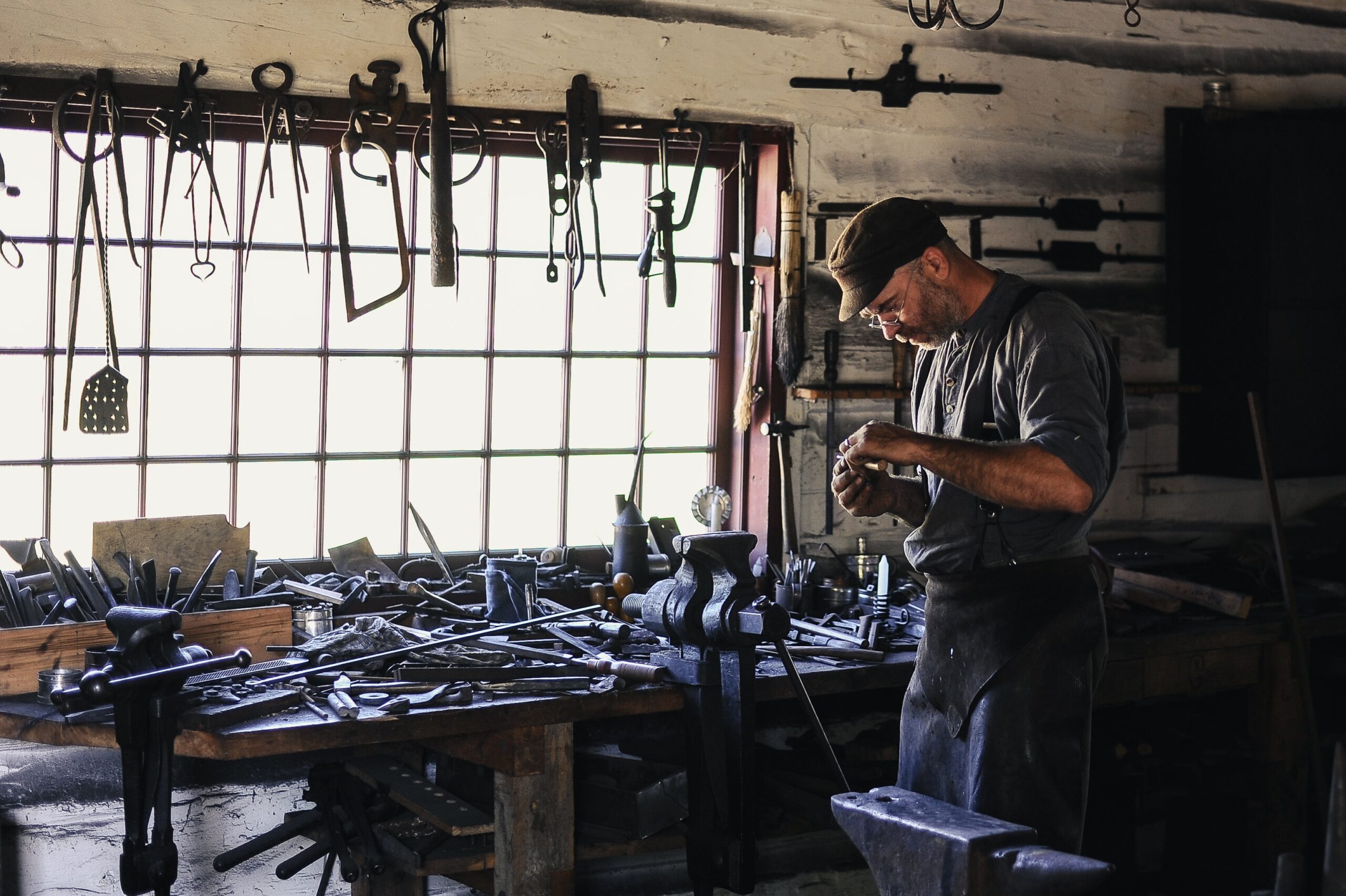
Your workspace is not just where you create — it is where efficiency, safety, and scalability either flourish or break down.
A poorly organized production area may work when you’re fulfilling a few orders per week. But as demand increases, clutter becomes a bottleneck. Supplies go missing. Production slows. Stress increases. Mistakes multiply.
A well-designed craft workspace should account for:
- Production flow
- Material storage
- Inventory tracking
- Photography setup
- Packing and shipping
- Safety compliance
If your craft involves chemicals, dyes, adhesives, or heat tools, basic safety and ventilation standards outlined by OSHA guidelines should be considered, especially if you plan to scale production or hire assistance. It may also be required for insurance coverage.
Designing your workspace intentionally from the beginning makes scaling smoother later. Efficiency compounds over time.
A functional workspace increases output. But without financial tracking, increased output doesn’t automatically equal increased profit. That’s where systems come in.
Step 7: Install Basic Financial Systems Before Launch
Many makers wait until tax season to think about bookkeeping.
That approach creates chaos.
Before your first sale, you should have a system for tracking:
- Cost of goods sold (COGS)
- Supply purchases
- Packaging materials
- Shipping costs
- Booth fees
- Marketing expenses
- Mileage
Without accurate cost tracking, you cannot price correctly. And without correct pricing, profit becomes guesswork.
Basic bookkeeping software — even free options — can automate much of this process. The key is consistency.
Financial clarity transforms decision-making. It shows you which products are profitable, which channels perform best, and when it’s time to raise prices.
If Step 1 defines your intent, Step 7 enforces your discipline.
Now that your financial systems are in place, you can evaluate one of the most overlooked realities of launching a craft business:
How much capital do you actually need?

Step 8: Estimate Realistic Startup Costs
Underestimating startup costs is a quiet threat to early-stage craft businesses.
Because many handmade businesses start from home, founders assume costs will be minimal. While overhead may be lower than traditional retail, expenses still accumulate quickly:
- Initial material inventory
- Tools and equipment
- Licensing and permits
- Insurance
- Website setup
- Packaging supplies
- Craft fair booth fees
Without realistic budgeting, new sellers often find themselves reinvesting every dollar back into materials without building financial cushion.
Estimating startup costs in advance allows you to:
- Set realistic revenue targets
- Determine how much capital you need
- Avoid debt-driven launches
- Maintain stability during slow sales periods
A well-planned launch reduces financial pressure and improves long-term sustainability.
Step 9: Choose Sales Channels Strategically
Where you sell shapes how you operate.
Different sales channels come with different margin structures, marketing requirements, and workload expectations. Choosing blindly can trap you in a model that limits profit or demands more time than you anticipated.
For example:
- Etsy offers built-in traffic but charges fees.
- Craft fairs provide direct interaction but require physical presence.
- Wholesale increases volume but compresses margins.
- A Shopify site offers control but requires independent marketing.
Your decision should align with:
- Your production capacity
- Your pricing structure
- Your lifestyle goals
- Your risk tolerance
- Your growth vision
Selecting the right channel isn’t about following trends. It’s about building a model that supports sustainable income.
With realistic cost expectations established, the final structural question becomes: Where will you sell, and does that channel support your margins?
Once you’ve chosen your sales channel, you’ll quickly discover that success isn’t just about making sales. It’s about fulfilling them consistently. That requires operational planning.
Step 10: Create a Simple Operating Plan
Spontaneous growth feels exciting until it becomes overwhelming. Without a written operating plan, even modest increases in demand can create fulfillment delays, inventory shortages, and customer service issues.
An operating plan doesn’t need to be complicated. But it should answer practical questions:
- How many units can you produce per week?
- When do you reorder supplies?
- How do you handle custom requests?
- What is your shipping turnaround time?
- What happens during peak season?
Documenting these decisions in advance reduces emotional decision-making under pressure. Structure prevents burnout.
And finally, once production and fulfillment systems are in place, there’s one more layer of protection to consider because every product-based business carries risk.
Step 11: Protect Your Business with Insurance
Many craft entrepreneurs postpone insurance because it feels unnecessary until something goes wrong. If your product causes injury, allergic reaction, property damage, or even a minor dispute, legal exposure can escalate quickly.
The SBA also notes that product-based businesses face higher liability exposure than service-based businesses, making general and product liability insurance a critical risk-management tool.
Insurance types to consider include:
- General liability insurance
- Product liability insurance
- Event insurance (for craft fairs)
Retail stores and wholesale buyers often require proof of coverage before carrying your product.
Insurance is not an admission of risk. It is a recognition of responsibility. Protecting your business allows you to grow confidently, without fearing worst-case scenarios.

FAQ
Do I need a business license to sell handmade crafts from home?
In most cases, yes — even home-based sellers may require a local business license or home occupation permit. Regulations vary by state and municipality. Additionally, if you sell tangible products, you typically need a sales tax permit. The SBA recommends checking both city and county regulations before launching. Even if you sell only online, compliance still applies. Operating without proper licensing can result in fines or complications when opening a business bank account or obtaining insurance.
How do I know if my craft business is profitable?
Profitability requires calculating your cost of goods sold (COGS), including materials, labor time, packaging, and overhead. Many new sellers underprice by ignoring their time or indirect expenses. A simple formula is:
Total cost per unit × 2–3 (for retail pricing benchmark)
However, margins vary by product category. Reviewing your pricing quarterly ensures rising material costs don’t erode profit.
Should I form an LLC right away?
Not always. Many craft entrepreneurs begin as sole proprietors to minimize startup costs. However, forming an LLC becomes more important as revenue increases or if your products carry risk (candles, skincare, children’s goods). An LLC provides liability separation between personal and business assets. Consulting a CPA or small business attorney is wise if your projected revenue exceeds hobby-level income.
Do online platforms handle sales tax for me?
Marketplaces like Etsy and Amazon often collect sales tax under marketplace facilitator laws. However, you may still need to register with your state’s tax authority. Responsibility varies by jurisdiction. Always verify your state’s rules before assuming compliance is automatic.
How much does it realistically cost to start a craft business?
Most home-based craft businesses require $500–$3,000 to launch responsibly. Costs include initial inventory, equipment, licensing, insurance, website setup, and packaging. Launching with insufficient capital can create cash flow strain, especially during early low-sales months.
Do I need product liability insurance if I sell at craft fairs?
Many event organizers require proof of general liability coverage. Additionally, if your product could cause injury, allergic reaction, or property damage, product liability insurance provides essential protection. Coverage is often affordable for small operations and worth the peace of mind.
Can I deduct my home workspace?
Possibly. The IRS allows home office deductions if the space is used regularly and exclusively for business. However, eligibility rules are strict. Mixing personal and business use can disqualify the deduction. Consult IRS guidelines or a tax professional before claiming it.
When should I scale my craft business?
Scale when:
– You have consistent demand
– Pricing is profitable
– Production systems are efficient
– Financial tracking is accurate-
Scaling before structure often increases workload without increasing income.
Conclusion
Starting a craft business is often portrayed as a simple transition from hobby to income — make something beautiful, list it for sale, and wait for customers. But sustainable success rarely happens that casually. Behind every profitable handmade brand is a structure that supports it.
The most successful craft entrepreneurs are not necessarily the most gifted artists. They are the ones who approach their creativity with discipline. They validate demand before investing heavily in inventory. They understand their legal responsibilities. They separate personal and business finances. They track costs with precision. They protect themselves with appropriate insurance. They design workspaces that allow them to fulfill orders efficiently. And they choose sales channels based on margin strategy — not trend appeal.
None of these steps diminish creativity. In fact, they safeguard it.
When your foundation is solid, growth no longer feels chaotic. A surge in orders doesn’t create panic because your systems are already in place. Busy seasons become manageable rather than overwhelming. Financial decisions become data-driven instead of emotional. Profit stops feeling accidental and starts becoming intentional.
Structure does not restrict creativity — it stabilizes it. It gives your talent room to expand without collapsing under pressure.
If you build the legal, financial, and operational foundation correctly, you give your craft business the best chance to evolve from side project to reliable income stream. And once that foundation is secure, you can confidently move into deeper profit strategy and sales channel optimization — knowing that what you’re building is not just beautiful, but sustainable.
Start with structure. Then scale with confidence.