

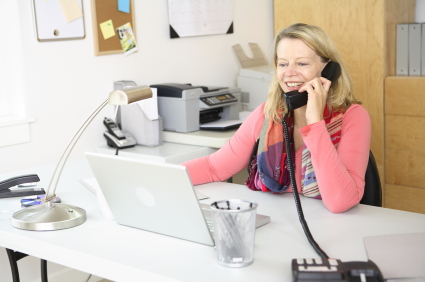
 One of the perks of becoming your own boss is having the full control on how your workplace will look like. You now get to choose the decor, decide on the furniture and cabinet, and select the equipment to use in your “perfect” home office.
The key is to make your home office as comfortable and as inspiring for you as possible. Forget the sterile and cramped cubicle you used to work in, and the corporate restrictions on decor your former employer imposed on you! In your own work space, you can have music as loud or as soft as you want, or put plants and flowers all over the place.
The Equipment Requirements of Your Business
The equipment you require is directly linked to the home-based business you choose. Telephones, mobile devices, fax machines, photocopiers and computers are the main elements in business communication today.
However, a desktop publisher will need a more sophisticated computer system equipped with huge memory and multimedia capabilities, scanner, colored printer, CD-ROM, publishing and graphics software. A lawn care service, on the other hand, will need power mower, rakes, power trimmer and spreader, pick-up truck or station wagon.
The key is to make sure you clearly separate needs and wants, and initially purchase only the needed items. Most home-based entrepreneurs either over-invest or under-invest for their home offices. Consider what you will need in terms of communication and furniture. Make a list of everything needed to start the business. Some goes overboard with the most ergonomically designed furniture, high-end computer systems and the latest high-tech gizmos – even when not needed. For example, a bookkeeping business does not need multimedia capabilities in a computer. Others, on the other hand, make do with makeshift cabinets and worn-out chairs hidden in the garage for the last decade. Office equipment, particularly computer systems, has come down to reasonable prices in the last few years.
Nevertheless, only buy such equipment that you will use in the early stages of your start-up. If you ascertain that you need some equipment, look around for low-cost used models or purchase new equipment on an installment plan. Before you buy anything, look around the house for things you already own that are usable. Or check the classified ads and garage sales. Both are good, inexpensive sources for office furniture, typewriters, computers, answering machines, etc. Also consider what you need on-site and what is available through an outside service. Buy only what is absolutely necessary for start-up, and wait until the business is off the ground to get the extras. In your start-up phase, it is better to keep your capital expenditures as low as possible.
Furniture
If you are going to spend a lot of time on your desk or in front of the computer, invest in a really comfortable home office chair and set-up appropriate lighting. If money is no object, splurge on ergonomically designed furniture and office systems with everything efficiently and conveniently at your fingertips. Modular furniture makes it easy to move your office around as your needs change.
For most home-based entrepreneurs, however, they have to “made do” with whatever furniture and equipment is readily available. Others make one piece of furniture serve more than one purpose. For example, the top of a lateral file cabinet can double as an extra surface for a paper cutter, fax machine, copier, etc.
Carefully plan your home office lay-out and remove any furniture that is not serving a purpose aside from taking up valuable office space. That includes a dining room chair you may be using instead of an ergonomically correct office chair (or at least one that is adjustable and offers more support than your present chair).
In addition, ensure that you have adequate filing or inventory capacity. Strive to maintain an efficient filing system. If you have an organized system, you’ll be more apt to file papers or inventory right away so you can easily retrieve items that you need right away.
Use sturdy shelves to store books, reference materials and supplies nearby. Store similar items together and place these items strategically. Books you refer to often should be within reach while supplies and other materials you use less frequently should be placed on higher or lower shelves.
Office furniture is available at several price levels. Manufacturers such as Ethan Allen produce high ticket desks, file cabinets, bookshelves, computer workstations and office chairs. Ikea also offers some moderately-priced home office furniture. Budget conscious entrepreneurs should check the classified ads section of your local papers for any closing out sale or used furniture sale.
Whether your office looks brand-new and spiffy, or old and well worn, the important thing is that it fits your purposes. Consider function over aesthetics. Your office may look like a million bucks but it may be designed to hinder rather than help you make a fortune.
Computers, Software and Internet Access
A business in the home used to mean unsophisticated equipment, but computers and telecommunications have become so inexpensive that you can run state-of-the-art communications out of your den.
Your ability to compete as a home business comes from your ability to match the technical equipment of large corporations. Most home-based graphic designers now use the same software used by the largest publishing houses graphic design shops. The affordable prices of sophisticated software make it possible for the home company to offer the same product and services of large corporations at lower rates. A decade ago, it was extremely difficult for a home business to compete directly with a large enterprise.
Invest in a good computer system. If your business requires you to be mobile, consider purchasing a laptop, notebook or mobile computer. Wireless broadband is also essential nowadays, to make sure you can quickly access the Web, respond to clients, and work even when you’re waiting for your kids to finish their taekwondo lessons.
If your business requires the use of computers, you also need to have a solid back up system in place. Consider at least two back-up systems, one for power and one for data storage. A low cost surge protector prevents data loss due to fluctuating currents. In this age of fast-spreading computer viruses, it is essential to develop back-up procedures to protect your computer files and store back-up disks or tapes off-site.
Telephone Services
The telephone is a critical business tool. Call the telephone company to find out the cost of a business phone in your area. Check how much you will need to pay for a vanity telephone number that will make it easy for customers to remember your telephone number. Remember, a separate phone line for your business is tax deductible. Though usage may have gone down in the past few years, a business phone also allows you to be listed in the Yellow Pages.
However, if you cannot afford a separate business land line, investigate the telephone company’s regulations on using your personal phone in a business. Keep a record of long distance business calls as they are a deductible expense. Don’t skimp on phone service. Customers do not like busy signals. Consider installing a multi-line telephone set if you think that your phone activity will be on the heavy side.
Finally, be sure to get an answering machine, or features such as voicemail and call forwarding especially when you are out. Local telephone companies offer a wide range of services, such as call-waiting feature that may be handy during the course of your business operations. You don’t want to miss the call of an important customer or business contact. Make sure that you answer your business telephone calls in a professional manner. If possible, place your phone in an area free from noise from children, pets, TV and stereo.
Mobile phones are a must-have nowadays. Look for various smartphone options for your business, and match the features and functionality with the needs of your business. Do you want customers to be able to contact you via videoconferencing? Do you anticipate the need to access your files to discuss and share with clients? Are there apps that you will need to operate your business when you’re on the go?
Equipment, Services and Facilities for Hire
If you have only occasional need for certain office equipment, consider renting or leasing. Kinko’s Copies, Staples, and other companies offer computers, fax machines, copy machines, and other equipment by the hour. Also available are an array of binding, collating, cutting and folding services and the ability to purchase office supplies. Some of the franchises even offer videoconferencing and electronic document distribution.
