

Home businesses, wherever the location, rely on electricity from a source to power up their way to revenue. It’s the lifeblood they connect to for light, connectivity, heat, and equipment that makes their home life comfortable and their businesses viable under one roof.
Table of Contents
How Electrical Power Systems Work
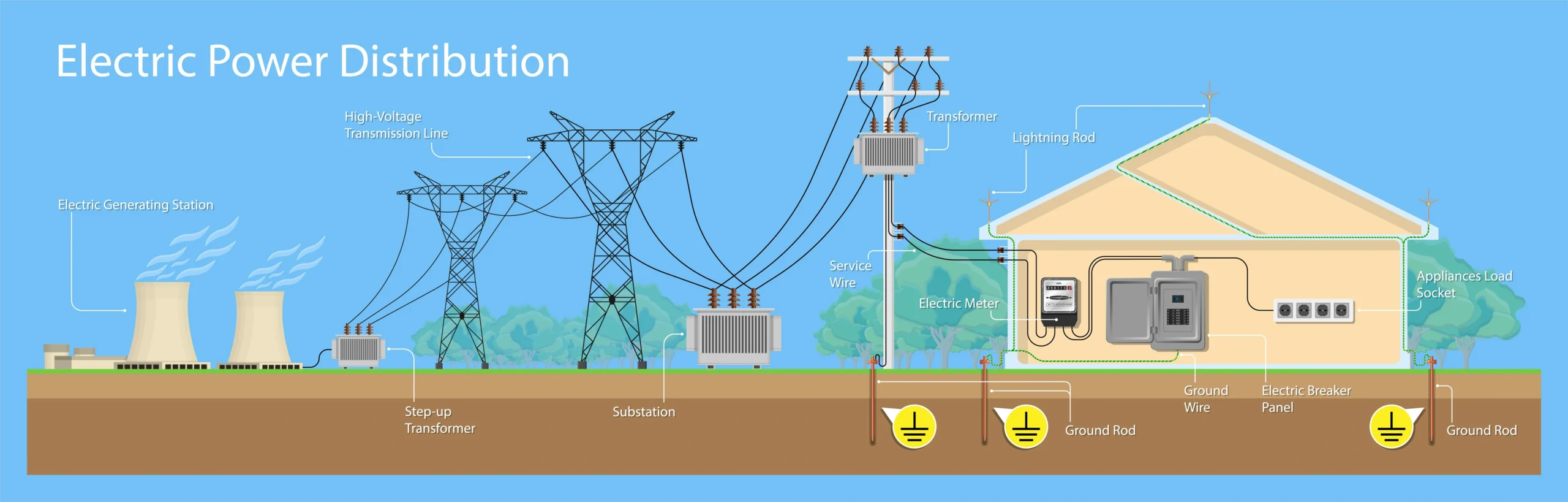
The path of electricity from the plant to the home involves many steps and different providers. Energy from coal, water, natural gas, and nuclear plants is transformed into electricity at the power generating plant. Note that some power plants supplement their primary energy sources with solar and wind energy to produce cleaner, more affordable electricity.
The output goes to a power grid or step-up transformer that increases its voltage, making it ready for transmission over long distances.
Once it reaches the substation or distribution center, the voltage is reduced before it goes to local companies. This electricity at the proper voltage is delivered to homes and other types of small businesses that are located in areas with transformers. Their output is according to the preferred voltage and phase.
The voltage that enters a home in the USA and North America is 240 volts, but it splits into two, so the voltage running the appliances is 110-120 thereabouts on a 60 Hz frequency. Modern homes usually have both 120 and 220 volts. The lower voltage is used for lights, microwave ovens, computers, and refrigerators, while the higher voltage is used for air-conditioners, electric heaters, and other appliances with high wattage.
Preventive maintenance like those done at 60hertzenergy.com/substation-preventative-maintenance/ does the following:
- It ensures safety
- Optimizes efficiency
- Prolongs the lifecycle of equipment and appliances by protecting them from power surges
- Prevents downtime from avoidable power failure
All the infrastructure and electrical lines go through numerous checks because lapses along the route will cause disastrous power interruptions. For instance, repairing, scheduled maintenance, and parts replacement are standard for substations. Included are:
- Testing mechanisms of transformers, breakers, and the like
- Cleaning motors
- Assessing equipment condition
- Measuring oil levels
- Recording data from pressure gauges
Checks include testing output meters and creating inspection reports. These are important for business owners who doubt the validity of their readings.
The top concerns on electrical power for your home business are performance, stability, safety, and costs. Aside from installing an alarm system, regularly check the wiring because tangled cables and heated ones could cause fraying from the friction and start a fire. Equipment should be well-maintained for safety and reduction of electric consumption.
As the folks from Energy Security Agency note, the emerging Energy Revolution is here to stay and responders must be prepared to properly handle incidents related to Electric Vehicles and Fixed Energy Storage Systems. Not only is it cost-effective and energy-efficient, but it’s also a way to prevent accidents or outages that can harm your home and business.

How Much Electricity You Need For Your Home Business
Not all homes are wired for business, which is something that every entrepreneur or professional working from home should come to terms with. Preventing power overloads that could damage equipment and interrupt operations can be easily done by computing what you need for home and business needs.
For example, your initial air-conditioning may no longer be enough and you need to change to a more powerful one. It’s not as simple as changing units, especially if your home is old and the wires are heating up or have gone brittle.
Three-phase electric power is recommended if your business operates on a higher voltage because it supplies both 120 and 208 volts. A home business will require a capacity of 200 amperes, higher than the 100-150 capacities of an average home. To be more accurate, be sure to check with your electrician and electric company.
How much you pay for electricity for your home business depends on the power consumption, location, operating hours, renewable or green electricity options, and in some cases, whether you get a discount for being a small or medium enterprise operating from home. An online electricity bill calculator specific to your provider and area helps you to estimate the monthly bill.
Many successful businesses like Body Shop, Apple, Facebook, and Microsoft started from home and didn’t need sophisticated setups. This is due to the fact that they didn’t require a higher electrical current to operate their businesses. Similarly, the following may adopt a similar configuration:
- Reselling/drop shipping business
- Homemade products business
- Printing services
- Organic soap and cosmetics-making business
- Beauty/Tattoo services
- Tutorials/online classes
On the other hand, these businesses that require refrigeration or appliances that heat up will probably need a new service panel and a complex setup, depending on the electrical code in your area:
- Home Bakeshop
- Laundry services
- Computer/Electronics repair shops
- Pet-grooming services
- Cleaning Services, especially those requiring steam
- Carwash
- Woodworking and décor items production
In traditional homes, major appliances take up about a third of your bill. To reduce monthly power consumption, you’ve probably switched to LED lights, replaced major appliances with energy-saving ones, changed filters, and added insulation. But you can also shrink your power bill by doing the following:
- Fill air gaps that can shave off 11% of your energy bill.
- Unplug appliances that are not in use, which can save you 10% in electricity bills.
- Install a programmable thermostat that can save another 10%.
- Turn the water heater temperature to 120-110 degrees.
In an office setting, lighting accounts for 16%, computers use up 17%, and heating/ventilation/air-conditioning (HVAC) a hefty 28% of electricity costs. Installing automatic dimmers and temperature control are effortless cost-cutting ways that may have an impact on your monthly bill.
Business Considerations
Depending on where you live, domestic rates may be lower than business rates – or vice versa. If you have a choice, consider which tax profile will give you better rebates. In some countries, registered micro businesses and those using green energy have incentives.
Conclusion
Working in a home business setup has a lot of benefits, as it saves you commute time and gives you more time to spend with family. Knowing how electricity gets to your switches and outlets – plus implementing cost-saving steps will save you money and relieve some of your anxiety.
