

Yoga has evolved from a niche practice into a thriving wellness industry generating billions each year. If you’re considering starting a yoga center, this comprehensive guide walks you through everything—from startup costs and branding to hiring instructors, scaling revenue, and building a loyal community. Learn how successful studios grow and how you can build a profitable, purpose-driven yoga business.
Key Takeaways
- The U.S. yoga market now exceeds 55 million practitioners, making it a strong business opportunity.
- Starting a yoga center typically requires $50,000–$250,000 in startup capital.
- Successful studios focus heavily on instructor quality, community building, and strategic scheduling.
- Diversifying revenue—workshops, private sessions, teacher trainings—dramatically increases profitability.
- Branding and marketing are essential; studios must create an emotional connection with their students to thrive.
- Franchising offers structure but limits creative freedom and requires high investment.

Ten years ago, mention the word “yoga,” and many people would picture unusual poses and something vaguely connected to Eastern mysticism. Today the landscape has transformed dramatically. Yoga has entered mainstream culture as both a wellness practice and a lifestyle movement embraced by people of all ages, fitness levels, and backgrounds. You can now find yoga not only in dedicated studios but also in gyms, corporate wellness programs, county recreation centers, schools, and even hospitals. What was once niche is now an essential component of modern well-being.
Yoga’s rapid rise has also created a substantial business opportunity. Even as far back as the early Yoga Journal surveys, Americans were already spending $2.95 billion annually on yoga classes, equipment, clothing, and media. At that time, 16.5 million adults were practicing yoga—up 43% from just three years earlier. Fast forward to today, and the numbers are staggering: more than 55 million Americans now practice yoga at least once a year, and the global yoga and mindfulness market is projected to reach $215 billion by 2025. In short: yoga is not just a trend—it’s a booming industry with no signs of slowing down.
For aspiring entrepreneurs who want to combine wellness with business ownership, starting a yoga center can be deeply fulfilling and highly profitable. But building a yoga studio is far more than renting a room and scheduling classes. It requires thoughtful planning, meaningful branding, financial strategy, and most importantly, a commitment to creating an experience where students feel safe, supported, and inspired. This guide takes you through every step—from capital requirements and studio design to marketing, hiring, and long-term success—so you can build a yoga center that thrives both financially and as a community cornerstone.
Table of Contents

Why Start a Yoga Center Today?
The decision to open a yoga center today is grounded in real consumer behavior and undeniable market momentum. People are increasingly prioritizing their mental and physical well-being, especially after years of collective stress, burnout, and digital overload. Yoga, with its blend of movement, mindfulness, and breathwork, addresses this holistic need better than almost any other fitness activity. It provides not only physical exercise but also emotional resilience and community connection—two things people crave more than ever.
Growing Demand Across All Ages
Another compelling reason is the demographic shift. Yoga participation has broadened dramatically, moving far beyond the stereotypical young, flexible crowd. Harvard Medical School reports increased adoption among seniors seeking balance, office workers dealing with chronic pain, athletes enhancing mobility, and even individuals undergoing trauma recovery.
- Seniors seeking balance and fall-prevention
- Office workers dealing with back pain and stress
- Athletes looking to improve mobility
- Individuals working through trauma, anxiety, or chronic pain
This means your potential clientele is far broader than ever before. This diversification means your potential customer base is larger, more stable, and more loyal than in decades past.
A Recession-Resilient Industry
Yoga businesses tend to be surprisingly recession-resilient. While many industries contracted during economic downturns, the wellness sector continued to grow. In fact, the Global Wellness Institute noted that wellness spending rebounded faster than most sectors during recent recessions, driven by people’s desire for stress relief and mental well-being.
People crave what yoga offers: grounding, breathwork, stress relief, and a sense of belonging. In this sense, yoga centers offer both purpose and practicality: they serve a deep human need, and they do so within an industry that continues to expand.
A Business That Builds Community
Yoga studios aren’t transactional—they create loyal communities. A successful studio becomes a place where:
- Students form friendships
- People find emotional support
- Locals gather for workshops, events, and wellness talks
This community aspect fuels retention and long-term profitability.

Understanding the Business Side of a Yoga Center
Launching a yoga center requires more than mats and instructors. Before opening a yoga studio, it’s important to recognize that while yoga is a practice rooted in mindfulness and healing, a yoga studio is also a business with operational realities. Many new owners underestimate this, and as a result, even passionate and skilled teachers can struggle to keep the doors open. Successful studios rely on:
- A compelling brand
- Strategic location
- Predictable revenue streams
- Smart scheduling
- High retention rates
- Exceptional instructors
A successful studio must balance artistry and entrepreneurship—providing high-quality classes while also managing expenses, creating predictable revenue streams, optimizing schedules, and maintaining strong student retention.
This begins with understanding your target audience. Are you catering to busy professionals? Moms? Athletes? Seniors? Each demographic has different needs, expectations, and preferred practice times. A profitable yoga center designs classes, pricing, and schedules around the lifestyle of its community, not around the owner’s personal preferences. Additionally, you’ll need systems for billing, bookings, marketing, instructor management, customer support, and more. When done well, these elements form the backbone of a studio that grows steadily and serves its community effectively.
Let’s break down the major considerations.
1. Startup Costs and Capital Requirements
Starting a yoga center requires thoughtful financial planning because the startup costs are real and often underestimated. Unlike home-based businesses or online ventures, a yoga studio relies heavily on physical space—and space must be safe, comfortable, and aesthetically inviting. From flooring to lighting, from heating systems to décor, every detail shapes the student experience. Your space becomes part of your brand, and students notice when it feels clean, peaceful, and intentionally designed.
The range of investment depends largely on the size and ambition of your studio. A small boutique space with minimal renovations may cost around $50,000 to $75,000 to launch. A larger multi-room studio with premium finishes could easily reach $150,000 to $250,000. This aligns with franchise models like Sunstone Yoga, which require investments from $147,000 to $327,000, depending on the package. While this may seem substantial, yoga studios enjoy the opportunity for strong monthly recurring revenue through memberships, which creates financial stability once the studio reaches healthy enrollment.
Here is a more detailed breakdown of startup costs:
Typical Startup Costs for a Yoga Studio
| Expense Category | Estimated Cost |
|---|---|
| Leasehold improvements | $20,000–$75,000 |
| Security deposit & first month rent | $5,000–$20,000+ |
| Flooring (hardwood, bamboo, or laminate) | $5,000–$15,000 |
| Mirrors & wall fixtures | $2,000–$8,000 |
| Heating/cooling adjustments | $5,000–$30,000 |
| Yoga props (mats, blocks, bolsters, blankets) | $3,000–$7,000 |
| Sound system & lighting | $1,500–$10,000 |
| Changing rooms (built or converted) | $2,000–$15,000 |
| Furniture & decor | $2,000–$10,000 |
| Studio management software | $100–$300/month |
| Insurance | $1,000–$3,000/year |
| Website + branding | $2,000–$10,000 |
| Marketing launch | $2,000–$8,000 |
| Initial instructor payroll | $3,000–$15,000 |
Total Estimated Startup Cost: $50,000 to $250,000, depending on size and ambition. Preparing financially allows you to start strong and avoid scrambling for additional funding mid-launch.
This aligns with franchise models like Sunstone Yoga, with investment costs ranging from $147,000 to $327,000 (with lower costs if converting an existing studio).

2. Choosing the Right Location
Location is one of the most influential factors in a studio’s success, and it’s worth investing time to choose wisely. The best location is not necessarily the cheapest—it’s the one that aligns with your target audience’s lifestyle, movement patterns, and proximity. A beautiful studio hidden in a low-traffic area will struggle, while a modest space in a thriving neighborhood can quickly develop a loyal following.
High-Performing Studio Locations Tend to Be:
- Near fitness centers, boutique shops, and healthy cafés
- In walkable, middle-to-upper-income neighborhoods
- Near residential communities with strong wellness culture
- Easily accessible by car or public transportation
- Close to corporate offices (if offering workplace yoga)
Start by studying your ideal demographic’s daily routines. Are they commuting downtown? Working from home? Visiting cafés and fitness centers? Your studio should sit naturally along the flow of where your audience already spends time. Additionally, visibility matters: foot traffic, parking access, signage opportunities, and even neighboring businesses can all subtly influence whether someone feels drawn to walk through your door.
A good rule: you should be able to draw at least 1,000 to 2,000 potential students within a one-mile radius.
3. Creating a Studio Space That Students Love
A yoga center is an experience—not just a place. Designing your studio is about much more than décor—it’s about cultivating an atmosphere that supports grounding, safety, and transformation. Students choose yoga studios not just for the class content but for how the space makes them feel. A well-designed studio becomes a sanctuary where people decompress from their day, reconnect with themselves, and build community.
Successful studios invest in:
Relaxing ambiance
Designing your yoga studio is much more than choosing pretty décor; it’s about shaping an environment that supports safety, presence, and emotional ease. The moment students walk through your doors, they should feel a shift—a subtle exhale, a sense of grounding, a quiet invitation to leave the outside world behind. Your studio’s ambiance is a direct extension of your brand, your philosophy, and the experience you want students to carry with them long after class. Every detail—from lighting to layout to texture—plays a part in creating a space that feels intentionally crafted, comfortable, and deeply welcoming.
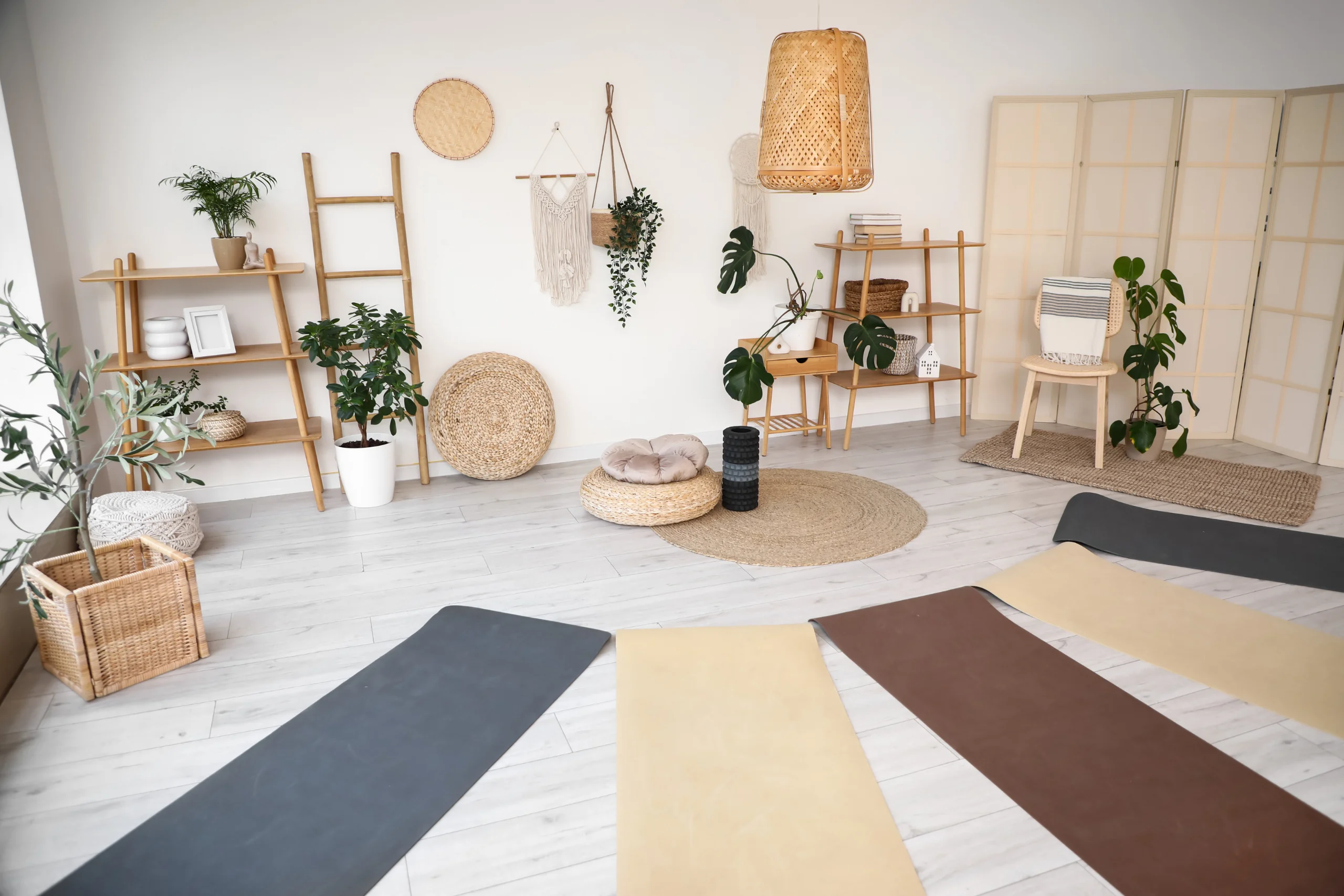
Creating this ambiance requires attention to detail. Warm lighting, clean lines, natural décor, plants, calming color palettes. Lighting should feel warm and natural, the floors should be comfortable and clean, and the room layout should encourage calm rather than clutter. Many studios incorporate natural elements—plants, bamboo, soft textiles—to evoke a sense of peace.
A well-designed studio doesn’t happen by accident. Successful spaces take into account traffic flow, safety, acoustics, natural light, ventilation, and even scent. The environment must support both the physical and emotional aspects of practice. A beautiful space elevates your classes, but a poorly planned space—crowded rooms, echoing floors, inadequate storage—can quietly erode the student experience and limit growth. When you design your space with care, it becomes a sanctuary, a community hub, and a reason students return again and again.

Plenty of floor space
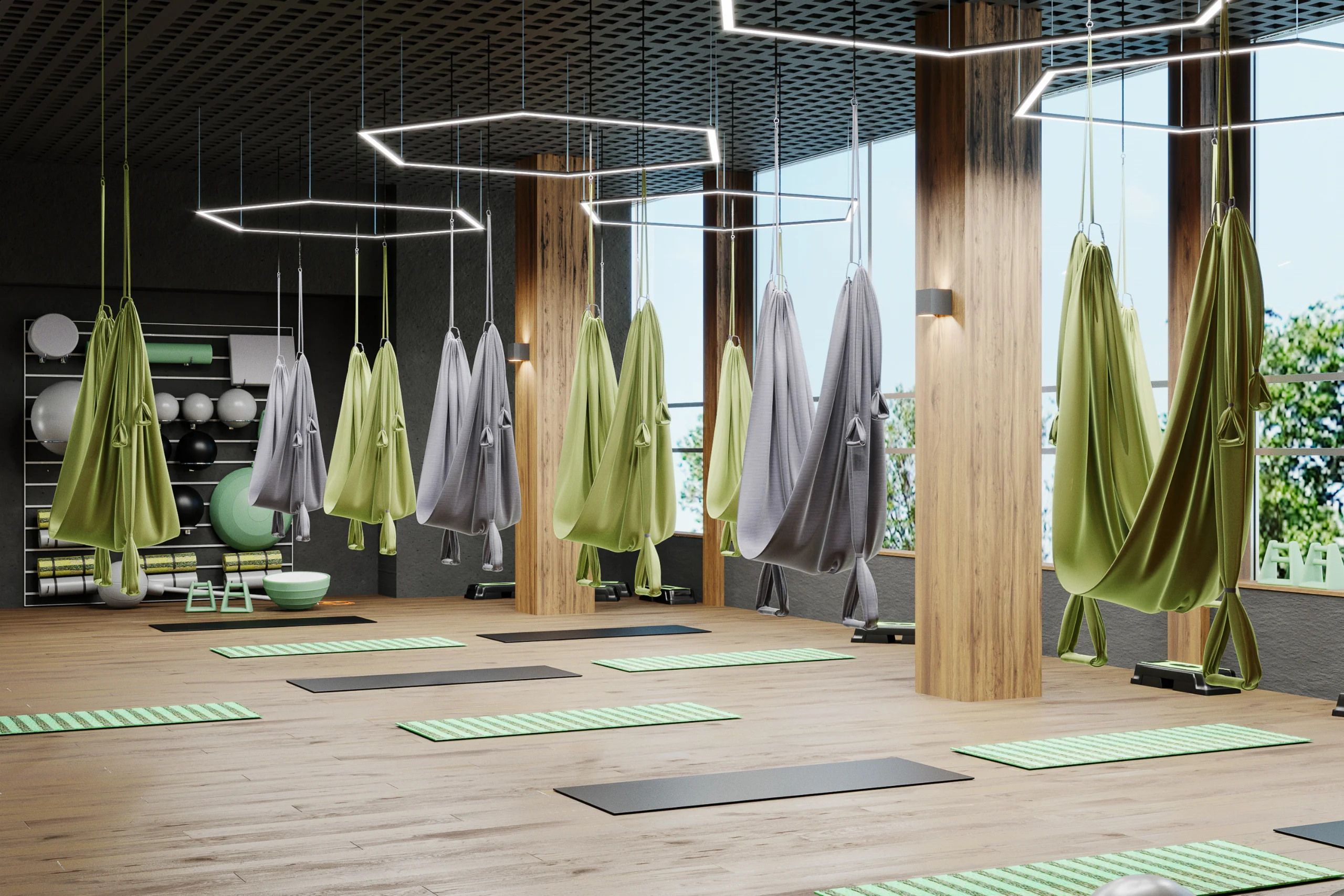
When it comes to yoga studio design, floor space directly affects both class experience and student retention. Yoga is a movement-based practice, and students need enough room to stretch, transition, and breathe without feeling cramped or distracted. Most studios aim for 25–35 square feet per student, a range that allows people to move comfortably without bumping into one another or feeling overwhelmed by crowding.
Adequate spacing also contributes to safety, important in poses that involve balance or inversions. Studios that prioritize generous spacing often find that students associate the room with calm, freedom, and ease—qualities that bring them back again and again.
Changing rooms & amenities
Changing rooms may seem like a small detail, but they significantly enhance the student experience, making the studio feel more welcoming and accommodating. Separate spaces for men and women create privacy, while well-organized storage cubbies reduce clutter in the practice room and help students transition smoothly before and after class. Some studios go a step further by offering showers, towel service, or vanity areas—features especially appreciated by professionals who practice before work or during lunch breaks. These thoughtful amenities elevate your studio from a simple exercise space to a full-service wellness environment, which can improve member satisfaction and justify premium pricing.
Thoughtfully designed workshop rooms
A dedicated workshop room is one of the most versatile and profitable spaces you can build into your yoga center. A separate room can be used for:
- Meditation classes
- Teacher trainings
- Sound baths
- Private sessions
Unlike the main practice studio, which often hosts large group classes, a separate room allows you to diversify your offerings and appeal to different student needs. You can use this space for meditation classes, small-group sessions, teacher trainings, sound baths, or private lessons, each of which provides additional revenue streams.
The atmosphere in a workshop room should feel more intimate and customizable—soft lighting, comfortable props, and flexible layouts. This space becomes the heart of deeper learning and community building inside your studio, supporting both student growth and financial sustainability.
Optional retail boutique
Adding a retail boutique to your studio can meaningfully contribute to your bottom line while enriching the student experience. Many studios profit significantly from selling:
- Yoga apparel
- Mats & blocks
- Essential oils
- Books
- Locally made goods
Retail sales naturally complement the wellness lifestyle, offering students a convenient place to purchase high-quality yoga apparel, mats, blocks, essential oils, books, or locally made artisanal products. The key is thoughtful curation—choose items that reflect your brand’s aesthetic and values.
Many successful studios find that retail contributes 10–20% of overall revenue, especially when integrated seamlessly into the studio layout. Shopping becomes a natural extension of the visit: students can try on clothing after class, replace worn-out mats instantly, or bring home items that support their personal practice. Retail not only boosts profit—it strengthens your brand identity and enhances the sense of community inside your space.
4. Hiring Quality Instructors (The Make-or-Break Factor)
Your statement “quality instructors can make or break your center” is absolutely true. The strength of your teaching staff is arguably the single most important factor in your studio’s long-term success. While ambiance and branding matter, students ultimately return for the instructors they trust, enjoy, and feel connected to. A great teacher can fill classes consistently, while a poorly matched or undertrained instructor can discourage new students from returning.
A Yoga Alliance study found that students choose studios based on:
- Quality of teachers
- Class atmosphere
- Studio cleanliness
- Class variety
Your instructors represent your brand. Their personality, teaching style, and level of care directly influence retention. When hiring, look beyond certifications. Yes, an RYT-200 credential is standard, but personality, communication skills, safety awareness, and the ability to adapt to mixed-level classes are equally essential.
You want instructors who can motivate beginners, challenge advanced practitioners, and maintain a warm, inclusive environment. It’s also important to look for teachers with diverse specialties—yin yoga, hot yoga, prenatal, restorative—so you can offer a rich and varied schedule.
A strong teaching team lifts your entire business. They help shape your culture, bring in new students, and build lasting relationships that keep your community thriving.

What to Look for in Yoga Teachers
- RYT-200 minimum certification
- Specialization (restorative, vinyasa, hot yoga, prenatal, power yoga)
- Ability to build rapport
- Strong cueing and safety awareness
- Reliability and professionalism
- Willingness to promote classes
- Confidence teaching mixed-level groups
Some studios hire employees; others use contractors. If you want consistent quality, employee models often provide more stability and control.
5. Building a Profitable Business Model
Successful yoga centers rarely survive on single-class drop-ins alone. Financial success in a yoga center comes from diversifying revenue streams and designing offerings that balance accessibility with sustainability. While single drop-in classes are important for trial, they are not enough to support long-term profitability. The studios that thrive are the ones that create predictable monthly income through memberships, packages, workshops, and training programs.
You need multiple revenue streams:
Primary Revenue Sources
- Membership packages
- Class packs
- Drop-ins
- Private one-on-one sessions
- Workshops
- Teacher training programs
- Retreats
- Corporate yoga programs
Secondary Revenue Streams
- Retail boutique
- Room rentals
- Online classes or subscriptions
- Brand sponsorships
- Affiliate programs
Monthly memberships are your financial backbone. They provide stability and help smooth out seasonal fluctuations. Class packs offer flexibility for irregular practitioners. Private sessions deliver premium pricing, while workshops allow you to showcase deeper aspects of yoga—like breathwork, mindset, or specialty practices. Corporate wellness programs and teacher trainings are two of the most profitable offerings in the industry. Teacher training programs, in particular, have extremely high profit margins and can generate $30,000 to $150,000 per cohort depending on size.
By thinking creatively and diversifying your services, you build multiple income pathways that support both your growth and your mission.
6. Scheduling Classes Strategically
A well-designed schedule can determine whether your classes feel energized and well-attended or scattered and empty. Many new studio owners make the mistake of offering too many classes too soon, thinking more options will attract more people. In reality, this often dilutes attendance and increases instructor costs without generating sufficient revenue.
Instead, start with a focused schedule that aligns with when your community is most available. Early morning classes attract working professionals, midday sessions appeal to remote workers or retirees, and evening classes often serve your busiest crowd. Weekends should include both active offerings and more meditative or restorative options. As demand grows, expand thoughtfully—let your attendance patterns guide your additions.
Recommended Initial Schedule
- 3–4 classes per weekday
- 2–3 classes on weekends
- Peak windows: 6–9 AM, 12–2 PM, 5–7:30 PM
You can expand as demand grows.
It’s also crucial to balance class styles. Too many high-intensity vinyasa sessions, for example, may overwhelm beginners, while too many slow classes could deter those seeking a workout. A strong schedule blends variety with consistency so students know what to expect and can build yoga into their weekly routine.
Best Types of Classes to Offer
- Vinyasa / Flow
- Gentle / Restorative
- Hot yoga (if you have heating systems)
- Yin yoga
- Beginner Foundations
- Meditation and breathwork
- Power or sculpt yoga
Classes should be designed around your target audience—not personal preference.

7. Branding Your Yoga Center
Brand is everything in wellness. It’s not just your logo—it’s the promise of what students will feel when they walk into your space.
Branding is the emotional language of your business. It communicates who you are, what you stand for, and how students will feel when they join your community. A strong brand does more than attract customers—it builds trust, fosters loyalty, and differentiates your studio in a crowded wellness landscape.
Your brand includes your visual identity (logo, colors, typography), but it also extends to your studio’s personality, tone of voice, values, and student experience. Are you aiming for a modern, fitness-forward feel? A spiritual sanctuary? A minimalist, community-driven space? The clearer your brand personality, the easier it becomes to create cohesive messaging across your website, social media, and physical space.
Successful Branding Includes:
- A clear personality (peaceful, athletic, spiritual, modern?)
- A mission you truly believe in
- Authentic storytelling
- Consistent, beautiful visuals
- A memorable name
- A strong online presence
Look to brands like CorePower Yoga, YogaSix, or Sky Ting Yoga for inspiration. Each has a unique identity that permeates everything from their social media presence to the layout of their studios. This consistency builds familiarity and loyalty—two factors that drive long-term growth.
Examples of strong yoga brands
- CorePower Yoga – fitness-driven, athletic approach
- YogaSix – modern, simplified class formats
- Sky Ting – artistic, creative aesthetic
Your goal is to create a brand that connects emotionally with your community.
8. Marketing Your Yoga Studio
Marketing is not optional—studios fail when they assume good classes are enough.
Effective marketing is essential for building awareness, driving trial, and ultimately converting visitors into long-term students. Great teaching and beautiful spaces are important, but without visibility, even the strongest studios struggle to grow. Fortunately, digital and local marketing strategies today make reaching your ideal demographic more accessible than ever.
High-ROI Marketing Channels
- Google Business Profile (critical for local SEO)
- Instagram and TikTok content
- Facebook groups or community boards
- Local partnerships (cafés, chiropractors, massage therapists)
- Wellness events and open houses
- Referral programs (“Bring a friend free”)
- Intro offers (e.g., $39 for 21 days)
Start by optimizing your Google Business Profile, which is one of the most influential tools for local searches. Many people discover yoga by typing “yoga near me,” and your profile ensures your studio appears in those results. Social media—especially Instagram and TikTok—is also powerful for showcasing class experiences, studio ambiance, instructor personalities, and community events. Short videos and behind-the-scenes content can build real connection and excitement.
Partnerships with local cafés, wellness practitioners, chiropractors, or fitness businesses can also introduce you to new audiences. And one of the most effective strategies is offering an introductory membership deal, such as 21 days for $39. This creates enough repetition for new students to form habits—and once they do, they are far more likely to become long-term members. They create trial, momentum, and loyalty. Once someone visits your studio six times, their chance of becoming a member skyrockets.
9. Success Stories: What Real Yoga Centers Did Right
Learning from successful studios can provide valuable insight into what makes a yoga center not just survive, but thrive. These studios didn’t grow by accident—they succeeded through thoughtful business models, intentional branding, and community-building.
Example 1: Sky Ting Yoga (New York)
Take Sky Ting Yoga, for example. Founded by two friends in New York City, Sky Ting created a cult following through its creative classes, minimalist décor, and warm, welcoming culture. Their brand feels artistic and modern, appealing to students who want something beyond the traditional gym-style class. Their success underscores how personality and authenticity can become powerful business assets.
Sky Ting built a cult following by:
- Offering creative, fun movement classes
- Building community through events
- Creating a calm, airy aesthetic
- Leveraging social media beautifully
They started small—one room—and grew into one of NYC’s most recognizable yoga brands.
Example 2: CorePower Yoga
Then there’s CorePower Yoga, which scaled from a single studio to more than 200 locations nationwide. Their structured class formats, strong teacher training programs, and modern, fitness-oriented approach helped them reach a wide audience. Standardization helped ensure quality control across locations while making the brand recognizable everywhere.
Their formula:
- Highly structured teacher training programs
- Standardized class formats for quality control
- Strategic expansion into affluent neighborhoods
- Fitness-oriented classes that appeal to beginners
Example 3: Local Boutique Success
Finally, many small studios thrive by carving out a niche: senior yoga, trauma-informed yoga, prenatal classes, or mindfulness-based sessions. A small studio in Ann Arbor, MI, for instance, grew from 45 members to more than 400 by specializing in trauma-sensitive practices. Their success shows that you don’t need to appeal to everyone—you just need to resonate deeply with someone.
Even small-town studios succeed when they:
- Build fierce community loyalty
- Offer specialized classes (prenatal, senior yoga)
- Host affordable workshops
- Focus heavily on teacher quality
A studio in Ann Arbor, MI, for example, grew from 45 members to 400+ by emphasizing trauma-informed yoga and meditation—a niche that resonated deeply with the community.
10. Should You Franchise a Yoga Center?
Franchising can be a powerful shortcut. Deciding whether to open an independent studio or franchise is a major consideration for many entrepreneurs. Each option carries distinct advantages and trade-offs, and the right choice depends on your business goals, experience level, and desire for structure or creative freedom.
Franchises like Sunstone Yoga or YogaSix offer turnkey solutions. They provide branding, training, marketing systems, operational playbooks, and ongoing support. This can be invaluable for owners who want a structured pathway to launching quickly and growing confidently. The downside, however, is cost: franchise fees and royalties add up, and total investment often exceeds $150,000.
Pros of Franchising
- Established brand and business model
- Training and support
- Marketing systems already built
- Curriculum consistency
- Strong brand recognition
Cons
- Large upfront investment
- Royalties and fees
- Limited creative freedom
- Required adherence to franchise rules
As mentioned earlier, franchises like Sunstone Yoga require $147,000–$327,000 depending on the package. This may be worth it if you prefer a turnkey business.
Independent studios offer greater creative control. You can shape your brand from scratch, price classes as you choose, and design unique experiences. The challenge is that you must build everything yourself—from curriculum to marketing to staff training. For entrepreneurs with a clear vision, independence can be deeply rewarding. For those who prefer guidance, franchising may feel more secure.
11. Keys to Long-Term Success
Sustaining a yoga studio for years requires more than passion and a beautiful space—it requires consistent operational excellence, community-building, and the ability to evolve with your students’ needs.
Focus on retention, not just acquisition
Your goal is not to get students in the door—it is to keep them. While the early months focus heavily on launching and acquiring members, the long-term health of your studio hinges on retention.
Create unforgettable experiences
Students stay when they feel supported, valued, and connected:
- Seen
- Supported
- Safe
- Challenged
- Connected
This means delivering consistent class quality, maintaining a clean and peaceful environment, and offering pathways for students to grow—whether through advanced workshops, themed classes, or training intensives. Studios that invest in community events, newsletters, and student engagement tend to retain members longer.
Invest in strong operations
Systems matter:
- Auto-billing
- Class pass enforcement
- Instructor training
- Clear cancellation policies
- Strong customer service
Keep evolving
Yoga trends change—stay adaptable. Adaptability is crucial:
- Fusion classes
- Hot yoga
- Meditation
- Strength + flow hybrids
- Sound baths
Studios that innovate stay relevant. Wellness trends shift, and student expectations evolve. Studios that stay curious and open—experimenting with new class formats, collaborating with local businesses, or integrating new technologies—are better positioned to thrive over the long haul.
Conclusion
Starting a yoga center can be one of the most meaningful and rewarding business ventures. You’re not just creating a place for exercise—you’re building a sanctuary where people heal, grow, find community, and reconnect with themselves. With a solid business plan, a welcoming space, quality instructors, and smart marketing, your studio can become a thriving and profitable anchor in your community.
The demand is there, the industry is thriving, and people need what yoga offers now more than ever. When you approach this journey with intention and a long-term vision, your yoga center can become a cornerstone of wellness in your community.
The yoga industry shows no signs of slowing down. People want wellness, connection, and calm—and your yoga center can provide exactly that.
FAQ on Starting a Yoga Center
How much does it cost to start a yoga center?
Starting a yoga center typically costs $50,000 to $250,000, depending on your location, studio size, amenities, and renovation needs. The biggest expenses include leasehold improvements, flooring, lighting, heating/cooling upgrades, yoga props, insurance, instructor payroll, and marketing. If you add a boutique, showers, or multiple practice rooms, costs increase. Franchises can cost upward of $150,000–$350,000 due to licensing fees and build-out requirements. While the investment is significant, yoga studios can generate strong recurring revenue through memberships, class packs, workshops, private sessions, and teacher training programs—often reaching profitability within 12–24 months.
Do I need to be a certified yoga instructor to open a studio?
No, you do not need to be a certified instructor to own a yoga center—but you do need deep respect for the practice and a willingness to hire qualified teachers. Many successful studio owners are business-minded entrepreneurs who handle operations while instructors lead the classes. That said, having at least a foundational understanding of yoga philosophy, anatomy, and class structure can help you manage teachers more effectively and maintain quality standards. If you decide to teach, obtaining a Yoga Alliance RYT-200 certification is the industry standard and helps build credibility with students.
How can a yoga studio become profitable?
Profitability comes from multiple revenue streams, not just drop-in classes. The most successful studios rely on recurring monthly memberships, class packs, private one-on-one sessions, specialty workshops, corporate wellness partnerships, and high-margin teacher training programs. Retail products—mats, apparel, essential oils—can add another 10–20% in revenue. Strong retention is also key; students who attend regularly are much more likely to convert to membership plans. By focusing on community-building, exceptional instruction, and smart scheduling, studios can achieve stable, predictable cash flow and grow profitably.
What makes a yoga center successful in the long run?
Long-term success comes from building community and consistency. Students stay when they feel supported, welcomed, and inspired. High-quality instructors, well-organized schedules, clean facilities, and meaningful class experiences all contribute. Strong branding and communication—email newsletters, social media engagement, and regular events—keep students connected. Successful studios also diversify their offerings with workshops, retreats, teacher trainings, and specialty classes like prenatal, hot yoga, or meditation. Finally, great studios stay adaptable: they evolve with trends, listen to student feedback, and make continuous improvements.
Should I open an independent studio or buy a franchise?
Both options can work—it depends on your personality, capital, and goals. Independent studios offer creative freedom, lower costs, and the ability to develop your own brand identity. However, they require you to build everything from scratch—curriculum, marketing, pricing, systems, and teacher training. Franchises like Sunstone Yoga or YogaSix provide turnkey operations, established branding, and ongoing support, which can significantly shorten the learning curve. The tradeoff is cost: franchises often require $150,000–$300,000+ and ongoing royalties. Choose a franchise if you value structure; choose independence if you want flexibility and a unique identity.
This article was originally published on December 23, 2006 and updated on December 11, 2025.

Hello everyone,
I’m April and i just opened a yoga studio in LA. Getting opened was a challenge, and keeping track of business was even more of a challenge. I was looking online for a good reliable, user friendly software that would help me with all needs(I’m not very computer savvy). First I looked at a lot of the online softwares, because I’m sometimes away from the studio and need to keep track of the place. A lot of them were expensive of and felt like the people on the other end were machines. Then I found a hosted software called Dharmatribe. They not only let me keep track of things while I’m away, but also the staff of Dharmatribe are super helpful. They are there if I have any questions and helped me run a more efficient business. I was able to get started immediately with only $59/month. There wasn’t even a set up fee! Dharmatribe also makes it so easy for me to keep an updated web schedule that is automatically updated from any changes made on the software and students can sign up for workshops and classes online too. If you are a yoga studio owner like me that can use all the help we can get, you should check out Dharmatribe.
Hello everyone,
I’m April and i just opened a yoga studio in LA. Getting opened was a challenge, and keeping track of business was even more of a challenge. I was looking online for a good reliable, user friendly software that would help me with all needs(I’m not very computer savvy). First I looked at a lot of the online softwares, because I’m sometimes away from the studio and need to keep track of the place. A lot of them were expensive of and felt like the people on the other end were machines. Then I found a hosted software called Dharmatribe. They not only let me keep track of things while I’m away, but also the staff of Dharmatribe are super helpful. They are there if I have any questions and helped me run a more efficient business. I was able to get started immediately with only $59/month. There wasn’t even a set up fee! Dharmatribe also makes it so easy for me to keep an updated web schedule that is automatically updated from any changes made on the software and students can sign up for workshops and classes online too. If you are a yoga studio owner like me that can use all the help we can get, you should check out Dharmatribe.
Great ideas in starting a yoga business. A lot of yoga teachers could use the information you gave who wants to start their own business.
Great ideas in starting a yoga business. A lot of yoga teachers could use the information you gave who wants to start their own business.