


Have you ever wondered why some customer referral programs thrive while others fade into obscurity? The answer lies in understanding the evolving dynamics of customer advocacy and employing innovative strategies that resonate with today’s digital-savvy consumers.
As we step into 2024, businesses must leverage advanced tools and techniques to make their referral marketing efforts more effective. This guide explores key strategies to incentivize and reward referrals in the best possible way, ensuring your referral marketing guide program not only engages your audience but also drives sustainable growth.
Table of Contents
Trends in Referral Marketing
Referral marketing continues to be a powerful strategy for businesses in 2024, as word-of-mouth recommendations and personal endorsements remain highly effective in driving customer acquisition and retention. As the marketing landscape evolves, new trends are shaping how companies leverage referral marketing to build stronger relationships and expand their reach.
From integrating advanced technology to enhance the referral process to adopting more personalized and incentivized approaches, businesses are finding innovative ways to engage customers and encourage them to share their positive experiences. This year’s trends in referral marketing highlight the importance of authenticity, seamless user experiences, and data-driven insights, enabling brands to amplify their efforts and stay ahead in an increasingly competitive market.

Trend 1: Personalized Rewards
Personalization has become the backbone of modern marketing, and referral marketing is no exception. Brands are increasingly recognizing that one-size-fits-all rewards no longer resonate with today’s consumers. Personalized rewards cater to individual preferences, offering something of real value, which in turn drives greater participation in referral programs.
A well-implemented ‘refer a friend’ program tailored to each customer’s interests can dramatically boost engagement. For instance, a fashion brand could offer discounts on a shopper’s favorite items, while a tech company might provide exclusive access to premium services. Personalized rewards create a more meaningful connection, fostering deeper customer advocacy and encouraging customers to keep referring others.
By using referral marketing software, businesses can collect and analyze customer data to tailor rewards to personal preferences. This kind of data-driven approach ensures that the incentive matches the customer’s specific desires, improving the success rate of the program.
Trend 2: Gamification and Engagement
Gamification is one of the hottest trends in referral marketing because it taps into people’s natural desire for competition and achievement. By incorporating elements like leaderboards, point systems, and challenges, businesses can make referrals more engaging and fun, driving higher participation rates.
For example, one of the most effective referral marketing ideas is to offer a points system where customers can accumulate rewards for each referral they make, and then redeem those points for various perks. This not only keeps customers engaged but also encourages repeat referrals, as participants strive to reach new levels of achievement.
One of the many referral program examples that demonstrates the successful implementation of gamification can be seen with fitness apps. They commonly reward users for referring friends with free membership upgrades or credits to purchase merchandise. Gamification transforms the referral marketing program into an interactive experience, motivating customers to continually advocate for the brand.

Trend 3: Multi-Tiered Rewards Systems
Multi-tiered reward systems are becoming increasingly popular as businesses aim to offer flexible and scalable incentives. This approach involves offering different levels of rewards based on how many referrals a customer generates or the value of those referrals. It ensures that top referrers receive the most valuable rewards, while still providing incentives to those who refer fewer people.
For example, in a typical referral in marketing campaign, a customer may receive a small reward, such as a discount or gift card, for referring one friend. However, if they refer five friends, they might unlock a bigger reward, such as exclusive products or premium service access. This strategy keeps customers motivated to refer more people over time, maximizing the effectiveness of the referral marketing campaign.
Multi-tiered rewards also encourage long-term engagement and loyalty. Participants feel incentivized to continue advocating for the brand because they see ongoing value in reaching the next reward level. Businesses can use referral marketing software to track these referrals and reward tiers automatically, making the process seamless and scalable.
Trend 4: Combining Monetary and Non-Monetary Rewards
While cash incentives and discounts remain popular, there is a growing trend toward combining monetary and non-monetary rewards in referral marketing programs. Offering both types of rewards gives customers more options and provides businesses with a way to appeal to a wider audience.
Monetary rewards, such as gift cards or account credits, appeal to those who seek immediate value, while non-monetary rewards, such as VIP experiences, access to exclusive events, or charitable donations, resonate with customers looking for more personal or meaningful incentives. A successful referral marketing strategy often blends the two to create a more holistic and versatile incentive program.
For instance, businesses might offer a cash reward for the first referral and a unique, non-monetary experience for additional referrals. This approach can be especially effective in industries like hospitality, luxury goods, and technology, where experiences often carry more value than monetary rewards alone.
Trend 5: Leveraging Technology and Automation
Technology is transforming the way referral marketing is managed and scaled. Advanced referral marketing software allows businesses to automate the referral process, from tracking referrals to distributing rewards, ensuring seamless and error-free execution. With the help of automation, brands can scale their online referral marketing campaigns quickly and efficiently.
Automation also provides valuable data insights, allowing businesses to continuously optimize their own referral marketing guide and techniques based on performance. From tracking how many referrals were made to analyzing which rewards were most effective, automation helps refine strategies and achieve better results.
For example, some businesses use AI-driven insights to predict customer behavior and offer highly relevant rewards. Others use chatbots to encourage customers to make referrals or to provide real-time updates on referral statuses. This combination of technology and automation makes referral program marketing more dynamic and scalable.
Another new innovation being leveraged by companies is blockchain. As a transparent and tamper-proof ledger, it records all referral transactions accurately and ensure advocates that they will receive their rewards without any discrepancies. The transparency offered by blockchain can enhance the credibility of your referral in marketing efforts, making it easier to build and maintain customer trust.
Ensuring Compliance and Ethical Practices
As referral marketing continues to evolve, businesses must prioritize compliance with data privacy laws and ethical marketing practices. Many regions have strict regulations governing how customer data is collected, shared, and used in a referral marketing program. Non-compliance can lead to hefty fines and damage to a brand’s reputation.
Ethical practices are also essential in fostering genuine customer advocacy. Customers need to feel that they’re referring friends and family to a trustworthy brand that respects their privacy and provides value without exploiting personal information. Transparency in terms of how referrals are tracked, how data is used, and how rewards are distributed ensures that a referral program remains trustworthy.
Measuring and Optimizing Referral Rewards
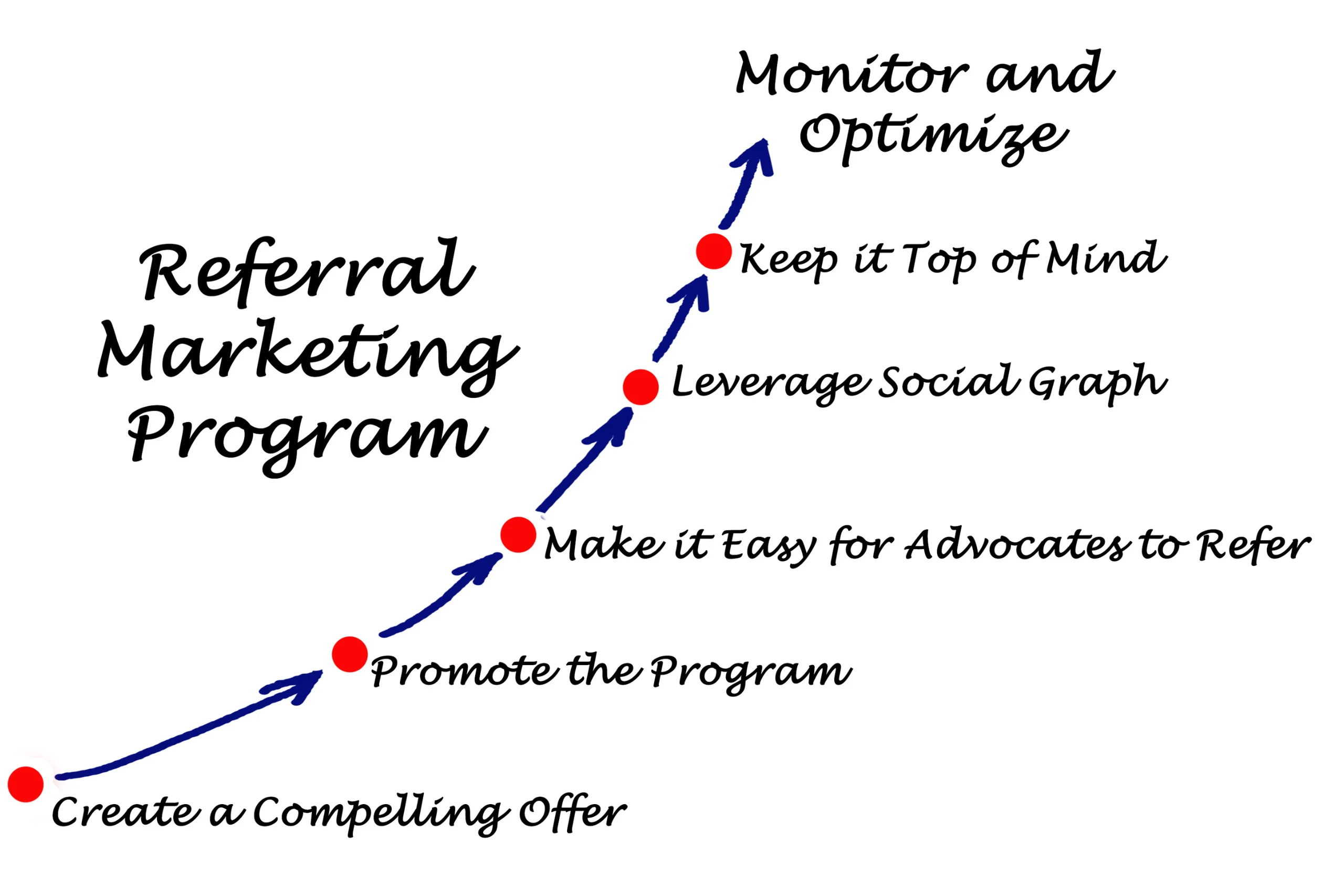
Finally, it’s important to measure the success of referral programs regularly and optimize them based on the findings. A key metric for success is the customer acquisition cost (CAC), which should be balanced against the lifetime value (LTV) of referred customers.
Using referral marketing tips and up-to-date software, businesses can track the performance of their campaigns and make data-driven adjustments. For example, if certain rewards aren’t resonating with customers, businesses can test alternative options. If a specific marketing channel is underperforming, efforts can be reallocated elsewhere.
Successful referral marketing ideas are rooted in continual measurement and optimization. This ensures that businesses not only drive short-term results but also create a long-lasting referral program that consistently delivers value.
Referral Marketing in the Modern Age
As we navigate 2024, businesses must evolve their referral marketing strategies to keep pace with changing consumer expectations. By leveraging AI for hyper-personalization, integrating social proof with influencer collaboration, employing advanced gamification techniques, synchronizing efforts across channels, and ensuring trust and transparency with technology such as blockchain, businesses can create referral marketing programs that not only incentivize and reward referrals effectively but also drive long-term growth and customer loyalty. Whether you’re just starting with a referral marketing campaign or looking to refine your existing approach, these strategies will help you stay ahead in the ever-competitive landscape of online referral marketing.
