

Key Takeaways
- Digital marketing success depends on the right metrics. Key measures like impressions, CTR, CPC, conversion rate, CAC, and ROI show how effective campaigns are.
- Analytics tools transform raw data into insights. Platforms like Google Analytics and Data Studio reveal user behavior and guide smarter decisions.
- SEO, email, and paid ad tools drive visibility. They ensure better search rankings, stronger engagement, and targeted reach for higher impact.
- Measuring ROI validates investments. Comparing revenue against spend ensures marketing campaigns contribute to sustainable growth.
- Choosing tools that align with business goals is essential. The right mix maximizes efficiency, improves targeting, and supports long-term success.
Digital marketing plays a significant role in the growth of a business’s success. Some key metrics help companies to measure success and enhance workflow operations. Let’s know what digital marketing is, key metrics and tools, and how we can measure the success rate by using some top key metrics and tools.
Table of Contents
What is Digital Marketing?
We are all familiar with the fact that today every object is connected to the internet, so we greatly rely on the internet for every purpose, from searching to getting connected with real-time data insights.
In modern days, we should be aware of what digital marketing is, what its services are, and how it uses different channels to drive the success and growth of a company.
Traditionally, we used to promote are product through direct connection with customers, which takes more time and money for promotion to be spent on. But now, as we’re getting digitized day by day, we use digital channels, including television, radio, and digital billboards, as well as many marketing methods that rely on many devices like phones, tablets, and more. So for great outreach, we need to be more focused on promoting are products digitally.
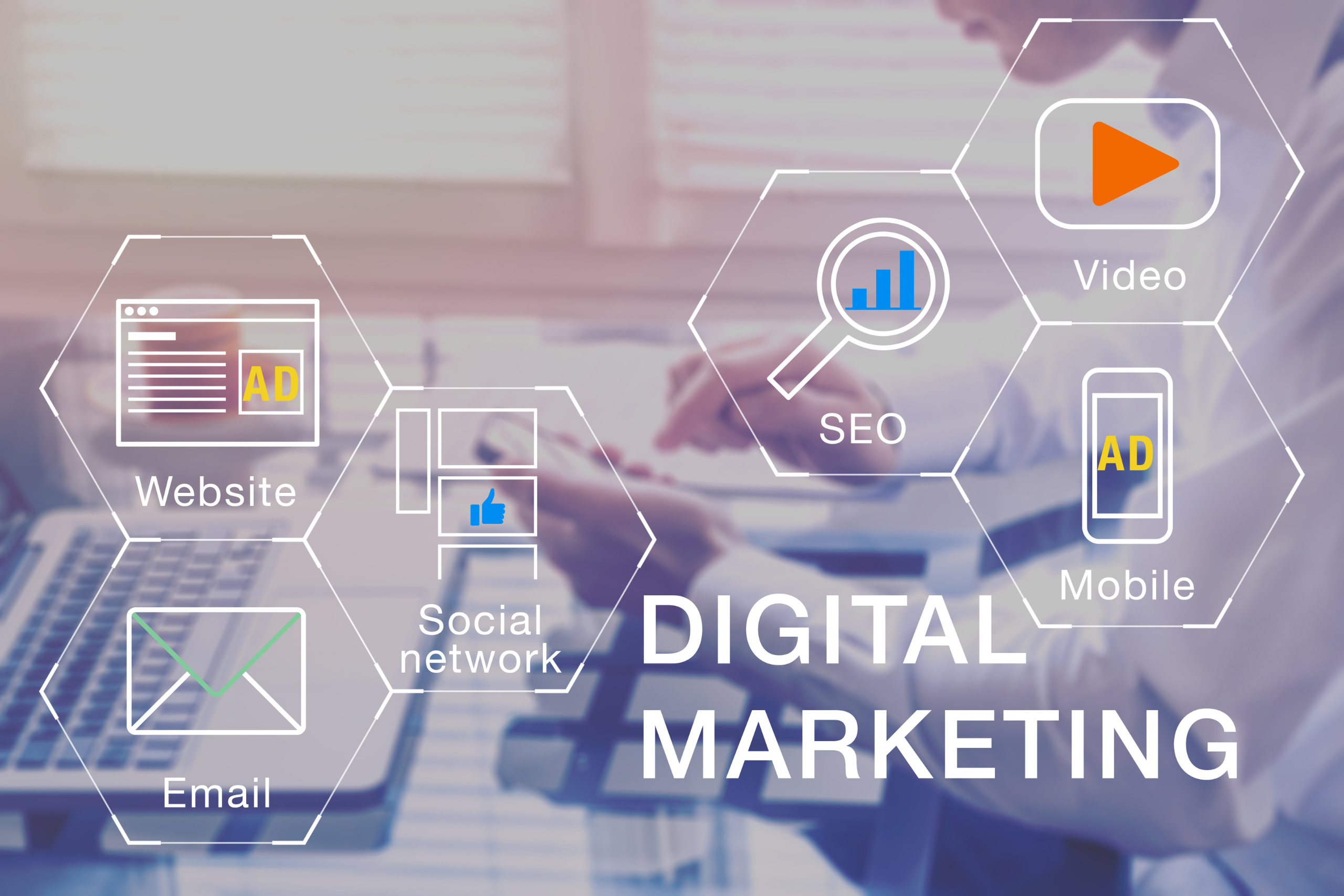
Digital marketing tools are applications, software, and online platforms that help businesses promote products and services online by managing, executing, and analysing digital marketing campaigns. Tools like social media marketing, email marketing, search engine optimization(SEO), content creation, and advertising these digital channels help businesses to promote their products through the vast globally and these processes enhance the streamlined process of business.
Here are some key metrics that help drive ongoing business success.

Top 7 Marketing Metrics to Help You Measure Success
Let’s know the top 7 marketing metrics that enhance your business workflow, drive your business towards success, and help you stand out in a competitive market environment.
1. Impressions
Impression represents the total count of times digital content, such as an ad, a web page, or a social media post, is displayed on a user’s screen. It’s a fundamental digital marketing metric that gauges the reach and potential exposure of advertising and content.
2. Search Engine Rankings
We are all familiar that before buying any service or product, we first search on Google and we get vast options for that particular thing, from that opinion we find one engaging website and we finally make purchases from it.
Still confused about what search rankings are? Let’s take an example, a person is searching for the best car washing shop near his area, so he searches and he gets the top-name shops options according to it, which are mainly mentioned on the first page of Google. If you actually want people to find your site online, like, not just your mom and that one friend who clicks every link you send, then you’ve gotta show up right at the top of Google (or whatever search engine people are using these days). Where you rank totally decides whether anyone even notices your brand or just scrolls on by. Seriously, if you’re buried on page two, you might as well be invisible.
Tools like Google Analytics and specialized search engine optimization provide valuable data, and when measuring search engine rankings, including the number of target keywords, the increase in organic traffic, the number of backlinks, and so on.
3. Click Through Rate (CTR)
Click-through rate is termed as likes, or reactions to the ad, campaign, divided by the target number, multiplying it by 100 to get a percentage. In simple words, when you run an ad or campaign for your company website to reach a vast audience, the impressions you may see on the page in the form of likes or reactions are the people who are really interested in buying or taking the service.
CTR also includes a formula to get a satisfaction percentage:
Number of impressions * 100 = Percentage (%)
4. Cost Per Click (CPC)
Cost Per Click is a KPI that relates to PPC Marketing and Online Advertising. It can be described as the price you pay for each click on your ad. Factors like quality score, ad rank, and bidding strategy will affect the cost-per-click results for your ad.
CPC is crucial because it allows you to track the performance of your campaigns and identify areas for improvement.
CPC calculation includes a formula.
Total Amount Spent / Total Measured Clicks *100
5. Conversion Rate
A conversion rate simply means a desired action taken after visiting your website. Such as making a purchase, signing up, or clicking a link, out of the total number of interactions.
6. Customer Acquisition Cost (CAC)
The Customer Acquisition Cost (CAC) is the overall cost incurred by a business to acquire a new customer. CAC includes all marketing and sales costs associated with this customer (as well as each cost incurred) for a specified time period.
The formula for CAC is to take the total of your sales and marketing costs for a time period and divide by the number of new customers added for that same period. CAC is a useful metric for assessing the efficiency of an acquisition strategy, as well as a way to help forecast an approach to controlled growth in a sustainable way.
Comparing acquisition cost against revenue generated by that customer (Customer Lifetime Value) can also be a way to ensure that acquisition costs are a profitable business decision.
7. Return on Investment (ROI)
Return on Investment (ROI) in digital marketing assesses the profitability of marketing campaigns and spending by comparing the revenue earned to the costs associated with the marketing campaign.
ROI can be calculated using the formula:
ROI = (Net profit from Investment / Cost of Investment) x 100%.
A positive ROI means that marketing activities were profitable, and a business can use ROI to justify money spent, decide where to allocate revenue, and help identify campaigns that are not providing the business with a good ROI.

Essential Tools for Measuring Digital Marketing Success
To increase brand awareness among audiences, we need the best essential tools for measuring digital marketing. Let’s know some of them.
1. Analytics & Reporting
It’s basically you poking around all the data from the internet, who clicked what, how long they stuck around, what made them bounce, to try and figure out what people are actually doing. It’s kinda like being a detective, but for website clicks instead of murder mysteries. Now, reporting? That’s you taking all that nerdy number stuff and turning it into something your boss (or whoever’s paying for the ads) can actually understand. Less “look at this spreadsheet,” more “here’s what’s working, here’s what sucks, let’s fix it.” Makes life way easier when you have to decide what to do next, trust me.
These works may be carried out by means of Google Data Studio and Google Analytics.
2. Email Marketing Tools
Email marketing tools are software platforms that help businesses connect with vast audiences through sending messages, analysing campaigns and more.
3. Search Engine Optimization Tools (SEO)
Search engine optimization tools refer to the various applications or services that help digital marketing specialists enhance the search visibility of a specific website. Such tools help in keyword research, on-page optimization, backlink evaluation, and even offer technical audits.
4. Paid Ads Tools
Paid ads are everywhere. You’ve got Google Ads, Meta (so, like, Facebook and Instagram), Microsoft Ads basically, if there’s a screen, someone’s out there trying to slap an ad on it. Companies throw money at these platforms to push their stuff in your face, whether you’re googling cat videos, scrolling through memes, or just reading the news. We’re talking search engines, social feeds, random banner, you name it. Sometimes they pay when you click (PPC), sometimes just for eyeballs (PPI). Wild world.
And these ad platforms? They’re not just simple “buy an ad, hope for the best” setups. Nah, you get all sorts of knobs and dials to play with, bidding wars, auto-optimization, creepy-level targeting options, the whole nine yards. Plus, you get buried in data and reports, so the marketers can obsessively tweak and spend money smartly. It’s basically modern-day wizardry for selling you stuff you didn’t know you needed.
Conclusion
Digital marketing success is measured through various tools and metrics; it’s not about just running campaigns. There are numerous benefits of digital marketing, such as: any information needed is visible at any time, it is less expensive than compared to traditional methods, can interact with a vast audience as compared to traditional methods, and more. So, don’t just rely on traditional methods, introduce your company with digital marketing tools with modern updates, which will help you in enhancing the business’s streamlined operations with drive a higher success rate.
Frequently Asked Questions (FAQs)
Why are digital marketing metrics important for business growth?
Digital marketing metrics are crucial because they give businesses tangible ways to measure the effectiveness of campaigns. Metrics like impressions, CTR, and conversions reveal whether your audience is engaging with your content, while CAC and ROI show if your spending is justified. Without tracking these, businesses risk wasting money on ineffective campaigns. For example, a high click-through rate without conversions might signal weak landing pages. On the other hand, positive ROI confirms that strategies are delivering profit. By consistently measuring and analyzing these metrics, businesses can adjust campaigns quickly, allocate budgets wisely, and achieve sustainable growth.
What tools help businesses measure digital marketing success?
Several tools provide insights into campaign performance. Analytics tools like Google Analytics and Data Studio track website traffic, engagement, and conversions. Email marketing platforms measure open rates, click-throughs, and subscriber growth. SEO tools like SEMrush or Ahrefs identify keyword opportunities, backlinks, and technical issues affecting rankings. Paid ads platforms such as Google Ads or Meta Ads Manager track CPC, impressions, and conversion data. Together, these tools give businesses a complete picture of their marketing performance. The key is choosing tools that fit your goals, whether that’s local visibility, lead generation, or brand awareness.
How does ROI determine the effectiveness of digital marketing?
Return on Investment (ROI) is one of the most telling metrics for digital marketing. It measures the profitability of campaigns by comparing net revenue earned to the cost of investment. A positive ROI means your marketing spend is generating profit, while a negative ROI signals inefficiencies. ROI is important because it connects digital efforts directly to business outcomes. For instance, if $1,000 spent on ads brings $5,000 in sales, the ROI clearly justifies the spend. Tracking ROI helps businesses prioritize high-performing strategies, cut ineffective ones, and make smarter budget decisions for long-term success.
What role do SEO tools play in digital marketing measurement?
SEO tools help businesses measure and improve their search visibility, which directly impacts organic traffic and conversions. They provide insights into keyword rankings, backlink quality, and technical website health. For example, tracking a rise in search engine rankings for target keywords shows SEO progress, while identifying broken links or slow-loading pages helps prevent performance drops. SEO tools also benchmark competitors, revealing opportunities to outperform them. By consistently using these tools, businesses can maintain a strong online presence, attract relevant traffic, and measure whether optimization efforts translate into higher conversions and better ROI.
How should small businesses choose digital marketing tools?
Small businesses should select tools based on their goals, budget, and team capacity. A local business focused on visibility may prioritize affordable SEO tools and Google My Business analytics. An e-commerce brand might invest in paid ad tools with strong ROI tracking features. Ease of use is also critical—tools should integrate smoothly with existing workflows and not overwhelm small teams. Many platforms offer free or freemium versions, allowing businesses to test features before committing. The best choice is a toolset that balances cost-effectiveness, reliability, and actionable insights, enabling small businesses to compete effectively in digital spaces.
