

This article was originally published on October 6, 2013, and updated on August 26, 2026.
Producing a successful yoga or fitness video takes more than good exercises and a camera. Learn how to choose a marketable concept, plan your shoot, capture professional audio and video, protect your business and turn your workout content into a valuable marketing and revenue-generating asset.
Producing a yoga or fitness video can be an exciting extension of your work as an instructor, personal trainer, studio owner or wellness entrepreneur. A well-produced video allows you to teach beyond the walls of a studio, reach people who may never attend one of your classes and create a lasting demonstration of your teaching philosophy, personality and expertise.
When I first began producing yoga videos, DVDs were the primary way instructors distributed professionally produced workouts. The market has changed dramatically. Today, that finished production might become a YouTube series, paid streaming program, online course, membership library, downloadable workout or collection of short videos for social media.
The technology and distribution channels have changed, but one fundamental principle has not: producing a successful fitness video requires much more than pointing a camera at an instructor and pressing Record. You need to understand the audience, develop a workout that translates well to video, make movements easy to see, record clear audio and determine how the finished content will support your business.
Video can be particularly valuable for instructors trying to distinguish themselves in a crowded market. PowerHomeBiz’s guide to making a fitness business stand out from the competition discusses the importance of differentiation, professionalism and building a community around a fitness business. Your videos can become an important part of that strategy.
Instead of thinking of the project simply as “making a workout video,” approach it as creating a long-term business asset.
Key Takeaways
- Start with the audience and problem you want the video to solve, not with cameras and equipment.
- Develop a distinctive fitness concept instead of producing another generic workout.
- Prioritize clear instruction, good lighting and excellent sound over unnecessary cinematic effects.
- Use multiple camera angles strategically when they help viewers understand proper form.
- Plan modifications and demonstrations for different ability levels before filming begins.
- Build safety considerations and responsible health claims into your script.
- Design longer programs so viewers can navigate individual routines, exercises and chapters easily.
- Plan distribution, pricing and marketing before spending heavily on production.
- Secure appropriate rights for music, images and other copyrighted material.
- Treat every fitness video as part of your overall professional brand rather than as a standalone product.
Table of Contents
1. Make Sure Your Yoga or Fitness Video Has a Unique, Marketable Approach
For instructors who do not already have enormous name recognition, simply producing “another yoga workout” or “another 30-minute fitness video” is unlikely to be enough. The Internet has given consumers access to an enormous amount of free and paid exercise content, which means your program needs a clear reason to exist.
The best place to start is at the intersection between what you teach particularly well and what a specific audience actually needs. You might develop yoga for runners, strength training for adults over 50, mobility exercises for desk workers, workouts for new mothers, flexibility programs for figure skaters, low-impact routines for beginners or short workouts for busy professionals.
That does not mean your niche should become so narrow that there is barely an audience for it. The challenge is finding a market that is specialized enough to differentiate your program but large enough to support your business. PowerHomeBiz’s discussion of how to focus on a profitable business niche makes the same point: a business cannot effectively be everything to everybody.
It is also useful to think carefully about who you expect to buy or watch the program. PowerHomeBiz’s guide to finding the right target market explains why entrepreneurs sometimes discover that their most profitable audience is different from the market they originally expected.
Before settling on your concept, search YouTube, streaming fitness services, social media and competitor websites. Look at what already exists and, just as importantly, read what viewers say about those programs. Complaints can reveal opportunities. Maybe existing videos move too quickly, require too much equipment, fail to demonstrate modifications or assume that every participant already understands basic terminology.
You do not necessarily need to invent an entirely new exercise system. You need to give viewers a compelling reason to choose your teaching over the many alternatives available.
PowerHomeBiz Tip: Don’t ask only, “What workout do I want to teach?” Ask, “Who exactly am I helping, what problem am I solving for them, and why would they choose my program?”
2. Know Your Market Before You Spend Heavily on Production
One of the easiest ways to lose money on a fitness video is to invest heavily in production before determining whether a meaningful audience wants what you plan to create.
Market research does not need to involve hiring an expensive research firm. Start with the people you already know. Talk with your students. Survey your email subscribers. Ask social media followers what kinds of workouts they struggle to find. Study the questions students repeatedly ask during your classes.
PowerHomeBiz offers practical ideas for conducting affordable market research for a small business, including using both primary research from prospective customers and secondary information that already exists.
The U.S. Small Business Administration’s market research and competitive analysis guidance also recommends examining factors such as demand, market size, location, market saturation and what customers currently pay for alternatives. Those questions apply just as well to a fitness video as they do to another small business product.
You should also determine exactly what you want the video to accomplish for your business. Direct sales are only one possible goal.
| Business Goal | How Fitness Video Can Support It |
|---|---|
| Sell workout programs | Charge for downloads, courses or complete programs |
| Build an audience | Publish useful free workouts on YouTube |
| Generate recurring revenue | Offer a subscription or membership video library |
| Find coaching clients | Demonstrate your teaching style to prospective clients |
| Promote a studio | Introduce prospective students to instructors and classes |
| Build authority | Demonstrate expertise in a specific fitness niche |
| Build an email list | Offer a free workout as a lead magnet |
| Sell related products | Connect viewers with appropriate programs or products |
| Attract partnerships | Create a portfolio demonstrating your abilities |
This distinction matters when developing a budget. A fitness video that generates only modest direct sales could still be highly successful if it consistently generates private coaching clients, studio memberships or other higher-value business.
Video can also serve as the foundation for a broader content business. StartingNewBiz’s guide to starting a YouTube channel as a business explains how creators can combine video with services, memberships, courses, affiliate marketing, sponsorships and other revenue streams rather than relying solely on advertising income.

3. Choose a Location That Works Visually and Practically
A beautiful setting can elevate the production value of a fitness video, but appearance is only one factor when selecting a location.
The environment needs to support the actual workout. Yoga and mobility programs generally benefit from calm, uncluttered spaces where body positioning is easy to see. Strength-training videos may need room for equipment. Cardio workouts may require enough space for larger and faster movements. Programs involving several demonstrators require even more room for people, lights, cameras and crew.
Think carefully about sound. A visually spectacular location next to a busy road can create serious audio problems. Air conditioners, refrigerators, traffic, lawn equipment, aircraft, nearby conversations and echo can all become more noticeable once a microphone starts recording.
Outdoor locations introduce additional variables. Wind can ruin audio. Clouds can change lighting in the middle of a sequence. Temperatures can make long shoots uncomfortable. Pedestrians and animals can interrupt a take, and uneven ground may not be appropriate for certain exercises.
Scout the location before production day and, if possible, visit at roughly the same time you intend to film. Take some test footage. Listen to the sound through headphones. Determine where cameras, lights, microphones and crew will go.
Pay particular attention to the background. Mirrors, reflective windows, distracting signs, clutter and crew members can accidentally appear in the shot.
A simple studio that you can completely control may ultimately produce a more professional video than an exotic setting that creates constant technical problems.
4. Move the Camera — But Only When Movement Helps
Camera movement can add production value and prevent a long workout from becoming visually monotonous. A slider, gimbal or jib can create polished movement around an instructor and provide different perspectives on a pose or exercise.
However, fitness instruction is not a music video. The viewer needs to understand exactly what the instructor is doing.
Constantly moving the camera simply because you can may actually interfere with instruction. If viewers are trying to study foot position during a squat or the alignment of a yoga posture, a stable full-body view may be considerably more useful than a dramatic camera move.
Think of each shot as having a job.
| Shot | Primary Purpose |
| Wide/full-body | Shows complete movement and overall form |
| Medium shot | Shows the instructor while retaining body context |
| Close-up | Highlights hands, feet, grip or another important detail |
| Side angle | Demonstrates posture or alignment |
| Rear angle | Shows positions difficult to understand from the front |
| Moving shot | Adds visual interest during suitable portions of the workout |
When movement adds clarity or energy, use it. When it distracts from instruction, keep the camera still.
Your production does not have to look like a television commercial to be professional. Clear communication is more valuable than unnecessary cinematography.
5. Use Multiple Cameras Strategically
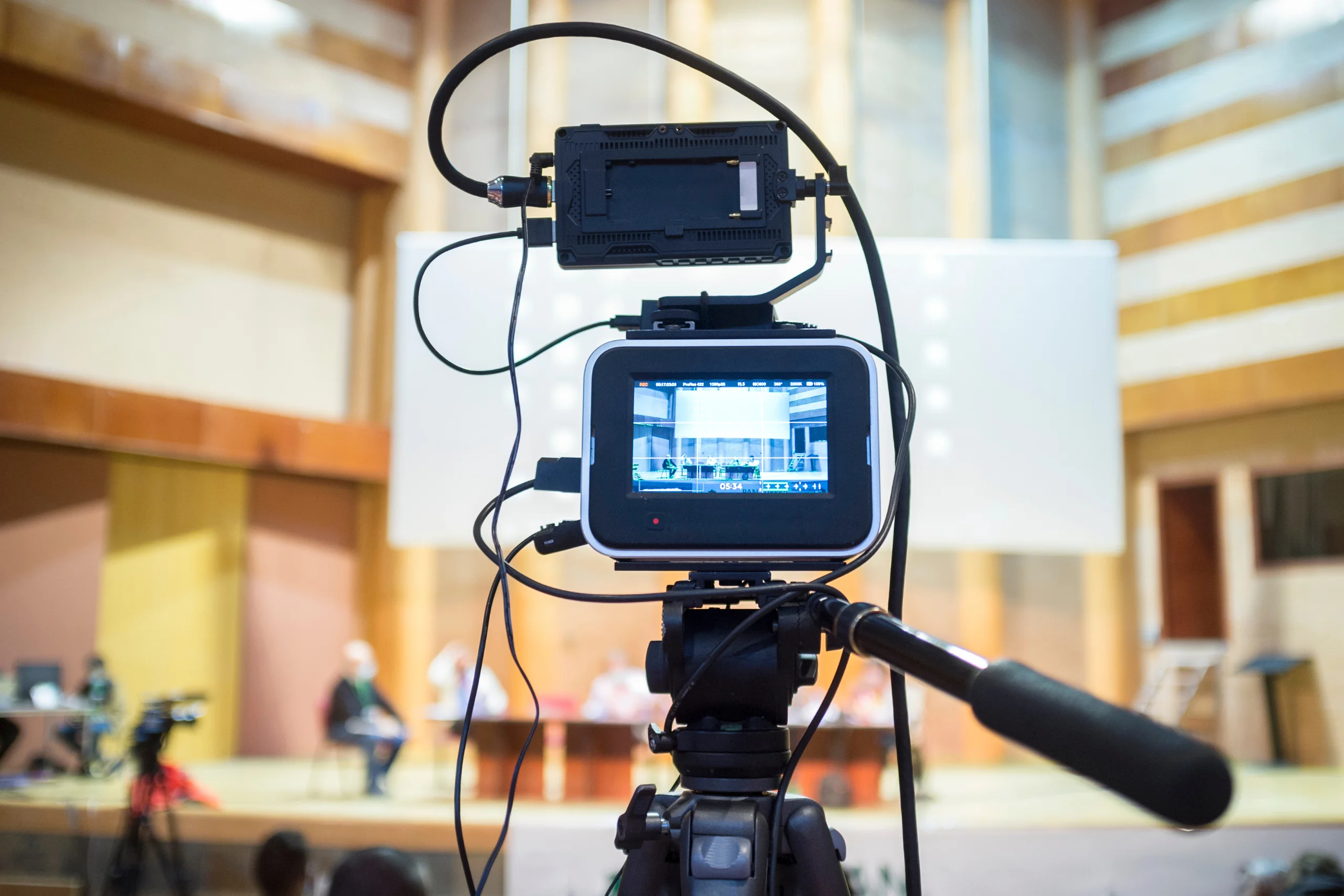
The original advice for fitness productions was often that you needed at least two cameras, sometimes three, synchronized with time code. Multiple cameras remain extremely useful, but advances in cameras and editing software mean that professional results can now be achieved with a much wider range of setups.
A common arrangement is to have one camera capture the entire workout while another records closer shots or a different angle. If several demonstrators are performing different modifications, a third camera may be worthwhile.
For example:
| Type of Fitness Content | Useful Camera Setup |
| Yoga or mobility | Full-body master plus alignment/details |
| Strength training | Wide shot plus form/equipment close-up |
| HIIT or cardio | Wide master with occasional medium shots |
| Multiple demonstrators | Wide master plus individual/detail camera |
| Exercise tutorial | Full demonstration plus close-up angle |
| Instructor introduction | Medium or close direct-to-camera shot |
However, multiple cameras also add complexity. You have more footage to organize, more equipment to monitor and potentially more differences in exposure and color to correct during editing.
For a smaller production, a single camera can work well if you are able to repeat an exercise and capture it from several positions.
Whatever setup you use, record test footage before the actual workout. View it on something larger than the camera’s small display. This is where you may discover focus problems, awkward framing, distracting backgrounds or parts of the body disappearing outside the frame.
Good planning saves considerably more time than trying to repair poorly captured footage during editing.
6. Decide How Many People Should Be in the Workout
The number of demonstrators should be an instructional decision, not merely an aesthetic one.
Multiple participants can make a workout feel energetic and welcoming, but their most important purpose may be demonstrating different versions of an exercise.
One person might demonstrate the standard movement while another performs a beginner or lower-impact variation. An experienced participant might demonstrate a more challenging option. This allows viewers with different ability levels to participate without stopping the video to work out what they should do.
Think about the audience you identified during your market research. If you are creating a program for older adults, complete beginners or people returning to exercise after a long period of inactivity, the demonstrations should make the program feel realistic and approachable for that audience.
The instructor should also explain modifications. Do not simply put another person in the corner of the frame performing an easier variation without explaining who might choose that variation and why.
Exercise intensity can vary significantly between individuals. The CDC’s guidance on measuring physical activity intensity explains that what feels vigorous to one person may be only moderate for someone with a higher level of fitness.
For broader context, the Physical Activity Guidelines for Americans provide the federal government’s evidence-based guidance on physical activity.
The goal should never be to pressure every viewer into performing the most difficult variation. A good fitness instructor helps viewers understand the options available to them.
7. Decide Between Voiceover and Direct-to-Camera Instruction
Before developing your script, decide how much of the workout the instructor will deliver live and how much will be recorded afterward as voiceover.
Direct-to-camera instruction creates immediacy. The viewer can feel as though the instructor is teaching a real class. For instructors with a strong personality and natural teaching style, this approach can make the workout feel engaging and personal.
The challenge is that talking while performing a physically demanding routine can be difficult. The instructor has to remember the exercises, repetitions, breathing cues, modifications, safety information and scripted message while also maintaining proper form.
If you record the instructor live, use a microphone suited to movement. Depending on the production, that might be a wireless lavalier or headset system. Do not expect a camera microphone across the studio to consistently produce clean instructional audio.
Poor audio can destroy otherwise excellent footage. Viewers may tolerate a straightforward camera setup, but they will quickly become frustrated if they cannot understand the instructor.
Voiceover gives you far greater control. The instructor can concentrate on demonstrating perfect form during filming and record carefully written instructions later. During editing, narration can be adjusted to match the action and clarify movements.
A hybrid approach can offer the best of both worlds. The instructor might address viewers directly during the introduction and transitions but use voiceover for technically demanding portions of the workout.
Whichever method you choose, develop an outline or script before filming. The instructor does not need to sound like someone reading from a teleprompter, but relying entirely on improvisation can result in missed instructions, inconsistent repetition counts and lengthy explanations that become frustrating when viewers repeat the workout.
8. Create More Than One Workout From Your Production
The original DVD model encouraged producers to include several routines on a disc. The distribution format has changed, but the strategy is even more valuable today.
Consumers do not have the same amount of time available every day. Someone may want a 50-minute yoga practice on a weekend but only have 15 minutes available before work.
Instead of filming only one long routine, think about how the production can generate several useful pieces of content.
A single filming project could potentially produce:
- A complete 45- to 60-minute workout
- A 30-minute condensed version
- A 10- or 15-minute express workout
- A beginner variation
- An advanced variation
- A warm-up
- A cooldown or stretching sequence
- Individual exercise tutorials
- Frequently asked question videos
- Promotional trailers
- YouTube videos
- Instagram Reels
- TikTok videos
- YouTube Shorts
- Clips for email campaigns or your website
This approach improves the economics of your production because you are no longer spending an entire filming day to create only one finished piece of content.
A useful video library can also support customer acquisition. PowerHomeBiz’s guide to attracting customers and increasing sales emphasizes that useful content can help a small business increase visibility, demonstrate expertise and build trust before asking someone to buy.
Repurposing should be planned, however. Do not simply chop a long workout into arbitrary pieces. Each short video should have a clear purpose and ideally make sense without requiring the viewer to watch several other clips first.ave a clear beginning, progression and conclusion so that it feels intentional rather than incomplete./image

9. Chapter Your Video and Make It Easy to Use
DVD chapters once allowed viewers to skip directly to warm-ups, workouts and cooldowns. Modern video platforms provide even more sophisticated navigation.
For longer YouTube programs, YouTube video chapters allow creators to divide a video into labeled sections so viewers can navigate directly to specific portions of the program.
A long workout might include:
| Time | Chapter |
| 0:00 | Introduction |
| 2:00 | Warm-Up |
| 8:00 | Lower-Body Exercises |
| 20:00 | Upper-Body Exercises |
| 32:00 | Core |
| 40:00 | Cooldown |
| 47:00 | Stretching |
Also distinguish between information a viewer needs every time and information they probably need only once.
An explanation of equipment, workout philosophy or instructor credentials can be important for a first-time user, but a regular viewer may not want to sit through the same five-minute introduction every morning.
Accessibility should be part of this planning as well. YouTube allows creators to add subtitles and captions, which can help viewers who are deaf or hard of hearing as well as people exercising with muted or low audio.
The World Wide Web Consortium’s WCAG guidance on prerecorded captions explains that captions should communicate spoken dialogue as well as meaningful audio information necessary to understand the video.
Captioning is therefore more than a nice extra. It makes your instructional content accessible to a broader audience.
When exporting video for YouTube, it is also worth checking the platform’s current recommended upload encoding settings rather than relying on settings you may have used several years ago.
10. Create a Professional Presentation — and Market It
The old saying that you cannot judge a book by its cover may be true, but people certainly make decisions based on presentation.
In the DVD era, this meant the disc cover and menu. Today, your “cover” might be a YouTube thumbnail, streaming-platform graphic, online-course landing page, Instagram preview or image on your website.
The same basic principle applies: presentation shapes expectations.
If you are the instructor and central personality of the business, professional photographs of you may be appropriate. Use consistent fonts, photography, logos and other design elements so that a viewer can move from your social media account to your website and paid program without feeling as though they have encountered three completely different businesses.
PowerHomeBiz’s brand-building tips for business owners explains how consistency in voice, visuals and customer touchpoints helps create a recognizable and trustworthy brand.
Your title also matters.
Compare:
Yoga Workout #3
with:
20-Minute Morning Yoga for Stiff Beginners
The second title immediately communicates the duration, timing, activity and intended audience.
Once the video is ready, choose distribution channels according to your business objective rather than automatically uploading everything everywhere.
| Distribution Channel | Particularly Useful For |
| YouTube | Discovery, audience building and free educational content |
| Your own website | Brand control and direct customer relationships |
| Membership platform | Recurring subscription revenue |
| Online course | Structured programs and progressive learning |
| Paid download | Permanent customer access |
| Social media | Discovery and promotional clips |
| Retaining students and promoting new programs | |
| DVD | Niche audiences that still prefer physical media |
You do not have to rely on a single channel. A yoga instructor could publish introductory lessons on YouTube, encourage viewers to join an email list, sell a complete progressive course through the website and offer private coaching for customers who want individualized assistance.
That turns video into an entire customer-acquisition system instead of hoping to make all of your money from individual video sales.
PowerHomeBiz’s discussion of presenting a professional image when running a home-based business is especially relevant here. Your video may be the first interaction a prospective customer has with you, so everything from sound quality to thumbnail design contributes to that first impression.

Don’t Forget Safety and Responsible Health Claims
This subject deserves special attention because fitness content is different from ordinary entertainment videos. You are encouraging viewers to perform physical activities, often without an instructor physically present to assess their individual capabilities.
The CDC’s guidance for adults adding physical activity notes that moderate activity is safe for most people but recommends that people with certain chronic conditions discuss appropriate activity with their healthcare professional. It also identifies circumstances in which people should seek guidance before beginning vigorous activity.
Your video should therefore provide sensible modifications and avoid creating the impression that every movement is appropriate for every viewer.
Be equally careful with promotional claims.
Promises such as “guaranteed weight loss,” “eliminate chronic back pain,” “reverse arthritis” or other strong health claims can create significant credibility and regulatory problems if they are not properly substantiated.
The Federal Trade Commission’s Health Products Compliance Guidance explains that health-related advertising claims should be truthful, not misleading and supported by appropriate evidence.
Fitness professionals should therefore distinguish between teaching an exercise and claiming that the exercise will produce a specific medical outcome.
Be Careful With Music and Copyright
Music can dramatically affect the energy and atmosphere of a workout, but it can also create legal and distribution problems if you do not have appropriate permission to use it.
Buying a song, subscribing to a consumer music service or having access to a recording does not automatically mean you have all of the rights necessary to place that music in a commercially distributed video.
Music copyrights can involve both the underlying musical work and the sound recording. The U.S. Copyright Office provides resources explaining music copyright and licensing for creators who need to understand how rights in music are managed.
Platforms may also have their own copyright policies and systems for identifying protected music.
If your fitness videos are part of a commercial business, use music you are properly authorized to use for your particular distribution method and keep records of your licenses.
Do not treat music rights as something to figure out after the video has already been edited. Make it part of your pre-production checklist.
Fitness Video Production Planning Table
Before the cameras roll, make sure you can answer the following questions.
| Production Area | Questions to Answer Before Filming |
|---|---|
| Audience | Exactly who is this workout designed for? |
| Problem | What need or frustration does it address? |
| Differentiation | Why should someone choose this program? |
| Fitness level | Beginner, intermediate, advanced or multiple levels? |
| Duration | How long should the main workout and shorter options be? |
| Instructor | Who will teach and how will they communicate? |
| Demonstrators | Are modifications or multiple ability levels needed? |
| Location | Can lighting, sound and interruptions be controlled? |
| Cameras | Which movements require additional angles? |
| Audio | Live instruction, voiceover or hybrid? |
| Lighting | Can viewers clearly see body position and movement? |
| Safety | What modifications, warnings or prerequisites are needed? |
| Music | Do you have the necessary usage rights? |
| Accessibility | Will captions and clear navigation be available? |
| Editing | What finished videos and short clips should be created? |
| Distribution | YouTube, membership, course, website, download or DVD? |
| Monetization | Sales, subscription, coaching leads, advertising or branding? |
| Marketing | How will your target audience discover the program? |
| Analytics | How will you determine whether the video succeeded? |
Before You Film: Fitness Video Checklist
- Define the target viewer.
- Research competing programs.
- Validate demand with students or prospective customers.
- Determine the primary business goal.
- Outline every workout and exercise sequence.
- Identify beginner and advanced modifications.
- Prepare scripts and instructor cues.
- Review safety considerations.
- Scout and test the filming location.
- Test cameras, lighting and microphones.
- Determine required camera angles.
- Obtain participant releases where appropriate.
- Confirm music and other content rights.
- Plan captions and accessibility.
- Create an editing and chapter plan.
- Determine how long-form footage will be repurposed.
- Prepare thumbnails, photographs and promotional graphics.
- Decide where the finished program will be distributed.
- Create a marketing plan before launch.
- Establish metrics for measuring results.
Frequently Asked Questions
How much does it cost to produce a professional fitness video?
There is no longer a useful single figure. Production can range from a relatively inexpensive creator setup using equipment you already own to a large professional production involving a studio, director, multiple cameras, lighting crew, sound engineer, editor, graphics, music licensing and several demonstrators.
Instead of assuming that a high production budget automatically creates a successful product, build the budget around the business opportunity. Validate demand first and spend most heavily on factors viewers will actually notice, particularly clear instruction, audio, lighting and editing.
Do I need multiple cameras to create a professional yoga video?
No. Multiple cameras can be extremely useful for showing alignment, modifications and detailed movement, but they are not mandatory. A carefully planned single-camera shoot can produce excellent results, particularly if exercises can be repeated from several angles.
If the workout needs to be recorded continuously without interruption, multiple synchronized cameras become much more valuable because the editor can change angles without interrupting the exercise.
Should fitness videos use music?
Music can help establish pace, energy and atmosphere, but it should support rather than overpower the instructor. In yoga, mobility and instructional programs, viewers need to hear breathing cues and detailed explanations clearly.
Most importantly, make sure you have appropriate rights to use the music in your specific type of video and distribution channel. Do not assume that owning a recording or paying for a consumer streaming subscription gives you commercial synchronization rights.
Is YouTube better than selling fitness videos?
They serve different purposes. YouTube is especially powerful for discovery and audience development, while paid programs, courses, downloads and memberships can generate revenue more directly.
Many fitness entrepreneurs use both. Free videos attract an audience and demonstrate expertise, while premium programs offer greater depth, progression, personalization or convenience.
How long should a fitness video be?
The correct length depends on the audience and purpose rather than an arbitrary industry standard. A complete yoga practice might last 45 minutes while a mobility routine for office workers might be far more useful at 10 or 15 minutes. Consider producing several lengths from the same filming session. Giving customers a short, medium and complete option makes the program easier to integrate into everyday life.
Can a fitness video help grow a personal training or yoga business?
Absolutely. A well-made video can function as a portfolio of your teaching, build familiarity with prospective clients and keep you visible between classes. It can also expand your audience geographically because prospective customers no longer need to live near your studio to experience your teaching. Video becomes particularly powerful when it is part of a larger marketing system that includes your website, email list, social media presence and paid services.
Final Thoughts
A successful yoga or fitness video does not require Hollywood production values. It requires a clear understanding of who you are teaching, what that viewer needs and how to communicate your expertise effectively through the screen.
Invest where quality matters. Capture clean audio. Make movement easy to see. Explain modifications. Think carefully about safety. Create navigation that respects the viewer’s time. Protect your legal rights and those of other creators. Most importantly, determine how the finished video fits into your broader business strategy before committing heavily to production.
Video gives fitness professionals something traditional word-of-mouth marketing alone cannot provide: the ability to demonstrate their teaching to people anywhere and at any time. When the production is useful, distinctive and professionally presented, a single filming project can become much more than one workout. It can create a library of marketing assets, build authority in your niche, generate leads and become an important part of a long-term fitness business.