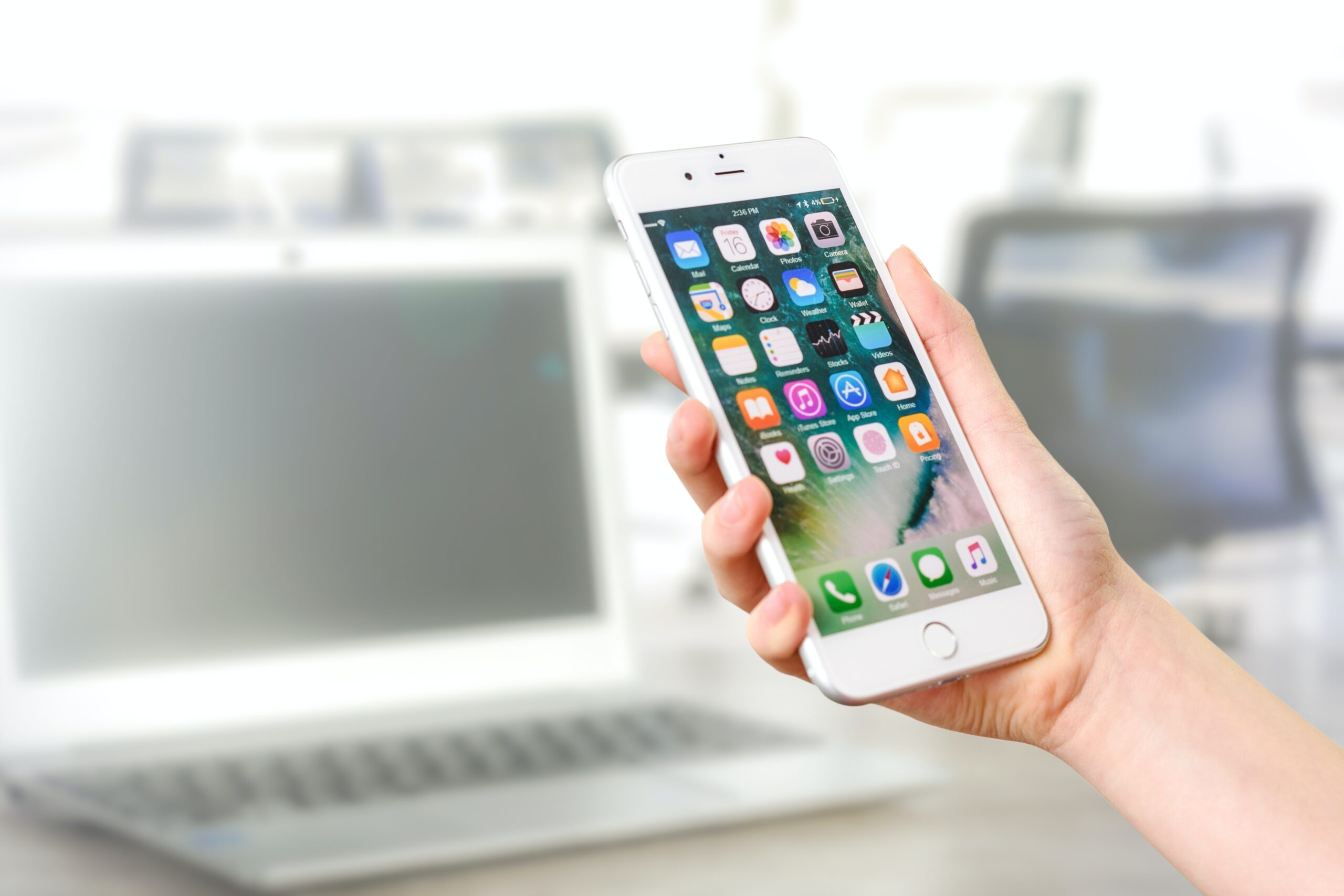
Your smartphone works on a wireless network because of a SIM card. With information about your service provider, the card lets you transfer data and make calls. With advances in mobile technology, your phone can now function without a physical card.
The thumbnail-sized chip has gone digital with a reprogrammable embedded chip called “eSIM.”
Table of Contents
What’s an eSIM?
An eSIM is an embedded subscriber identity module (SIM), which allows you to activate a mobile data plan without buying a physical card.
The downloadable SIM is not tied to any specific carrier, so you can switch services or retain two if you need a second one when travelling. You don’t need to buy a new SIM when you get into another country. eSIMs allow you to add an international plan to your mobile device, and it activates the moment you land. It saves you from the inconvenience of queueing at the airport for a new SIM card.
The digital SIM also allows you to download another SIM, giving you another number (or multiple numbers) to use.
But instead of searching for an eSIM provider to use this mobile technology, you need to find smartphones that support eSIMs. Not all mobile network operators offer eSIM services and not all smartphones are configured for it just yet.

How Did eSIM Evolve?
Developed in 2012 by the GSMA, eSIM’s commercial deployment occured across industries: automotive, home automation and consumer electronics. eSIMS are also found in wearable devices (e.g., smartwatches), tablets and other consumer Internet of Things (IoT) devices.
Initially, carrier adoption was slow. In recent years, however, the number of mobile operators offering eSIM services has risen to about 200. By 2025, 3.4 billion eSIMs will be installed in connected devices, which is a big jump from 2021’s 1.2 billion.
The industrial sector is also investing in the use of eSIMs, especially in manufacturing, oil and gas sectors, and logistics. The number of units for eSIM installation in the industrial sector will surge to 116 million units in 2025 from 28 million in 2021.
eSIM adoption and growth may have started on a sluggish pace, but this technology is clearly winning over industries and the consumer sectors. eSIMs can unlock multiple capabilities, other than eliminating the need for physical SIMs, so it makes sense to invest in this technology.
What Makes an eSIM a Good Investment for Businesses?
Although eSIMs are more convenient than traditional SIMs, businesses are investing in the former for reasons beyond their obvious benefit.
To begin with, eSIMs reduce manufacturing errors for IoT devices. Without the need to insert a SIM card during production or end-user activation, the manufacturer avoids a step that could be a source of failure and significant cost.
The technology also provides a subscriber management solution since eSIMs have embedded universal integrated circuit card (eUICC) capabilities. You can download multiple profiles and switch without changing eSIM chips. If the provider offers a multi-international mobile subscriber identity solution, you could switch cellular subscription within the provider.
What this means for businesses is the better and more efficient management of hundreds or thousands of lines. Device managers can easily change service or subscription plans remotely. They can also test the services of one carrier before committing to it.
Other than future-proofing connectivity and streamlining processes, here are other advantages of choosing eSIMs:
- Users gain from global connectivity. eSIMs can connect to multiple carriers, making it easier to use in different locations.
- Companies can minimise total cost of ownership, enabling maximum returns on investing in this particular mobile technology.
- Freedom from lock-in periods and limited carrier options. Choosing a mobile network operator at deployment no longer has to be a lengthy commitment.

Which Phones Support eSIM?
Two mobile phone models that have been early adopters of the eSIM configuration are Apple iPhone and Google Pixel. Pixel phones have had eSIMs since 2017 whereas iPhones have had them since 2018. Samsung Galaxy has had the embedded SIM since 2020.
Other than the Galaxy line from Samsung, Samsung Note 20 Ultra (versions from the US and Hong Kong) and Samsung S20/S21 (US versions) are also eSIM-enabled.
The following phones also support eSIM:
Motorola
- Motorola Razr 5G
- Motorola Razr 40
- Motorola Razr 40 Ultra
- Motorola Razr+
- Motorola Moto G Power 5G (2024)
Sony
- Sony Xperia 10 III Lite
- Sony Xperia 10 IV
- Xperia 10V
- Xperia 1 IV
- Sony Xperia 5 IV
Oppo
- Oppo Find X3
- Oppo Find X3 Pro
- Find N2 Flip
- Oppo Reno 5A
- Oppo Reno 6 Pro 5G
Nokia
- Nokia XR21
- Nokia X30
- Nokia G60 5G
Others
- myPhone NOW eSIM
- Vivo X90 Pro
- Vivo V29 Lite 5G (eSIM Supported only in Europe)
- Vivo X100 Pro
- OUKITEL WP30 Pro
- OUKITEL WP33 Pro
- Nuu X5
- ZTE Nubia Flip
- TLC 50 5G
- Gemini PDA

The Future of Mobile Communications
Flexibility, convenience and ease are all achievable with the embedded subscriber identity module. Whether you have a startup in a small community or are running an international company, eSIMs allow you to seamlessly manage multiple plans and subscribers.
As adoption grows with more eSIM-enabled phones and carriers offering services, this is the future of mobile communications. An investment today would mean an investment in your company’s future as well.