
Your customers are relying on your water treatment system to keep hard water minerals out of their pies, tarts, cookies, cupcakes, and bread. If you installed water filtration systems in your bakery, you know the downsides of hard water. According to evidence, hard water minerals and other contaminants – iron, manganese, calcium, lead, and arsenic – negatively impact baking. These contaminants affect two important components of baking, including yeast and gluten. The negative impact will leave your dough tough and rubbery. In addition to the negative impact on flour dough, hard water minerals also cause a significant decrease in the yeast fermentation rate.
Just because you have taken the initiative to install a water filtration system in your bakery is only half of the responsibility. With the unit fully installed, it is time to start maintaining it to ensure it is functioning at full capacity.
Learn How Your Water Filtration System
Filtration systems work by removing hard water minerals from your bakery’s tap water. In addition to filtering out hard water minerals, the system also purifies water. Several parameters determine the length of the life cycle of commercial water softeners. These parameters include water amount, time, and contaminant level. Of course, these are just the beginning, as there are many other factors that can reduce the life of your water filtration system. One such factor includes maintenance. If you properly maintain your water filtration system, it will function at the maximum capacity and last longer than if there is no routine maintenance.

Reverse Osmosis Water Purification System
Reverse osmosis is a water purification process found in many residential water filtration systems. When reverse osmosis is performed at the maximum level, the water filtration system will deliver the highest quality drinking water.
Regular Filter Replacement
To ensure your water filtration system is working at full capacity, the onboard filters must be fully functional. As tap water runs through the filtration system, the filters remove hard water minerals and other sediments. Over time, the filters become clogged with contaminants. When this happens, the carbon filters can no longer capture and trap hard water minerals, allowing them to leak through into your tap water. This is why it is crucial to heed the advice of the manufacturer or brand.
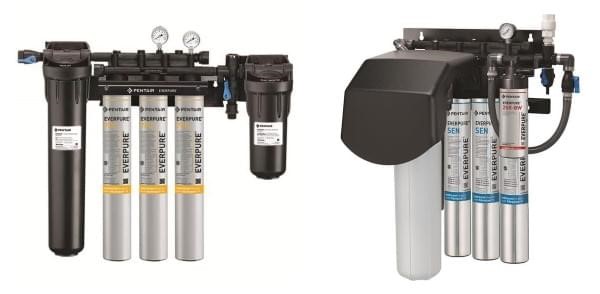
State-of-the-art water filtration systems utilize up to three filters and a single membrane. Manufacturers believe more filters are guaranteed to remove more contaminants than fewer filters. The additional RO membrane removes any remaining hard water chemicals and sediment particles from tap water.
The manufacturer will provide you with a carbon filter replacement schedule, which you must follow to a tee. You may be asked to invest in a water test kit to ensure the water filtration system is functioning as it should.
Summary
Two signs that point to a clogged carbon filter are low or no water pressure. Once the carbon filters become fully clogged with sediment, they will hinder water flow. Carbon filters work through absorption, limiting the volume of hard water minerals trapped inside the filter.