

Key Takeaways
- Stick to a Routine – Scheduled meals and snack times help prevent mindless eating and maintain focus.
- Choose Healthier Options – Stock nutritious snacks and stay hydrated to curb unnecessary cravings.
- Create Boundaries – A dedicated workspace and set work hours can reduce boredom and emotional eating.
- Be Mindful, Not Perfect – Practice mindful eating and self-compassion to build sustainable, healthy habits.
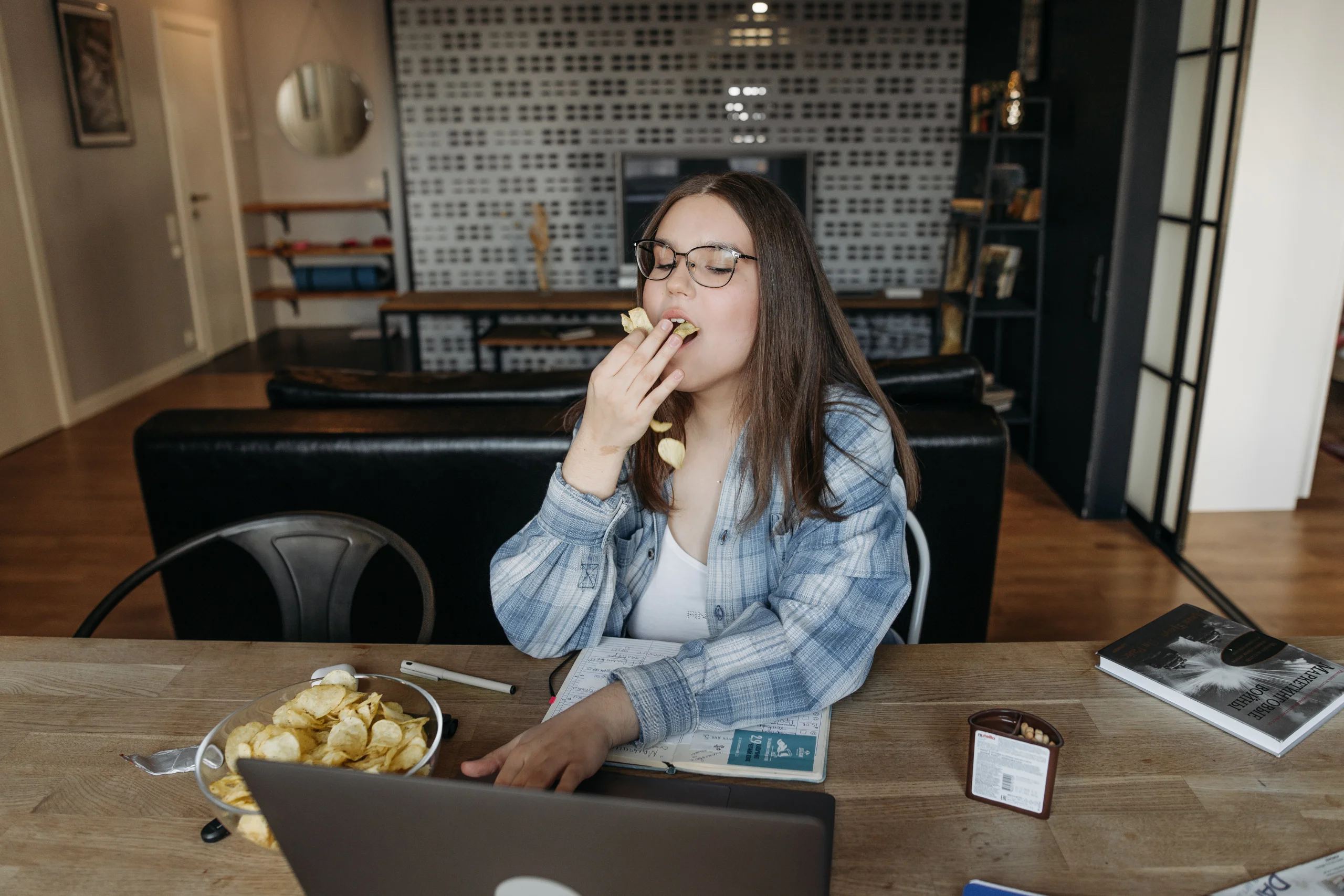
Working from home has blurred the lines between personal and professional life, often leading to an increase in mindless snacking and drinking. A study by the Office for National Statistics revealed that 29% of adults reported consuming more snacks and drinks whilst working from home, with many attributing this change to boredom and stress. The convenience of having food and drink readily available at home can make it all too easy to indulge without considering the consequences.
Moreover, the psychological aspects of remote work can exacerbate these habits. Stress and anxiety related to job performance, isolation, and the challenges of managing work-life balance can lead individuals to seek comfort in food and drink. This coping mechanism, while temporarily soothing, can result in long-term health issues if not managed effectively.
Table of Contents

Top Tips to Avoid Excessive Snacking and Drinking
Establish a Routine
Creating a structured daily routine can help delineate work hours from personal time. Set specific times for meals and snacks, and stick to them. This approach not only helps regulate hunger cues but also creates a sense of normalcy that can improve overall productivity.
Mindful Eating
Practising mindful eating involves paying attention to what you eat and how much you consume. Take the time to savour each bite, and avoid eating in front of screens. This can help you recognise when you are truly hungry versus eating out of boredom or habit. Keeping a food diary can also help you track your eating patterns and identify triggers for excessive snacking.
Healthy Snack Alternatives
Stock your pantry and fridge with healthier snack options. Fresh fruits, vegetables, nuts, and whole-grain snacks can satisfy cravings without the added sugars and unhealthy fats found in many processed foods. Portioning out snacks into small containers can also prevent mindless eating straight from the package.

Stay Hydrated
Sometimes, feelings of hunger can actually be a sign of dehydration. Keep a water bottle at your desk and aim to drink water throughout the day. Herbal teas or infused water can also be refreshing alternatives to sugary drinks or alcohol. Setting reminders to drink water can help establish this healthy habit.
Limit Alcohol Consumption
If you find yourself reaching for a drink more frequently while working from home, consider setting limits. Designate specific days for alcohol consumption, and opt for lower-alcohol alternatives or non-alcoholic beverages. Being mindful of your drinking habits can help prevent reliance on alcohol as a coping mechanism, particularly for those experiencing alcohol withdrawal symptoms.
Incorporate Physical Activity
Regular exercise can help mitigate the urge to snack and drink excessively. Incorporate short breaks throughout the day to stretch, take a walk, or engage in a quick workout. Physical activity not only boosts mood and energy levels but also reduces stress, making it easier to resist unhealthy habits.
Create a Dedicated Workspace
Having a designated workspace can help establish boundaries between work and personal life. This separation can reduce the temptation to snack mindlessly while working. Ensure your workspace is comfortable and conducive to productivity, which can help maintain focus and reduce the need for comfort snacks.
Engage in Hobbies
Finding fulfilling activities outside of work can help distract from the urge to snack or drink. Engage in hobbies such as reading, painting, or gardening to fill your time productively. This can alleviate boredom and provide a sense of accomplishment, reducing the reliance on food and drink for comfort.
Seek Support
If you find it challenging to manage your eating and drinking habits, consider seeking support from friends, family, or professionals. Sharing your goals with others can create accountability and encourage healthier behaviours. Online support groups or forums can also provide valuable resources and motivation.
Practice Self-Compassion
Finally, it is essential to be kind to yourself. Adjusting to a new work environment can be difficult, and occasional indulgences are perfectly normal. Instead of feeling guilty about a snack or drink, focus on making healthier choices moving forward. Recognising that change takes time can alleviate pressure and promote a more balanced approach to eating and drinking.
Conclusion
Working from home presents unique challenges, particularly regarding snacking and drinking habits. By implementing these tips, individuals can create a healthier work-from-home environment that promotes well-being and productivity. As we navigate this new normal, prioritising self-care and mindful habits will be crucial in maintaining a balanced lifestyle. With a conscious effort to manage our eating and drinking behaviours, we can thrive in our remote work settings while safeguarding our health.

Frequently Asked Questions
Why do people snack more when working from home?
When working remotely, food and drink are often just steps away, making it easy to snack mindlessly. Without the social and structural boundaries of an office, people may use food as a way to break up the day, combat boredom, or cope with stress. Psychological factors also play a big role—stress about job performance, isolation from colleagues, and blurred work-life boundaries can trigger emotional eating. Additionally, remote workers may skip formal meals and instead graze throughout the day, leading to higher calorie intake. Awareness of these triggers is the first step toward making healthier choices and breaking the cycle.
How can I stop mindless snacking while working from home?
Mindless snacking often happens when there’s no clear separation between work and personal time, or when snacks are within easy reach. To break this habit, set designated snack and meal times and stick to them. Keep snacks out of your immediate workspace and opt for portion-controlled servings instead of eating from the package. Practicing mindful eating—paying attention to flavors, textures, and fullness cues—can help you slow down and eat more intentionally. Creating a dedicated workspace away from the kitchen and engaging in short bursts of physical activity can also help reduce boredom-driven snacking.
Are there healthy snacks that still satisfy cravings?
Yes, you can satisfy cravings without resorting to high-sugar or high-fat processed foods. For sweet cravings, try fresh fruit, yogurt with honey, or dark chocolate in moderation. For salty cravings, air-popped popcorn, roasted chickpeas, or a small handful of nuts can do the trick. Whole-grain crackers with hummus or veggie sticks with guacamole are great for crunchy cravings. The key is balance—choose nutrient-dense snacks that provide fiber, protein, and healthy fats to keep you fuller longer. Pre-portion snacks into small containers to avoid overeating and make healthier options as easy to grab as less nutritious ones.
How does hydration help manage snacking?
Dehydration is often mistaken for hunger because the body sends similar signals for both. By drinking enough water throughout the day, you can reduce unnecessary snacking that’s triggered by thirst. Keeping a refillable water bottle at your desk makes it easier to sip regularly. If plain water feels boring, add lemon slices, cucumber, or berries for natural flavor. Herbal teas are another good option. Aim for consistent hydration rather than waiting until you’re thirsty, as thirst is a late indicator of dehydration. This simple habit can improve concentration, stabilize energy levels, and support overall health.
How can I reduce alcohol consumption while working from home?
Working from home can make it tempting to pour a drink earlier in the day or more frequently. To reduce alcohol consumption, set clear rules—such as no drinking before a certain time or limiting alcohol to weekends. Replace your usual alcoholic drink with a non-alcoholic version like sparkling water with lime or mocktails. Tracking your alcohol intake can help you see patterns and spot areas for improvement. If you find you’re drinking to manage stress, explore healthier alternatives like exercise, hobbies, or meditation. Consistent habits and mindfulness around drinking can make long-term moderation easier.
