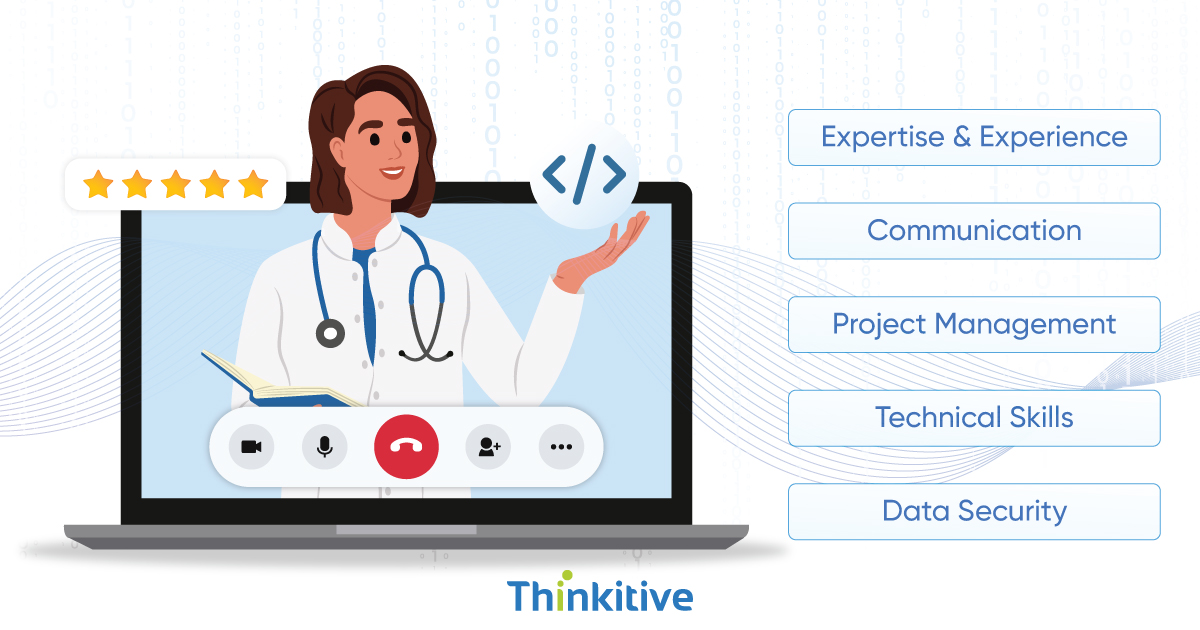
The use of telemedicine dates back to the 1950s, but it took a global pandemic for people to realize its full potential and practical real-life uses. And ever since then there has been no looking back towards the traditional means of providing or receiving healthcare.
Furthermore, given the high patient satisfaction rate and the ease it has brought to healthcare providers in providing services, the telemedicine software development sector is blooming. This has given rise to a specific sector in the healthcare IT industry, where companies are specializing in developing robust telemedicine software.
Today, if you ever search on the internet for ‘telemedicine software development,’ the results will give you a list of custom telemedicine software companies specializing in developing the ideal telemedicine software for you.
However, every telemedicine software development company offers unique sets and services that can define the success or failure of your telemedicine solution and even your practice. That is the reason there are some of the key factors that you need to consider when choosing the right custom telemedicine software development company.
Table of Contents
The intricacies of the software can vary from design, user experience, integration, security, etc. To make the choosing process simple for you, here are some of the key factors to consider when choosing a telemedicine software company.
So, without further ado, let’s get started!

Expertise & Experience
When you work with someone from the industry, it becomes very easy for you to collaborate and cooperate. Along with that, the experience of developing custom telemedicine software adds the form of a valuable asset that elevates the performance of your communications and routine tasks, in short, the software.
Furthermore, to add another layer to the process of choosing the right telemedicine software development company, you can check the company’s proven track record. The projects they have delivered over their years of expertise and the wide range of technological solutions they have provided for healthcare organizations can be some of the checkboxes you can tick.
If you are developing advanced telemedicine software, then you can ask for their work samples related to EHR integration, data security, remote patient monitoring, and chronic care management as a sample. You can even request a demo for these telemedicine software solutions they have developed.
This will show you how well they understand healthcare and its unique challenges. Furthermore, since they deal in the digitization of manual tasks, processes, and ultimately, care delivery, having a practical understanding of this can boost your custom telemedicine software.
Communication & Collaboration
We all know communication is the key to literally anything in the world. The better you can communicate and collaborate with your telemedicine software vendor, the better your software will be.
Furthermore, during testing and deciding the user experience, you will need to work closely with them. Here, communication plays an important role in enhancing a simplified healthcare software solution. Also, with all the communications with your healthcare IT teams in place, you can ensure that your telemedicine software is being developed as decided.
One effective way to check the communication and collaboration level of the best telemedicine software development company is to check their responsiveness and willingness to work with your healthcare practice.
Since we live in a very connected world, their presence on social media platforms and how they communicate can make a difference. For instance, their availability over LinkedIn, email, or phone can help you directly communicate with the required professional.
A thing to observe during all the communications is how well they react to your feedback and the kind of adjustments they make as per your suggestions. This end-to-end communication with meaningful outcomes can help you not only develop an ideal custom telemedicine software but also build a long-lasting relationship with a potential business partner.

Project Management & Methodology
As a healthcare provider, you know the importance of methods and the role they play in getting the expected results. Similarly, in any custom telemedicine app development, there is a certain timeline and a unique telemedicine software development process that need to be followed.
Though the telemedicine software development company might give you a brief understanding of the process, proactively asking them about the timeline and budget concerns can encourage them to build the project.
The more transparent they are about the software, the better you will know what it takes to digitize a simple task. Furthermore, a flexible development structure will teach you about the risks and challenges you will probably face in the development cycle.
On top of that, understand that you’re asking for a telemedicine software solution, not a product that does just one task. Emphasize regular updates and progress reports. These updates and progress will help your digital healthcare practice to evolve with time.
Technical Skills & Capabilities
Being a healthcare IT solution provider, they need to be masters of their technical skills. Check whether they have all the necessary skill sets to build custom telemedicine software that matches your needs and requirements.
During your early conversations, discuss whether the company has relevant technology experience. This can prove to be your valuable asset in future developments as well. Also, check if the healthcare software development company is up-to-date and in practice with the latest technological trends and developments. Integrating them into your healthcare practices can help you stay ahead of your competition and improve your proficiency and efficiency.
The best way to cross-check this is to look at the various projects they have delivered over the years, the variety of projects they have developed, and the different technologies they have worked on. This company is working on developing cloud-based telemedicine software or telemedicine mobile app development and even integrating data analytics into your custom telemedicine software.

Data Security & Privacy
Understand that with the development of custom telemedicine software solutions, you will be dealing with your patients’ very personal and private data. It can compromise their fundamental right if leaked or used for non-ethical practices. It can not only affect their health but also leave a bad reputation for your practice. On top of that, other healthcare regulations and legal fines make the situation even worse.
That is why discussing the telemedicine software vendor’s commitment to data protection can ensure your patient’s information is safe and secure. For this, you can ask for their HIPAA compliance certificate, as it acts as a regulatory watchdog for the proper use of healthcare technology.
Several laws and HIPAA, such as GDPR, HITECH Act, etc, can help you easily navigate the security and legal landscape. Adding another layer of security to the data, you can ask the healthcare development vendor for regular security audits and assessments.
Remember, assessing your custom telemedicine software’s security is crucial in healthcare. Data is the new-age currency that can change the face of your practice.
Conclusion
When it comes to choosing the right telemedicine software development partner, there are a lot of factors that you should consider. Along with that, for your unique requirements, the needs and requirements also change. However, the key factors mentioned above are something that you must consider before you start searching for a vendor for your custom telemedicine software development.
On that note, let this blog be your guide to choosing the right custom telemedicine software development partner. To further explore the intricacies of developing your custom telemedicine software, click here and get your free consultation.

Frequently Asked Questions
1. How can I evaluate the reputation and credibility of a telemedicine software development company?
Evaluating the reputation and credibility of a telemedicine software development company involves several key factors:
- Experience: Look for companies with a proven track record in developing telemedicine software, demonstrated by a portfolio of successful projects and client testimonials.
- Expertise: Assess the company’s team’s expertise in telemedicine-specific technologies, regulations, and industry best practices.
- Security and Compliance: Ensure the company adheres to strict data privacy and security standards, such as HIPAA compliance, to protect patient information.
- Scalability: Consider the company’s ability to handle your organization’s growth and evolving needs in the future.
- Client References: Request references from previous clients to gain insights into their experience working with the company, including project timelines, communication, and overall satisfaction.
2. What should I look for in a development team’s project management approach?
In a development team’s project management approach, look for:
- Clear communication: Ensure there’s a transparent process for sharing information and updates.
- Defined roles and responsibilities: Each team member should have a clear understanding of their tasks and expectations.
- Agile methodologies: Consider teams that use iterative development and prioritize flexibility.
- Risk management: A plan to identify and address potential challenges is crucial.
- Collaboration tools: Effective use of tools like project management software can improve efficiency.
3. How can I ensure that the telemedicine software meets my organization’s specific needs?
To ensure telemedicine software aligns with your organization’s needs:
- Define Requirements Clearly: Outline specific functionalities, integrations, and compliance needs.
- Evaluate Vendors Thoroughly: Research vendors, demo their software, and check customer reviews.
- Prioritize Scalability: Consider your organization’s growth and future needs.
- Focus on Security: Ensure robust data protection and privacy measures.
- Seek Customization Options: Inquire about tailoring the software to your workflows.
- Negotiate Contracts Wisely: Review terms for pricing, support, and ownership.
4. How is the cost of telemedicine software development typically calculated?
The cost of telemedicine software development is typically calculated based on the following factors:
- Features and complexity: The number and complexity of features directly impact the development time and cost.
- Platform: The choice of platform (web, mobile, or both) affects development efforts and costs.
- Development team: The size and experience of the development team influence the overall cost.
- Third-party integrations: The need to integrate with other systems can add to the project’s complexity and cost.
- Location: Development costs vary depending on the geographical location of the development team.
In general, telemedicine software development projects can range from a few thousand dollars to hundreds of thousands of dollars, depending on the specific requirements and scope.

5. Are there any hidden costs or fees that I should be aware of?
Yes, there may be some hidden costs or fees that you should be aware of. Some examples of hidden costs include transaction fees, shipping fees, and taxes. It is important to read the terms and conditions carefully to ensure you are aware of all the costs involved in your purchase.
6. What kind of ongoing support and maintenance is provided after the software is launched?
Ongoing support and maintenance for software typically includes:
- Bug fixes: Addressing errors or glitches that are discovered after launch.
- Updates: Implementing new features or improvements based on user feedback or changing requirements.
- Security patches: Protecting the software from vulnerabilities that could be exploited by malicious actors.
- Technical assistance: Providing help to users who encounter problems or have questions about the software.
- Compatibility maintenance: Ensuring that the software continues to work with other systems and software as they evolve.
- Documentation updates: Keeping user manuals and other documentation up-to-date with the latest changes to the software.
7. How often are software updates and upgrades provided?
Software updates and upgrades are provided at varying frequencies depending on the type of software, its developer’s policies, and the severity of any issues. Some software, like web browsers and operating systems, receive frequent updates to address security vulnerabilities and improve performance. Others, such as enterprise software or specialized tools, might have less frequent updates, often tied to new feature releases or major bug fixes.
8. Can the telemedicine software be scaled to accommodate future growth and changes in our organization?
Yes, telemedicine software can be scaled to accommodate future growth and changes. It often involves cloud-based solutions that offer flexibility and scalability. Additionally, these systems can be integrated with existing electronic health records (EHRs) and other healthcare IT systems, ensuring seamless communication and data sharing. As your organization expands or introduces new services, the telemedicine software can be adapted to meet evolving needs.
9. How flexible is the software in customization and integration with other systems?
The software offers a high degree of customization and integration flexibility. It allows for tailored configurations to match specific business processes and workflows. The software seamlessly integrates with various third-party systems and applications, enabling smooth data exchange and streamlined operations. This flexibility empowers organizations to adapt the software to their evolving needs and leverage existing technology investments.
10. Can the software be easily adapted to meet new regulations and industry standards?
The software’s adaptability to new regulations and industry standards depends on its design and architecture. If it has a modular structure with well-defined interfaces, it can be more easily modified to incorporate changes. Additionally, configuration files or databases can separate business logic from technical implementation, making updates more manageable. However, the extent of effort required for adaptation will vary depending on the complexity of the changes and the software’s overall design.