
When e-commerce entrepreneurs need extra funds to scale their business, both Shopify Capital and Amazon Lending provide tailored financing solutions. These platforms offer quick access to capital without the complexity of traditional business loans, helping online sellers manage inventory, marketing, and expansion needs. But which is better for your business?
This article compares Shopify Capital and Amazon Lending based on eligibility, loan terms, repayment structures, and more, helping you decide which financing option aligns with your business goals.
Table of Contents

Overview: Shopify Capital vs. Amazon Lending
Shopify Capital and Amazon Lending provide tailored financial solutions to their respective platform sellers, enhancing accessibility to working capital with quick processing times. These programs focus on ease of access, fast approval, and repayment flexibility, which makes them ideal for businesses needing quick funding.
However, each service operates differently:
- Shopify Capital provides merchant cash advances and short-term loans to Shopify store owners, with repayments based on a percentage of daily sales.
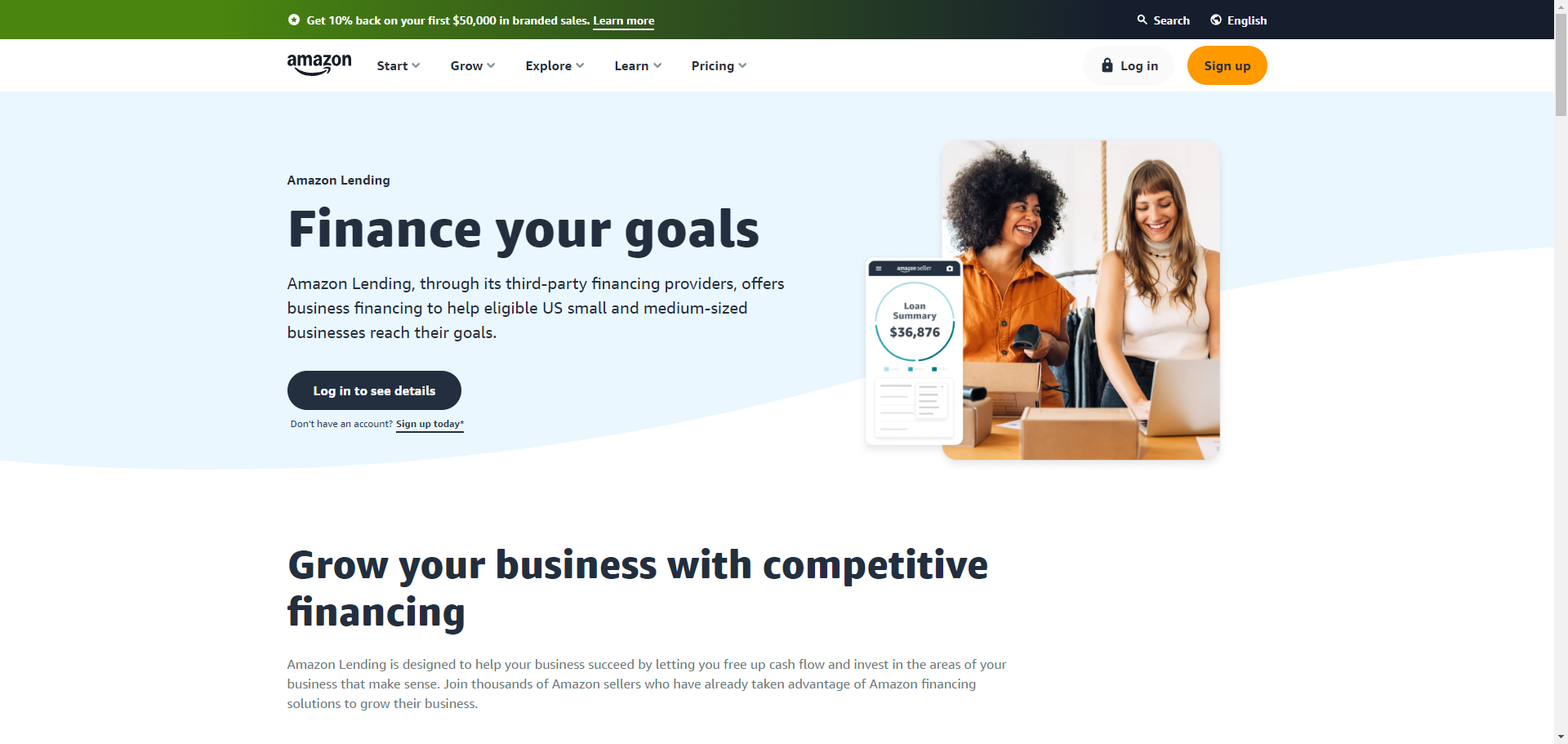
- Amazon Lending offers short-term loans exclusively to Amazon sellers, with repayments automatically deducted from the seller’s marketplace revenue.
Both programs offer convenience, but they cater to different business models and platforms, making it essential to understand how each works. This contrast in services underscores the need for sellers to carefully consider which program best aligns with their business operations and cash flow needs. Each platform’s approach is designed to streamline the financial support process, but the choice between them depends on the specific requirements and circumstances of the seller.
Eligibility Requirements
Understanding the eligibility requirements for financial services like Shopify Capital and Amazon Lending is crucial for e-commerce sellers aiming to enhance their business operations with additional funding. This section delves into the specific criteria set by each platform, detailing how performance metrics, sales history, and geographical presence impact a seller’s ability to access these financial products. Whether you’re operating on Shopify or Amazon, knowing these requirements can prepare you for successful application and utilization of their respective lending services.
Shopify Capital
- Eligibility Criteria: Shopify evaluates sellers based on store performance, sales volume, and history on the platform.
- Pre-Qualification: Shopify store owners are invited to apply through the Shopify Capital dashboard when they meet the criteria.
- Regions Covered: Shopify Capital is available in the U.S., Canada, and the U.K.
Amazon Lending
- Eligibility Criteria: Amazon pre-selects sellers based on sales history, account health, and performance metrics. There is no manual application process—only invited sellers are eligible.
- Regions Covered: Amazon Lending is available in several countries, including the U.S., U.K., and Japan.
Verdict: Both platforms rely on performance-based eligibility, but Shopify Capital offers more flexibility in geographic reach, while Amazon Lending caters only to Amazon sellers.

Loan Types and Amounts
Navigating the varied loan options and amounts available through Shopify Capital and Amazon Lending is crucial for sellers looking to fuel growth and manage operational needs efficiently.
Carefully evaluate the different types of loans offered by each platform, including merchant cash advances and short-term loans from Shopify Capital, and short-term loans from Amazon Lending. Check the typical loan amounts available, tailored to the seller’s performance on each platform, and discuss suitable use cases for these funds, such as inventory management, marketing initiatives, and staffing. Understanding these details can help sellers make informed decisions about financing options that best suit their business scale and objectives.
Shopify Capital
- Loan Types: Offers merchant cash advances and short-term loans.
- Loan Amounts: Typically ranges from $200 to $1 million, depending on store performance.
- Use Case: Ideal for inventory replenishment, marketing campaigns, or hiring staff.
Amazon Lending
- Loan Types: Provides short-term loans with fixed repayment periods.
- Loan Amounts: Offers loans from $1,000 to $750,000+, based on sales performance.
- Use Case: Often used for inventory purchases to support peak seasons or new product launches.
Verdict: Shopify Capital offers more flexibility with merchant cash advances, while Amazon Lending focuses on larger loans for scaling sellers with higher revenue.

Repayment Structure
Understanding the repayment structures of Shopify Capital and Amazon Lending is essential for online sellers considering these financing options. This section explores the unique repayment methods employed by both platforms, highlighting their flexibility and suitability for different business needs.
From the percentage-based repayments of Shopify Capital’s merchant cash advances to the fixed deductions from Amazon sales for its loans, each system is designed to streamline financial management for busy entrepreneurs. Additionally, the availability of penalty-free early repayments adds an extra layer of flexibility, accommodating the varying financial flows of e-commerce businesses.
Shopify Capital
- Merchant Cash Advances: Repayment is taken as a percentage of daily sales (typically between 8-20%).
- Short-Term Loans: Fixed repayment amounts are made daily or weekly from your Shopify sales revenue.
- Early Repayment: No penalties for early repayment, but cash advance fees are fixed upfront.
Amazon Lending
- Short-Term Loans: Repayments are automatically deducted from your Amazon marketplace sales. The loan term is typically between 3-12 months.
- Early Repayment: No early repayment fees, but the total loan amount must still be repaid in full.
Verdict: Shopify Capital offers more repayment flexibility since repayments adjust with sales volume. Amazon Lending’s fixed repayment structure can be more predictable but may strain cash flow during slow periods.

Interest Rates and Fees
Navigating the landscape of financing options involves a close examination of interest rates and fees, which are pivotal factors in the decision-making process for e-commerce businesses. This section delves into the financial intricacies and cost implications of choosing between Shopify Capital and Amazon Lending, highlighting how each platform structures its charges and what it means for your bottom line. Understanding these financial elements is crucial for any business owner looking to make an informed choice that aligns with their business model and growth objectives.
Shopify Capital
- Merchant Cash Advance Fees: Instead of traditional interest, Shopify charges a flat fee based on the loan amount.
- Effective Rate: Rates are typically higher than traditional loans, but the flexibility of sales-based repayments compensates for the higher cost.
Amazon Lending
- Interest Rates: Amazon Lending offers fixed interest rates, typically between 6% and 16%.
- Repayment Transparency: Borrowers know the exact repayment amount upfront, and Amazon does not charge hidden fees or prepayment penalties.
Verdict: Amazon Lending generally offers lower interest rates, but Shopify Capital’s cash advance model may work better for businesses with fluctuating sales.
Application Process and Approval Time
Navigating the application and approval processes for financial services can be daunting, but Shopify Capital and Amazon Lending simplify these steps for their sellers. Let’s look at both platforms’ streamlined procedures, highlighting their efficiency in processing and disbursing funds. Understanding these processes is crucial for sellers looking to leverage financial products quickly to scale operations or manage cash flow effectively. We’ll delve into each platform’s approach to application and approval times, providing a clear comparison to help sellers make informed decisions.
Shopify Capital
- Application Process: Shopify Capital sends loan offers directly through the seller’s dashboard. The process is simple and fast, with minimal documentation required.
- Approval Time: Funds are typically deposited within 1-3 business days after accepting the offer.
Amazon Lending
- Application Process: Amazon pre-selects eligible sellers and offers loans through the Seller Central dashboard. The seller only needs to review and accept the terms.
- Approval Time: Funds are usually disbursed within 24-48 hours after the offer is accepted.
Verdict: Both platforms offer fast approvals, but Amazon Lending typically disburses funds slightly faster.

Pros and Cons
Both Shopify Capital and Amazon Lending offer unique advantages tailored to their respective platform sellers, but they come with distinct conditions that can influence a business’s financial strategy. Exploring these options reveals the nuanced benefits and limitations each service provides, helping merchants make informed decisions based on their specific needs and sales dynamics.
Shopify Capital Pros and Cons
Shopify Capital caters exclusively to Shopify merchants, providing flexible financial solutions like cash advances and loans that adapt to sales volume. This flexibility is particularly beneficial for businesses with fluctuating sales, as repayment adjusts accordingly, minimizing financial pressure during slower periods. Additionally, these financial instruments do not impact a merchant’s personal credit score, offering a significant advantage for those looking to preserve their credit status.
However, Shopify Capital may incur higher fees than traditional loans, which could be a deterrent for some businesses. Furthermore, its services are restricted only to sellers on the Shopify platform, limiting its accessibility to a broader audience of e-commerce vendors.
Amazon Lending Pros and Cons
For sellers on Amazon, Amazon Lending provides lower interest rates compared to many merchant cash advances, making it an attractive option for those looking for cost-effective borrowing. Repayments are conveniently deducted from Amazon sales, streamlining the process and ensuring seamless financial management without necessitating credit checks.
Yet, the fixed repayment structure could strain cash flow during periods of reduced sales, potentially placing financial stress on a business. Like Shopify Capital, Amazon Lending is also only available to sellers within its marketplace, restricting access to those outside the Amazon ecosystem.
To summarize the pros and cons:
| PROS | CONS | |
| Shopify Capital | Flexible repayment based on sales volume Offers both cash advances and loans No impact on personal credit score | Higher fees than traditional loans Limited to Shopify platform sellers |
| Amazon Lending | Lower interest rates compared to merchant cash advances Seamless repayment from Amazon sales No personal credit check required | Limited to Amazon marketplace sellers Fixed repayment amounts may strain cash flow |
Both Shopify Capital and Amazon Lending offer tailored solutions that reflect the operational realities of their respective platforms. Choosing between them depends on specific business needs, sales stability, and platform affiliation. While each has its advantages in terms of ease of access and repayment flexibility, they also pose challenges such as potentially higher costs and platform exclusivity. Ultimately, the decision should align with the company’s financial strategy and long-term goals, ensuring that the chosen financial tool supports sustainable business growth and adaptation in an ever-evolving market.

Which Option Is Best for Your Business?
Choosing between Shopify Capital and Amazon Lending depends largely on where your business operates and your cash flow needs.
- Shopify Capital is ideal if you have a Shopify store with fluctuating sales and prefer flexible repayment terms. The ability to repay as a percentage of sales makes it easier to manage cash flow during slower months.
- Amazon Lending is better suited for Amazon sellers looking for larger, low-interest loans. The fixed repayment schedule works well if you have predictable sales volumes and need capital for inventory or product expansion.
Conclusion
Both Shopify Capital and Amazon Lending offer fast, convenient financing tailored to e-commerce sellers, but they cater to different business models. Shopify Capital provides flexible repayment options through cash advances, making it ideal for businesses with seasonal sales patterns. On the other hand, Amazon Lending offers larger loan amounts with lower interest rates, making it a great choice for high-volume sellers on the Amazon marketplace.
Ultimately, the right choice depends on your platform, funding needs, and repayment preferences. Sellers operating on both Shopify and Amazon may even benefit from using both financing options strategically to manage different aspects of their business.

Frequently Asked Questions (FAQs)
Can I apply for Shopify Capital if I also use Amazon Lending?
Yes, you can apply for Shopify Capital even if you are already using Amazon Lending. Each platform evaluates your eligibility based on your performance on their respective platforms. This means Shopify will look at your sales and history on Shopify to determine if you qualify for their funding, while Amazon assesses your Amazon business performance.
What happens if my sales drop while repaying Shopify Capital?
If your sales decrease while you’re repaying a Shopify Capital advance, your repayments will adjust accordingly. Shopify Capital uses a revenue share model for repayments, which means the repayment amount is a fixed percentage of your daily sales. Therefore, during slower months when sales are lower, you will pay back less, providing you with greater flexibility in managing cash flow during varying business cycles.
Can I use Amazon Lending funds for non-Amazon-related expenses?
While Amazon Lending provides funds that can technically be used for any business expense, it is advisable to reinvest these funds back into your Amazon operations. This could include purchasing more inventory, marketing for your Amazon listings, or improving logistics. Using the funds to enhance your Amazon business can lead to better performance and increased sales, thereby maximizing the impact of the borrowed capital.
Does Shopify Capital require a personal credit check?
No, Shopify Capital does not require a personal credit check. Instead, the eligibility for Shopify Capital is determined by the performance metrics of your Shopify store, such as sales history and volume. This focus on business performance rather than personal credit makes it accessible for store owners who might have strong business operations but less-than-perfect personal credit scores.
Which financing option has better interest rates?
Typically, Amazon Lending offers lower interest rates compared to Shopify Capital. However, the actual cost of capital will depend on specific terms like the loan amount and repayment period. Amazon Lending’s rates are often competitive because they are closely tied to the seller’s performance on Amazon, which provides Amazon with confidence in the seller’s ability to repay. Shopify Capital, while potentially higher in cost, offers the advantage of repayment flexibility linked to your sales, which can be beneficial for managing cash flow.