This article was originally published on March 4, 2022, and updated on February 1, 2026.
Strong customer relationships aren’t built with gimmicks. They’re built on clear expectations, consistent follow-up, and support that make customers feel confident about buying again. In this guide, you’ll learn how CRM supports retention, how the customer lifecycle works, and which practical tactics (emails, feedback loops, loyalty programs, and win-back campaigns) create long-term customer loyalty.
Key Takeaways
- CRM is a strategy first, and software second: the goal is better relationships that lead to repeat business.
- Retention is usually cheaper than acquisition, and even small retention gains can have a big profit effect.
- Use the customer lifecycle to choose the right message at the right time.
- Trigger-based emails and proactive support are two of the most reliable retention levers.
- Track a few key metrics (repeat purchase rate, retention, churn, CSAT/NPS, LTV) to know what’s working.
Table of Contents
How to Build Strong Customer Relationships for Better Retention
Customers are the business
Customers aren’t just “buyers.” They’re the reason your business survives, grows, and becomes referable. The strongest businesses don’t win because they have the fanciest logo or the loudest ads. They win because customers feel understood, supported, and confident they’ll get value every time they return.
That’s what customer relationship management (CRM) is really about. CRM is both:
- A strategy for building trust and consistency across the customer experience
- A system (software + process) that helps you remember details, follow up at the right time, and serve customers better
When you do CRM well, retention gets easier. And retention matters because (across industries) acquiring a new customer can be 5 to 25 times more expensive than keeping an existing one. Also, selling to existing customers tends to be significantly more likely than selling to brand-new prospects
Knowing where your customers are on the customer life cycle and the common hurdles they encounter can foster great customer support. Customers use different digital touchpoints to interact with brands, including the company website, social media, email, and ads. Identifying entry points that most of your customers are using and making intelligent assumptions on what’s stopping them from going further into the customer life cycle can help you craft a CRM strategy to fast-track your customers’ journey. Your customers have varying needs and concerns, so crafting one CRM strategy just won’t cut it. Instead, your goal is to have diversity in your approach. Designing a smooth customer experience is successful if for every action your customer chooses, a particular activity is triggered and automates another response to continuously engage with your customer at whatever point in their customer journey.
At any point, collecting data should be a priority. You may start by building various customer personas and segmenting them based on different factors. Keeping tabs on customer preferences is vital in figuring out what keeps them engaged or what drives them to purchase from you. Having your customer data analytics in place can help you understand your customers’ buying habits and lifestyles. Through these, you can predict buying behaviors and design a targeted, structured approach for various audiences.
Data, insights, and strategy combined still will not suffice. In any campaign strategy, timing plays an important role. When to send the message is at the core of a good CRM strategy.
Utilizing all these factors at play, how can you build strong customer relationships for better customer retention?
What’s in It for You
Every customer journey is different, but through CRM, you can optimize every experience for your target market. Having a solid CRM is vital for building strong customer relationships and better customer retention. In this post, we’ll be familiarizing you with the following:
- The different ways that CRM can help you realize your business goals
- The different stages of the customer life cycle
- Best CRM practices and applications to implement in your business
Understanding the Role of CRM
Once you’ve established positive customer relationships, the next step is to intensify customer retention. Since it is costlier to acquire a new customer than to retain them, you want to ensure that you can build loyalty among your customer base.
Statistically speaking, repeat or loyal customers are most likely to purchase 60% to 70% of the time than new ones, registering only a 5% to 20% chance. CRM can help increase your customer retention and revenue in three different ways. Think of CRM as the bridge between “a customer bought once” and “a customer sticks around, buys again, and recommends you.”
Customer Insights (the “why” behind behavior)
By helping businesses learn more about their customers and behavior patterns, they are better equipped to fulfill customers’ needs through targeted, strategic marketing. CRM helps you capture useful patterns: what customers buy, what they ask, what triggers them to return, what causes drop-off, and what they value most. With better insight, you stop guessing and start making decisions based on real customer signals.
Data Analytics
CRM is heavy on data analytics. Your customers are segmented into groups based on the factors you choose to sort by. Each customer’s data is easily broken down into sizable chunks that can be easily included in any marketing campaign you want to implement and the sales processes you plan to set up. A streamlined process simplifies the customer’s buying journey, making it easier to infer data.
CRM isn’t about hoarding data. It’s about using it to do helpful things automatically, like:
- following up after a first purchase
- sending reminders or replenishment prompts
- flagging high-value customers for VIP support
- re-engaging customers who went quiet
Optimization
Simplifying the customer journey is one of the best ways to attract loyal customers, and CRM helps you work on this goal. Enhancing the way you interact with customers increases customer satisfaction with your business.
Nurturing customer relationships should be easy as long as you know how to make sense of your data. Each customer journey cycle is unique and should be tailored to reach the right audience.
Important: CRM is not just a tool. Even the best software won’t fix unclear policies, slow response times, or a confusing website. CRM works when your process is solid.

The Customer Life Cycle (and how to build relationships at each stage)
To scale and grow your business, you must expand your customer base. That means continuously delivering to meet your customers’ demands through excellent customer support, so they’ll become a believer in your brand. They will speak about the good experience they’ve had, unconsciously becoming brand advocates. Simply being visible for your customers or offering to set up loyalty programs won’t be enough. The name of the game is providing value for your customers every step of the way.
The best way to attract loyal customers is to understand the customer life cycle, which comprises five stages. Each cycle in the journey represents different types of approaches to ensure your customers stay engage.. Nurturing customer relationships means ensuring they move from one step to another as outlined below:
Customer lifecycle stages at a glance
Most customers move through five stages. Your job is to help them progress without pushing too hard, and without leaving them hanging.
| Stage | Customer mindset | Your goal | What to do now | Best metrics |
|---|---|---|---|---|
| Awareness | “Do you solve my problem?” | Earn attention + trust | Clear messaging, SEO content, social proof, simple offers | Traffic, CTR, time on page |
| Consideration | “Should I choose you?” | Reduce uncertainty | FAQs, comparisons, testimonials, chat support, guarantees | Lead rate, email signups, quote requests |
| Purchase | “Don’t mess this up.” | Make buying effortless | Fast checkout, transparent pricing, proactive support | Conversion rate, cart abandonment |
| Retention | “Was it worth it?” | Deliver ongoing value | Follow-ups, education, loyalty perks, proactive check-ins | Repeat purchase rate, churn, CSAT |
| Advocacy | “I’d recommend you.” | Turn loyalty into referrals | Referral program, VIP perks, community, user-generated content | Reviews, referrals, NPS |
Awareness
Your customers are searching for a solution to their problem. Put yourself in their shoes and think hard about what they need, and then try to answer that demand by communicating what your business can do.
Using apt marketing tactics, such as paid ads or search engine optimization (SEO), can increase your business visibility at this stage. Keep in mind that your customers don’t exactly know what they are looking for – yet; they are just scouting for possible solutions. You can position your business by communicating clearly what your business can do to help solve their pain points. They may not know you very well, but once you make them feel that you can potentially help them, you can guide them to the next step.
Consideration
At this point, they are reading and consuming every content on your website’s landing pages. They know you as someone who can solve their problem, and on the other end of the spectrum, you see them as a prospect or a lead. The thing is, they are also considering other businesses in your field, your competition. How do you win them over?
Communicate personally and persuasively. Provide website visitors with the necessary information on any products or services you are offering through email. Since they are already considered a prospect, you can warm them up further to become hot leads by injecting marketing tactics: offer discounts, invite them to sign up for a newsletter for free, send personalized email outreach, or present case studies or testimonials. Ensure that you will be able to answer their every question, and then they will be ready to …
Purchase
They are already convinced that you are the dealbreaker for them. But keep on your toes because, in a snap, they might change their mind. What could go wrong, and how do you fix it if it comes to that? If the purchase is successful, then what could you do right?
If you have a CRM, you can send them a personalized thank you email, with an option to include discounts on their next purchase. Appreciating customers for trusting your brand and business can help deepen your relationship with them.
Use your CRM and other sales tracking software to profile your newly acquired customer based on their buying behavior. Use the data to find similar people who share the same pattern and set them up for profiling in the early stage of the customer life cycle journey.
Suppose you’re running an e-commerce store. If technical issues arise during the checkout process, set up an automated system where you can reach out to customers via email, offer to help solve their problem, and loop them back into the checkout landing page. It is also wise to eliminate barriers and simplify the checkout process for a smooth customer experience.
Retention
Most likely, your customer will make another purchase. Since you’ve already established your credibility, you can start offering them through email similar products or services that you think they might like. Using CRM software, you can send them regular and insightful content updates. Since they are already existing customers, the chances of increasing your sales from repeat orders are better than from prospects in the early stages of the cycle.
At this stage, support and service are vital. Continuously reach out to your customers and ask how they are enjoying their purchase. Pay close attention to their needs, and apply the immediate feedback given to improve the customer relationship even more.
Advocacy
This is the stage where your customers know you well, are fully satisfied with your service, and already speaking ON your behalf. They are already doing the work for you to increase your customer base. You don’t need to go the extra mile to convince new prospects since your brand ambassadors are already doing that job for you!
To keep your brand advocates satisfied and as a way to thank them, offer exclusive perks and discounts. You can employ a loyalty program to keep them pumped up to interact more with your business. You can also create a referral program or points-based incentive for every purchase they make.
More than the technical know-how, it’s crucial to build and nurture a community. Make your customers feel you understand them. And always keep them in the loop on regular updates.
Best CRM Practices for Your Business
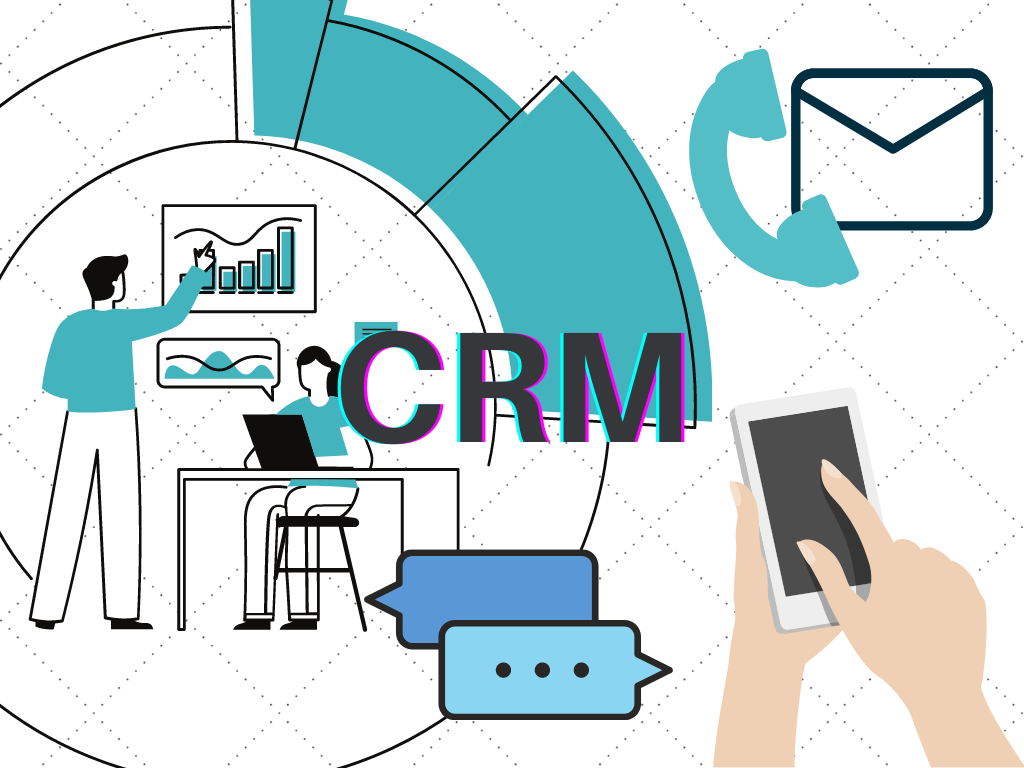
Effective customer relationship strategies can lead to better retention. Now that you are familiar with the customer life cycle, here are some practical applications on how you can specifically reap the power of CRM while improving your overall customer-building efforts.
Live assistance or chatbot
Chatbots effectively solve a customer’s query instantly, eliminating the hassle of searching FAQs or lining up for a chat agent to answer on the other end of the line. Time is an essential element to save, and with chatbots, you save your customers their precious time to solve their queries.
Chatbots and live chat can reduce friction and prevent lost sales, especially during consideration and checkout. Use them for:
- quick FAQs
- status updates
- scheduling
- routing to a real person when needed
Automate your emails
We can’t stress this enough: emails are one of the cost-efficient ways to keep your customers happy and satisfied. Triggered-based emails, meaning they are automated depending on a consumer’s action in your customer journey cycle, tend to have higher open rates and click-through rates. Again, timing plays an important factor when a consumer is having second thoughts on what to do with the information presented to them at an opportune moment.
Even a basic email system can improve retention when it’s timed well.
High-impact automated emails
| Trigger | When to send | Goal | What to include |
|---|---|---|---|
| Welcome | Immediately after signup | Build trust | What you do, proof, what to do next |
| Post-purchase thank you | Same day | Reinforce confidence | Order summary, support link, “what to expect” |
| “How’s it going?” check-in | 3–7 days | Prevent regret | Setup tips, usage guide, quick help |
| Review request | 7–14 days | Generate social proof | Easy link, simple prompt, gratitude |
| Reorder reminder | Based on typical cycle | Increase repeat purchase | Quick reorder link, bundle suggestion |
| Win-back | 30–90 days inactive | Re-engage | What’s new, helpful tip, optional incentive |
Have an omnichannel presence
Like in any relationship, your customer doesn’t wake up one day and decides to break up with you. There’s a brand experience buildup wherein the cons outweighed the pros. Luckily with CRM, you can detect the “indifference” they feel towards you through the following: waning engagement, a drop in purchase patterns, or bad product reviews.
Analyzing your customer behavior is essential in identifying how to improve your communication and marketing strategies.
The metrics that prove your relationship strategy is working
You don’t need a complicated dashboard. Track a few signals consistently.
| Metric | What it tells you | Simple formula |
|---|---|---|
| Repeat purchase rate | Are customers returning? | Repeat customers ÷ total customers |
| Customer retention rate | Are you keeping customers over time? | ((Customers end − New customers) ÷ Customers start) × 100 |
| Churn rate | How fast you’re losing customers | 100 − retention rate |
| CSAT | Are customers satisfied right now? | Avg satisfaction survey score |
| NPS | Are customers likely to recommend you? | % Promoters − % Detractors |
| LTV (lifetime value) | How valuable retention is | Avg order value × purchases per year × years retained |
A strong retention strategy can have outsized profit impact. Bain’s work has long highlighted that small improvements in retention can significantly increase profits, depending on industry and cost structure.
CRM tools: what “counts” as a CRM for a small business?
CRM can be as simple as a spreadsheet plus consistent follow-up. But once you’re juggling more customers, a dedicated CRM helps you stay organized and responsive. Definitions vary by vendor, but the core idea is the same: a CRM system helps manage interactions with current and potential customers to improve relationships and growth.
A practical CRM stack (no fluff)
| Need | Simple option | When to upgrade |
|---|---|---|
| Track leads + customers | CRM + tags/segments | When follow-ups get missed |
| Follow-up automation | Email sequences | When you want consistent retention |
| Customer support | Shared inbox/helpdesk | When response times slip |
| Reporting | Basic dashboards | When decisions need data, not vibes |
Quick-start: the 30-minute relationship upgrade
If you only do a few things this week, do these:
- Add a clear “What happens next?” section to your checkout/confirmation page
- Create a 3-email post-purchase series (thank you → tips → check-in)
- Set one standard response-time promise (and meet it)
- Ask every customer one feedback question and track answers
- Create one win-back email for customers inactive 60+ days
Put Yourself in Your Customers’ Shoes
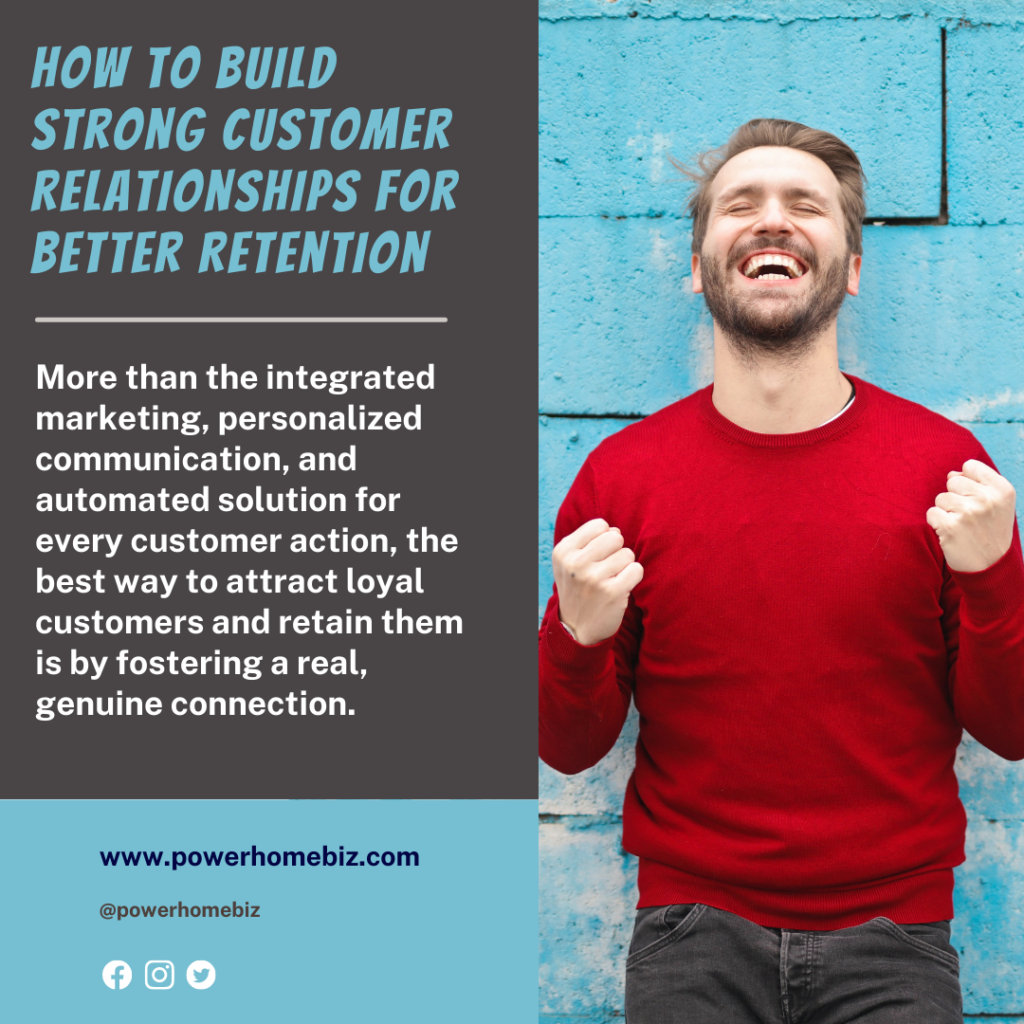
We have discussed customer relationship management’s power and what it can do to transform your business from good to great. More than integrated marketing, personalized communication, and automated solution for every customer action, the best way to attract loyal customers and retain them is by fostering a real, genuine connection. Besides the technical aspects of using CRM tools, you want your business to solve your target audience’s pain points. Building customer relationships is all about understanding their needs and serving them what they need.
FAQ
What are the best ways to improve customer retention?
The best retention strategies are the ones customers actually feel: faster support, clear expectations, consistent quality, and helpful follow-up. Start by reducing friction (confusing policies, slow replies, complicated checkout). Then build a simple “second purchase path” with post-purchase emails that help customers get results, answer common questions, and recommend the next logical step. If you sell replenishable products, reminders work well. If you sell services, check-ins and maintenance schedules work well. Loyalty programs can help, but they’re strongest when they add convenience or status, not just discounts. Finally, track repeat purchase rate and churn monthly so you can spot improvement early.
What is CRM and why is it important for small businesses?
CRM stands for customer relationship management. It’s the process (and often the software) used to organize customer information and manage interactions across marketing, sales, and support. For small businesses, CRM is important because it prevents follow-ups from falling through the cracks and helps you treat customers consistently even when you’re busy. A simple CRM setup can store notes, preferences, purchase history, and customer status (new, active, at-risk, VIP). That makes it easier to personalize communication, automate the right messages, and respond quickly. The result is a smoother experience that increases repeat sales and referrals.
What are the stages of the customer lifecycle?
A common customer lifecycle model includes five stages: awareness, consideration, purchase, retention, and advocacy. In awareness, customers are learning what solutions exist. In consideration, they compare options and look for proof and clarity. During purchase, your job is to remove friction and build confidence. Retention is where you reinforce value, provide support, and guide customers to a second purchase. Advocacy is when satisfied customers leave reviews, refer friends, and promote you naturally. Using lifecycle stages helps you stop treating every customer the same way. Instead, you match your message to what the customer needs right now, which is one of the simplest ways to improve retention without spending more on ads.
How do you build customer loyalty without always offering discounts?
Loyalty is stronger when it’s built on trust, convenience, and recognition. Discounts can help occasionally, but if customers only return for a coupon, you don’t have loyalty, you have price sensitivity. Instead, reward customers with things that feel meaningful: priority support, early access, helpful education, small surprise upgrades, and points that unlock perks (free add-ons, shipping upgrades, or VIP status). Also, make repurchasing easy: saved carts, quick reorder links, personalized recommendations, and proactive reminders. A loyalty program should feel like a relationship perk, not a clearance rack.
What customer retention metrics should I track?
If you want a simple scorecard, track repeat purchase rate, retention rate (or churn), and one satisfaction metric like CSAT or NPS. Repeat purchase rate shows whether customers are coming back. Retention/churn shows whether you’re keeping customers over time. Satisfaction metrics help you catch problems before they turn into lost customers. If you can go one step further, estimate customer lifetime value (LTV). LTV helps you understand how much retention is worth, and it guides decisions like how much you can spend on customer support, onboarding, or loyalty perks. Track these monthly, compare them to past months, and look for trends rather than obsessing over a single week.
What’s the difference between customer service and customer relationship management?
Customer service is what you do when a customer needs help. Customer relationship management is the broader system that supports the entire relationship, before and after the sale. Service is reactive: answering questions, solving problems, handling returns. CRM is proactive and organized: tracking customer history, segmenting customers, timing follow-ups, automating helpful messages, and making sure the customer experience feels consistent across every channel. Great customer service is part of good CRM, but CRM also includes sales follow-up, lifecycle messaging, loyalty strategy, and using customer insights to improve your products and processes.