

Understanding how customers interact with your brand across multiple touchpoints and marketing channels is essential for maximizing conversions. This article explores the fundamentals of marketing attribution, outlines key attribution models, and explains how marketers can use these insights to optimize the customer journey and boost ROI.
Key Takeaways
- Touchpoints define customer experience — Every interaction between the brand and customer, from social media to in-person events, shapes perceptions and purchase decisions.
- Marketing channels are distribution systems — Platforms like email, SEO, and social media are tools to deliver brand messages across touchpoints.
- Attribution models quantify impact — Understanding which model to apply helps marketers determine which touchpoints most influence conversions.
- Multi-touch models offer better insight — Unlike single-touch models, multi-touch attribution reflects the complexity of the modern customer journey.
- Attribution drives personalization and ROI — Accurate analysis allows marketers to tailor campaigns to customer behavior, improving engagement and profitability.

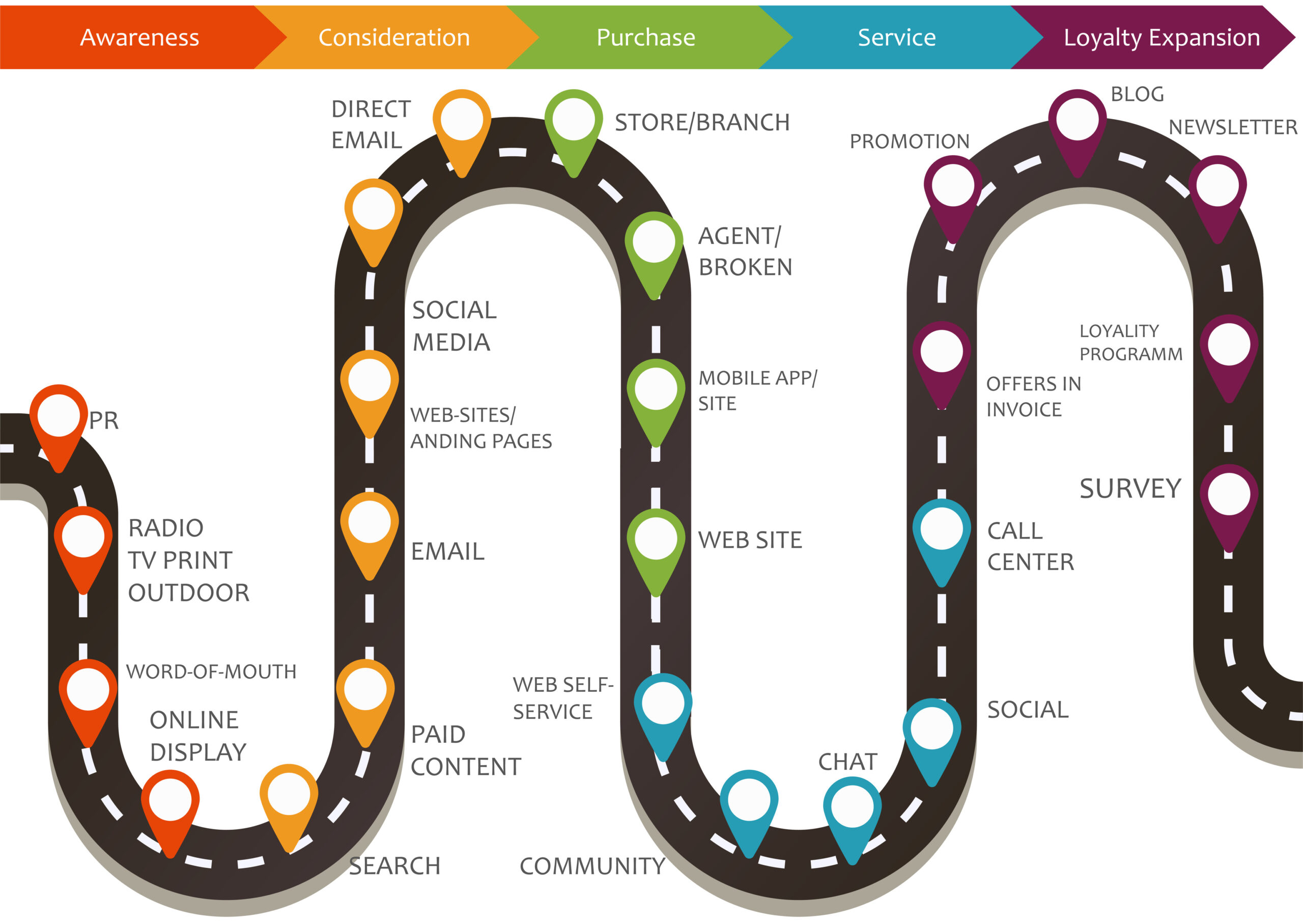
Today, marketers seek to create connections between their firm and customers by understanding different touchpoints and channels clients use to interact with products. Touchpoints are the modes utilized such as online ads, face-to-face interactions, or video promotions that convey the business message.
Marketing channels are different platforms marketers use to convey marketing messages. These platforms include cold calling, email, social media, and SEO marketing. Marketers usually analyze these touchpoints and channels by creating different marketing attribution models to determine which strategy generates more revenue.
Table of Contents
Fundamentals Of Marketing Attribution
Marketers review marketing attribution, the analysis of events that show how, where, and when the target audience interacted with the marketing messages, to determine which mediums reach their target audience. When marketers evaluate campaigns, their goal is to know which channels and touchpoints customers interact with most and bring in the most sales and revenue. Marketing attribution also helps to understand customers’ behavior at each touchpoint that contributed to the success or failure of the marketing campaign.
By understanding the different channels and touchpoints, marketers can easily personalize their messages to meet each consumer’s individual needs. It’s often wiser to personalize messages instead of sending generic notes, which could be unproductive. The different models in attribution seek to make marketing campaigns person-based and not product-based to better connect with your consumers.

Models In Marketing Attribution
Different marketing attribution models use diverse techniques to understand consumer behaviors and better insights into the customer journey. Here are the main attribution models:
1. Single Touch Attribution Models
The single-touch attribution model focuses on one event in the customer journey. This model divides further into two sub-models which are:
- First Touch Attribution
In first touch attribution, marketers focus on the first event the customers interact with. Full credit is given to this first touchpoint; other messages and interactions aren’t considered. However, this model is ineffective because customers are likely to change preferences and choices during other interactions.
- Last Touch Attribution
The last touch attribution completely differs from the first because the focus is on the last interaction before the customer makes their purchase. However, this model is also inferior because prior engagements that contain necessary customer data are assumed and not verified.
Multi-Touch Attribution Model
A multi-touch attribution model gives focus on different touchpoints in the whole customer journey. Either the same amount of credit is given on the different interactions or credit is assigned differently. Here are some of the multi-touch models:
- Linear
Linear touchpoints record and weighs each interaction with the consumer equally. Every marketing message is credited as an equal contributor to the purchase.
- U-Shaped
U-shaped attribution gives all the touchpoints credit, but in varying significance since some messages are considered more important than others. Because of the U-shape, more credit is given to the first touchpoint and the last touchpoint that leads to the conversion. The remaining credit is divided equally among the touchpoints in between.
- Time Decay
The time decay model gives more credit to the touchpoints closer to the conversion point and less to the first. This model believes the touchpoints closer to the conversion carry more weight in the sale.
- W-Shaped
A W-shaped model focuses on the first and the last touchpoints as playing a significant role in achieving the conversion. However, it also includes another major touchpoint in the middle called the opportunity stage. The remaining credit is divided between the other touchpoints, thus forming a W-shape.
Importance Of Marketing Attribution
Conducting marketing attribution has several benefits for marketers to achieve higher conversion and understanding customer’s experiences. Some of the benefits include:
- Better Personalization
Attribution gives marketers important data such as the messages and platforms buyers prefer. With this information, marketers have the chance to personalize messages and use targeted channels to reach customers.
- Develop Better Product
As you develop products to meet customer needs, marketing attribution ensures that business models are customer-centric rather than product-centric. As products sell and gain more traction, campaign options should be updated to meet consumer needs, leading to updated products that generate more revenue.
- Increased Return On Investment
The goal of marketers is to convert as many ads to sales as possible. They also need enough data to identify the proper channels to market and create appealing, eye-catching messaging. By conducting marketing attribution, insights on points could generate the highest returns.
Visual Summary: Comparing Marketing Attribution Models
Understanding Attribution Models at a Glance
To better understand how each marketing attribution model assigns value across different touchpoints, the table below provides a side-by-side comparison. It highlights how credit is distributed, what makes each model useful, and where its limitations lie. This visual summary helps marketers choose the model that best aligns with their goals, resources, and customer journey complexity.
| Attribution Model | Type | Credit Distribution | Main Focus | Advantages | Limitations |
|---|---|---|---|---|---|
| First Touch Attribution | Single-Touch | 100% to the first interaction | Identifying initial awareness channels | Simple and easy to track; great for top-of-funnel campaigns | Ignores subsequent customer interactions |
| Last Touch Attribution | Single-Touch | 100% to the last interaction | Recognizing final conversion touchpoints | Useful for optimizing closing strategies | Overlooks early awareness and nurturing efforts |
| Linear Attribution | Multi-Touch | Equal credit to all touchpoints | Balanced overview of the customer journey | Fair and transparent; ideal for broad campaigns | Fails to identify high-impact interactions |
| U-Shaped Attribution | Multi-Touch | 40% to first, 40% to last, 20% split among middle interactions | Highlights first and last interactions | Recognizes both brand introduction and conversion efforts | May undervalue mid-journey engagement |
| Time Decay Attribution | Multi-Touch | More credit to recent interactions | Prioritizing recency in decision-making | Reflects realistic customer influence | Early stages lose visibility |
| W-Shaped Attribution | Multi-Touch | 30% to first, 30% to key middle, 30% to last; 10% to others | Highlights key conversion milestones | Recognizes critical decision points | Complex to track and analyze |
How to Use This Chart
When selecting a marketing attribution model, consider your sales cycle, marketing goals, and available data.
- If your campaigns focus on awareness, single-touch models like First Touch can help.
- For a longer customer journey, Multi-Touch models such as W-Shaped or Time Decay provide more accurate insights.
By visualizing attribution this way, marketers can make data-informed decisions, balance creativity with analytics, and ensure every customer interaction adds measurable value to their strategy.

Conclusion
Marketing attribution provides marketers with a data-driven map of the customer journey. By analyzing which touchpoints and channels customers interact with most, businesses can refine strategies, personalize engagement, and improve overall campaign effectiveness. Whether through first-touch simplicity or multi-touch complexity, attribution ensures marketing efforts are optimized for maximum ROI and meaningful customer relationships.
FAQs
What is marketing attribution?
Marketing attribution is the process of identifying which touchpoints or marketing channels contribute most to a customer’s decision to make a purchase or take a desired action. It allows businesses to measure the effectiveness of each interaction along the customer journey, helping them optimize ad spend, improve messaging, and understand customer behavior more accurately.
What are marketing touchpoints and channels?
Touchpoints are all the ways a customer interacts with a brand—such as visiting a website, seeing a digital ad, or engaging on social media. Marketing channels, on the other hand, are the mediums through which these touchpoints occur, like email marketing, SEO, paid ads, or in-store visits. Together, they create the map of the customer journey that attribution seeks to analyze and improve.
What are the main types of marketing attribution models?
There are two main types of attribution models: single-touch and multi-touch. Single-touch models (like first-touch or last-touch) assign all credit to one interaction, while multi-touch models (such as linear, U-shaped, time decay, and W-shaped) distribute credit among several touchpoints to reflect more accurate customer journeys. Multi-touch attribution is generally preferred for complex, multi-channel campaigns.
Why is marketing attribution important for ROI?
Attribution helps marketers identify which marketing efforts are generating the most conversions and revenue. By knowing which channels work best, businesses can allocate budgets more effectively and eliminate underperforming tactics. This leads to higher ROI, improved targeting, and a more efficient marketing strategy that aligns with customer behavior.
How can small businesses use marketing attribution effectively?
Small businesses can start with simple tools like Google Analytics or HubSpot to track website interactions, conversions, and campaign performance. By understanding which marketing efforts drive the most engagement, small businesses can focus on high-impact strategies, refine their messaging, and better manage limited marketing budgets—leading to stronger customer relationships and improved results.
This article was originally published on August 23, 2021 and updated on November 12, 2025.
