
Localized marketing is a great way to attract more customers if your business has one or more physical locations. It also gives you the chance to attract more web traffic from ideal prospects who may be concentrated in a specific area.
In this article, we are going to be diving into 7 different localized marketing techniques that you can use to get the attention of more leads who you can then turn into customers for your business. Read on to find out more.
Use ads to target people in your desired area
Most paid advertisement platforms allow you to target internet users in a particular geographical area. So, if you’re looking to promote your local business or your ideal customers are concentrated in a specific location, these advertisements can help to drive the right people to your website
To make sure you get this right, try to use advertisement platforms that are already known for getting good results. Google Ads is one great example that lets you place ads on the search engine results pages (SERPs) for specific queries.
You can also use Facebook Ads to target users based on factors like their demographic, profile information, age, or geographical location. According to Statista, over 2.85 billion people use Facebook every month, so using this platform can do wonders for your reach.
Publish localized content your audience will love
If you can create high-quality and engaging content that your ideal customers will be interested in, you’ll be able to drive more valuable traffic to your website. And, when you’re trying to attract people from a specific area, it’s a good idea to create localized content.
For instance, an estate agent could create a round-up of the best local interior stores in the area where they are located, or a dog groomer could put together a list of dog-friendly cafes nearby to drive more qualified traffic to their site.
Let’s take a look at some examples of businesses that create great localized content for their sites to provide you with some inspiration.

For example, Florin Roebig is an attorney firm that specializes in a range of different practice areas. And, on their website, they have a page that promotes their services as car accident lawyers in St. Petersburg.
The content on this web page does a great job of letting readers in the area know that the company can help them make a claim if they find themselves in a car accident nearby. They also strategically mention the specific location (St. Petersburg) in key parts of the page, where it still reads naturally. This is a great way of using localized keywords to attract new customers through local searches and it also provides valuable information that their customers will need.

Another example comes from John Baethke & Son Plumbing, a residential and commercial plumbing company. They have a post that advises readers on how to protect their Chicago drinking water from lead poisoning because of a new equity program that was launched.
This kind of localized content is going to be very useful for people who reside in the Chicago area and it can help the company get more customers who might want to contact them for help in protecting their drinking water.
If there’s one thing you should take away from these examples of localized content, it’s the importance of providing value with your content and covering relevant local issues that your customers will genuinely be interested in learning more about.
Make sure you’re targeting local keywords
Another thing you should be doing is carrying out keyword research to see what relevant searches people are carrying out in your area. You can do this with keyword research tools like the ones from Ahrefs or Ubersuggest.
Start by inputting relevant words and phrases that are common in your niche. For instance, if you sell designer handbags, then using a phrase just like that (designer handbags) could give you some very interesting keyword suggestions.
When you type relevant words and phrases into keyword research tools, you’ll be presented with a range of search queries that your target audience is already typing into search engines.
You’ll then want to target the most appropriate ones, depending on what type of content you are creating. A lot of keyword research tools will even allow you to input your preferred country or a more specific location to make your research as precise as possible.
You should also be considering the intent behind certain search queries, as some people might be looking to make a purchase while others might be looking for advice. If you want to create informational content, you’ll need to target the keywords that indicate people are looking for more information or details about a product and, if you’re writing copy for a sales page, for instance, you should gravitate towards keywords that show buyer intent.
To provide you with some inspiration, here’s an example of a brand that does a great job of targeting local keywords.

Florida Eye Clinic is a medical practice that specializes in treating various eye conditions. They work in several areas throughout Florida and have included local keywords to give search engines and people an idea of where they are located.
This tactic has been very successful for the business — they currently rank in the top stop of Google for the search query “florida eye clinic”, which receives 4,400 monthly searches in the United States. So, this is sure to send a lot of relevant traffic to the website.
Take a look at the site to get a good idea of how you should be targeting local keywords in your copy to get similar results. You should frequently mention your location when talking about what you do, and incorporate local keywords into everything from your website’s page titles to its body copy.
Build links on local sites
Links can help to drive traffic to your site, as well as boost your SEO efforts. By getting links from other reputable and quality sites, you’ll show search engines that your website is also high-quality and this will make them want to rank you higher for relevant queries. And, if you focus on building local links and citations, you’ll be able to give people (and search engines) a better idea of where you’re based, so more relevant traffic will come your way.
If you want to build links on local sites, one way is to look for local websites or blogs within your niche that accept guest posts. These are basically blog posts that you can write for other websites, and some will allow you to include backlinks back to your website in the post. Using guest posts to get local backlinks opens your website up to new eyes and prospective customers, many of which might be in your local area.
To find sites that accept guest posts, simply visit Google and enter relevant search queries. For example, if you provide a lawn mowing service in Brooklyn, you could use the query “gardening blogs in Brooklyn”. Let’s take a look at the results.
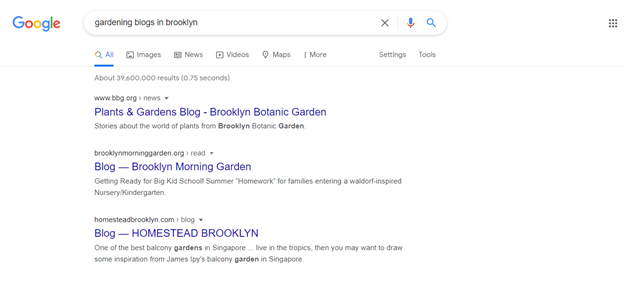
You can then go through the websites that come up on the result pages and reach out to ask about guest blogging opportunities. To improve your chances of success, you should send them a personalized pitch that includes relevant topics you think will interest their readers. This is a strategy you can use, regardless of the field you work in.
Use social media to connect with locals
Another way to increase brand awareness among your ideal customers by connecting with local individuals and businesses through social media.
There are a number of ways you can do this. One is to use localized hashtags that ensure your posts appear when people search a particular platform for local posts. You should also like local posts, mention local businesses, and post the kinds of content that locals would be interested in.
You can also create giveaways or contests and let your audience know that they only apply to people in specific locations. And one of the rules in the contest could be to tag or mention 5 other people in the same location as your business. This will widen your reach, is a great way of improving brand awareness for your company, and works particularly well on platforms like Instagram or Facebook.
Try out some offline marketing techniques
Sometimes doing things the old-fashioned way is the most effective, so consider taking your marketing offline too. This could involve hanging physical advertisements like posters around the area you’re targeting, or investing in local TV and radio ads.
You could even use more modern forms of offline marketing, such as Bluetooth Beacon marketing to send push notifications to the smartphones of people around your business location. With these notifications, you could give them a reason to visit your site by letting them know about current offers, the events you have on, or new product launches.
Many people already have their Bluetooth enabled by default, so this is a genius marketing strategy that can help you attract more customers for your brand.
Make sure your website has location pages
If your business has multiple locations, it will do you a lot of good to dedicate a webpage to each one. This is a very effective tactic because it shows both customers and search engines where you’re based and the areas you serve.
To make sure your location pages are optimized effectively, you should include relevant keywords, the office addresses, phone numbers, and embedded Google Maps that can help your prospective customers locate you.
For inspiration, let’s take a look at a number of businesses that have created effective location pages for their websites.
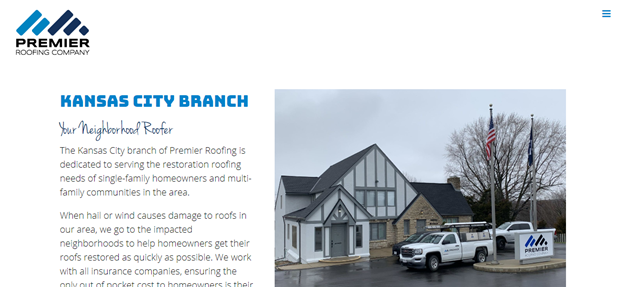
For instance, Premier Roofing Company specializes in building or restoring the roofs of their customers’ homes. And, on their website, they have a location page dedicated to telling people about their Kansas City branch.
They include relevant local keywords, an address for their Kansas City branch, and a phone number for customers to call. They also display clear photos of their office to ensure that customers don’t get lost if they are trying to visit.
All of these tactics are very effective because they do a great job of making sure a prospective customer who lands on the page will know that they have a branch in Kansas City that can serve their needs. They are also very useful for improving their site’s local SEO, as these techniques make it very easy for search engines to work out where the company serves.’
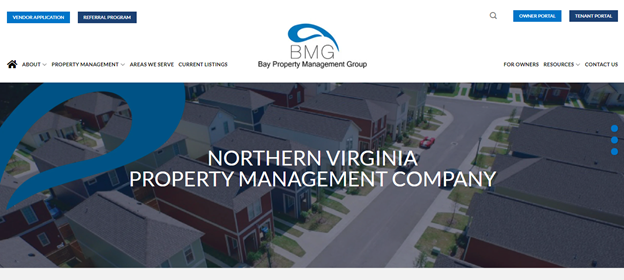
And then there’s Bay Property Management Group. They provide services like property marketing, rent collection, and property maintenance for their customers. For their Northern Virginia office, they have a location page that boasts all of the elements you need. These include an address of the branch, their full list of local services, as well as the name, emails, and phone numbers of their team in Northern Virginia. To top it off, they’ve also displayed an overall star rating and reviews from previous customers in the area.
Each of these elements has been used to optimize their location page and they work well because they help search engines to know where the company’s office is located so their site can appear in relevant search results that are shown to prospective customers.
Summary
This guide was created to help you understand all of the ways you could use localized marketing to attract more attention from prospective customers in your area.
To recap, you can use paid advertisements to target people in your area, publish localized content, build links on local sites, and create locally optimized landing pages. Of course, you don’t have to master everything at once — simply start with one of these tips and you’ll be able to move onto the others as time goes on.