You know your business needs a professional website—it’s the only way to be relevant, competitive, and successful in this e-commerce era. Recent research indicates that 92 percent of small business owners in the U.S. share the same opinion. And yet, about 64 percent of them still don’t have a website. Their reason could be the same as your own – budget restraints, lack of technical know-how, or the general belief that it’s tough to make a business website. Website builders, however, suggest otherwise.
A website builder is a handy program that allows you to build your own website using a set of existing templates, easy, drag-and-drop functionality, and no need for coding knowledge or prior website building experience. Website builders come in both online and offline forms. Online website builders like Weebly and Jimdo run on the service provider’s server and are completely web-based. You’ll need to use a standard web browser such as Chrome or Firefox and remain online while working on your website.
Offline website builders such as Mobirise and NicePage offer downloadable software that can be installed on your computer and used for creating your website without the need for a working internet connection.

Both types of modern website builders are fast, user-friendly and efficient. They’re also more economical than hiring professional web designers, making them ideal for small businesses to whom budget is a big factor.
How to search for the best website builder for your small business?
An online search for the best website builder for small business isn’t a bad move, but it’s not specific enough. What works for other small businesses may not work as well or at all for your own business. To identify the most suitable website builder for your business goals and needs, you should use these factors as the basis for your search:
Website features
Make a list of every feature necessary for carrying out your business functions. Does your business website require a shopping cart? If that’s the case, you’ll need online checkout functionality over a secure connection. Your choice of website builder needs to have suitable templates and adequate features to support the functions of your online store. The interface, navigation speed and overall user experience need to be impressive enough to nudge the customer towards completing the purchase.
Think of the type of media your website needs to display. Does it require a photo gallery and a blog? Do you need to upload videos? Your chosen business website builder needs to support all the media formats that you want to include in your website.
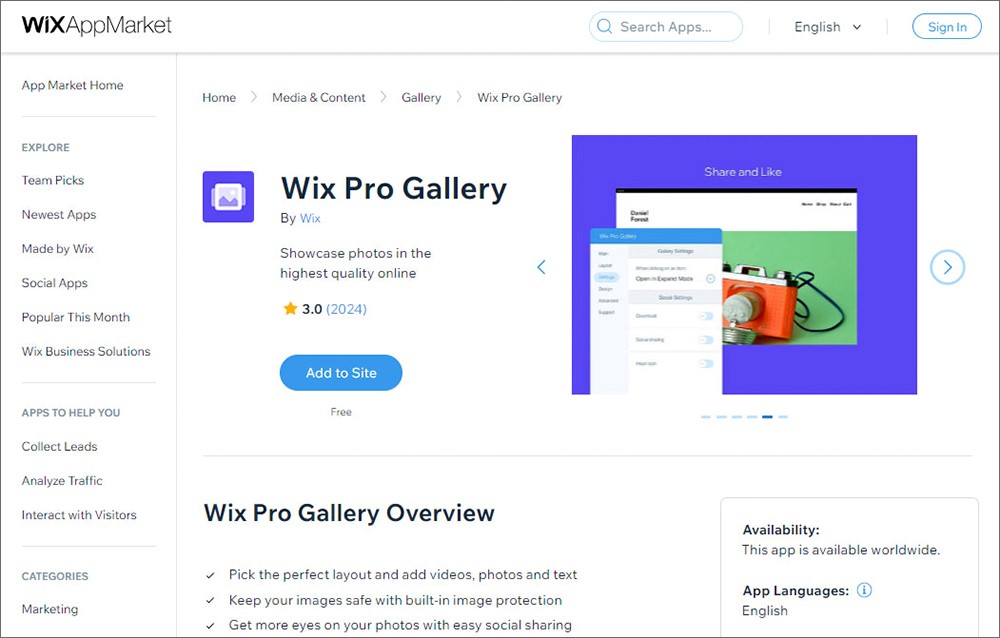
How particular or flexible you are about your website’s look and feel also plays a major role in your choice of website builder. Will you be okay with fewer customization options or do you want attributes such as the themes and color schemes to be as close to how you’ve envisioned as possible? If you’re leaning towards the latter approach, you should focus your search on website builders with sizable template and theme libraries, and easy, flexible editing tools.
Your budget
Knowing your exact budget will make your search easier and keep you from wasting time and energy evaluating website builders that you can’t afford. The price of the website builder’s plan isn’t the only cost you need to consider. Make sure you take note of additional expenses such as the cost of content creation, domain registration, and website hosting.
While there are plenty of website builders that offer a free plan, the paid subscription plans typically include features such as being ad-free, greater bandwidth, password-protected pages, audio, and video players, and priority support. Consider whether or not you can do without these premium features before making a decision.
The number of themes
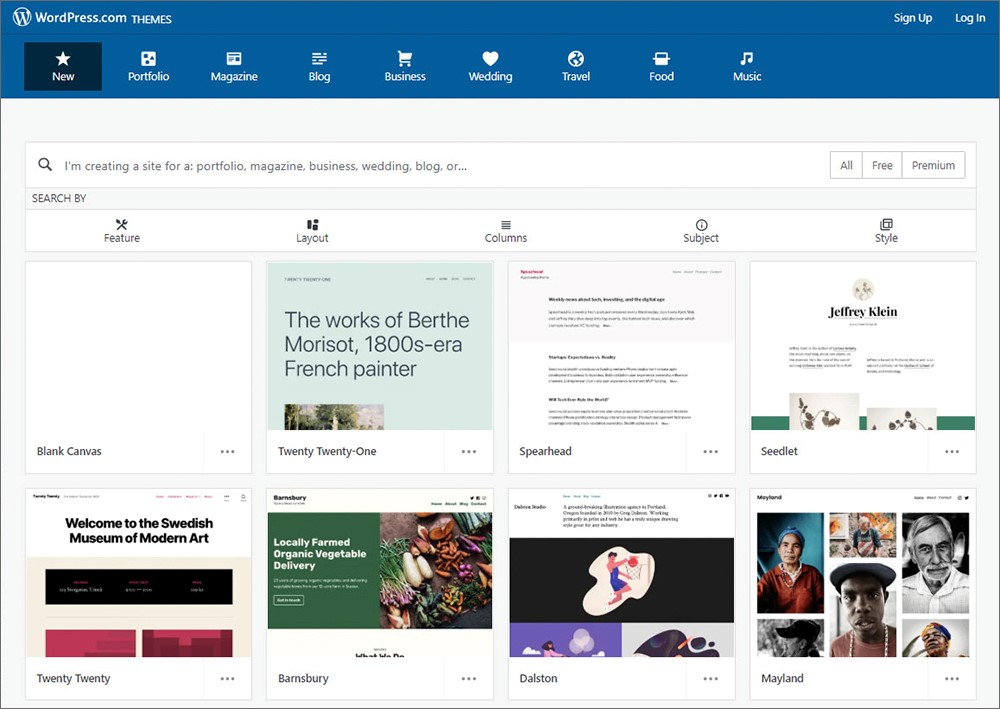
The process of website design using a website builder begins with selecting a theme. Your chosen theme acts as the template which you then customize to create your website. Website builders with too few themes and limited customization options can hamper your plan of creating a unique website. If you’re aiming for a design that stands out from the dozens of similar-looking websites within your niche, look for a website builder that offers a wider range of themes.
Search Engine Optimization Features
For your website to help boost your business, it first needs to be ranked by Google. The website builder you select should offer easy-to-use Search Engine Optimization (SEO) features so you can set up your site URL, data structure, image alt text, meta information, and other attributes according to the best, latest SEO practices. When trying to gauge a website builder’s suitability to your business, check whether it offers these on-site optimization tools along with easy-to-follow instructions on how to use them.
User reviews
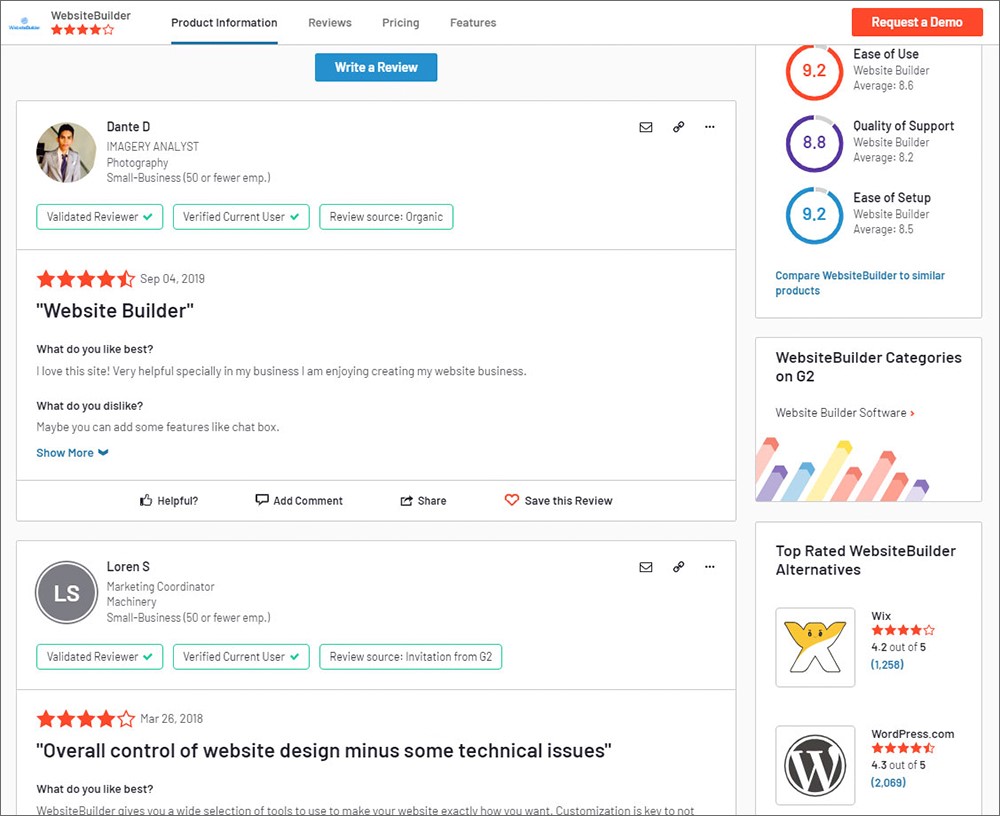
You’ll notice that every website builder you check out claims to be the best website builder for small business units such as your own. You can verify the validity of such claims by looking at the user reviews and ratings. A lot of website builders include user reviews on their own website, but these are usually only positive reviews.
Make sure to look for reviews on social media, third party, or independent websites and look into the reasons for negative reviews, poor ratings, and whether or not user grievances have been addressed by the website builder’s team.
The level of support
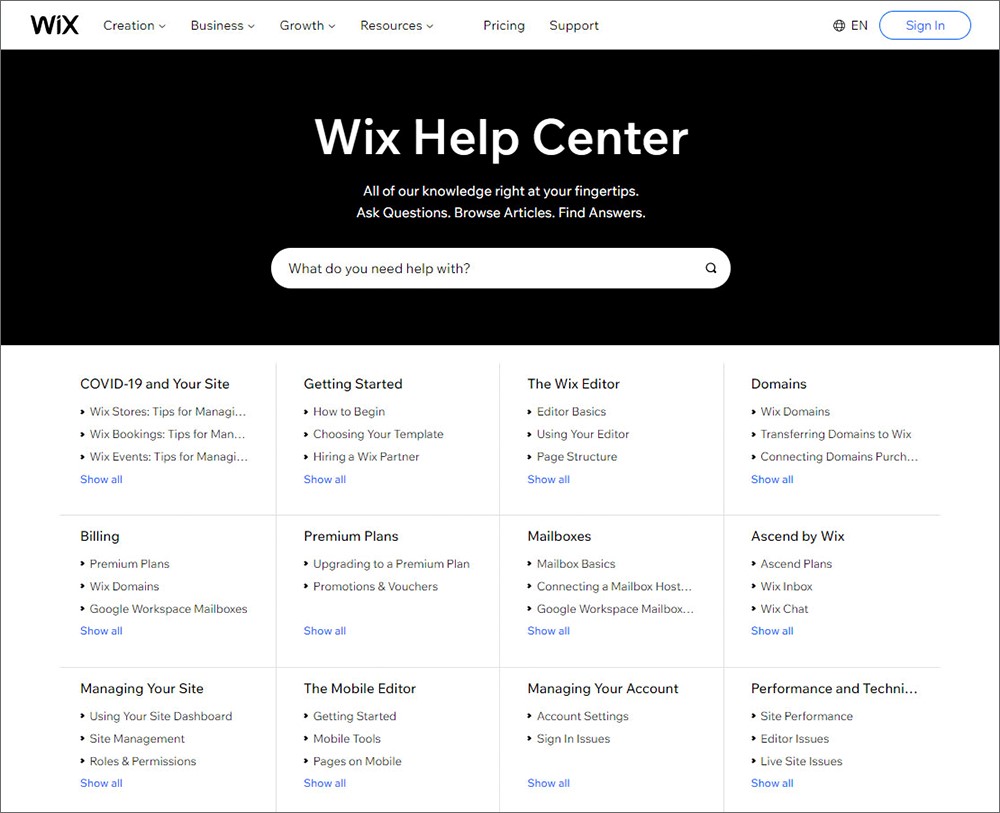
The level of support that you’ll require for effectively running your business website depends on your own technical skills and experience. Even if you feel confident in your ability to handle minor problems, you should compare your options of website builders on the basis of their ‘Help’, ‘Documentation’ or ‘FAQ’ sections.
In addition, check out the website builder’s tutorials and see whether the included information is easy enough for you to follow. Many website builders include video guides on crucial website building activities which offer a better understanding of using the different tools and customizing the website.
Note how detailed these sections are, along with the number of customer support channels at your disposal. The best website builders offer troubleshooting through support tickets, calls, live chat, and email. If your website operates as an ecommerce store, even minor delays in resolving technical issues can leave a big dent in the customer’s trust and experience. For such businesses, it’s best to choose a website builder that you can rely on for fast, round-the-care customer support.
While these parameters will go a long way in helping to find the best website builder to create a small business website, make sure you don’t make the final decision without a trial run. A majority of top website builders offer free, limited-period trials for users to evaluate their service’s suitability for their needs. A lot of website builders don’t even ask for your credit card or other payment information for signing up for a free trial.
Once you’ve narrowed down your choices, devote some time to actually using and comparing the website builders on your list. Free trial periods usually last for up to two weeks—ample time for you to get a good idea of whether a website builder has all the goods that you seek and whether or not you can use it to create the best website for your business.