If you’re running an eCommerce business in 2022, you need to build the best website possible. Having a great website can help you improve your conversion rate, build trust with customers, and drive more traffic to your pages.
In this article, we’re going to outline how you can build a successful eCommerce website. Let’s get started.
Choose a website builder that will work for your business
A website builder is a program or platform that helps a user quickly and easily create a website. If you aren’t familiar with coding or website hosting, website builders offer a great way to get your business up and running.
WordPress, Wix, and Squarespace are a few of the most popular website builders. When choosing one for your business, consider the costs, what features you need (a digital store, a portfolio of work, and the like), what templates they provide, and how easy they are to use. Don’t be afraid to test out the free trials of a few different website builders in order to figure out what you like best. After all, that’s what free trials are there for!
For more help, take a look at PowerHomebiz.com’s article on how to choose the best website builder for a small business.
Start with getting your core pages right
Your website will likely grow over time with more pages for your products, services, and the like. To start, however, you want to ensure that your core pages are top-notch. These pages should include your homepage, category pages, and product pages.
Ensure that these pages are all easy to reach through your navigation — this will not only help your website visitors to find what they’re looking for on your website, but it will also give you a search engine optimization (SEO) boost, as it will help Google crawl and understand the structure of your site.
Your core pages should have optimized copy, images, and internal links to other relevant web pages. You should also make sure your images are descriptively named and compressed in order to decrease your loading speed and boost your SEO.
To optimize the copy of your core web pages, conduct some keyword research. Head to a keyword research tool like Google Keyword Planner with a list of keywords related to your business. Plug them into the Keyword Planner, and Google will provide you with a list of phrases that people are searching for according to their competitiveness, or how hard they are to rank for, and their average monthly search volumes. Weave these keywords into the copy on your core web pages in order to make them more visible in the search results.
Need more help optimizing your product pages? Take a look at this article from PowerHomebiz.com. This article can help you turn your visitors into customers!
Make it incredibly easy to get in touch with you
A lot of prospective customers might have questions or concerns that need to be addressed before they’ll be willing to invest in your products. To help move them through your sales funnel and reduce the risk of them leaving without making a purchase, you’ll want to make it easy for them to get in touch with you. This will help encourage more sales and boost customer satisfaction.
Here are a few different ways that you can help your prospective customers get in touch with you:
- Make your contact options very clear
- Offer multiple channels of customer support, including email, phone, and live chat
- Display your contact information throughout your website
- Have a contact form where customers can input their information
Let’s look at a few examples of businesses that do this well for inspiration.
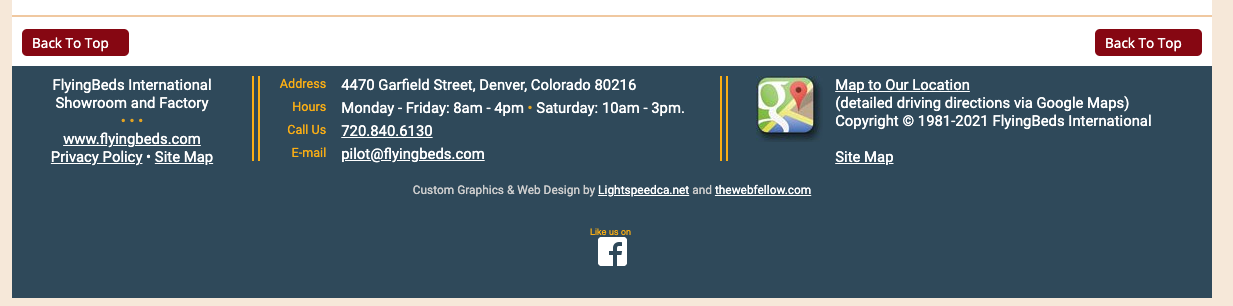
Take a look at how Flying Beds, a murphy bed retailer, makes it incredibly easy for customers to get in touch with them.
If you scroll to the bottom of any page on their website, you can see multiple different contact options, as well as their opening hours and address. No matter how a person wants to get in touch, even if it’s in person, Flying Beds has made the necessary information easily available to the customer.
On your website, be sure that all of your contact information is easy to locate and up to date. Adding it to your footer like this is a great approach.
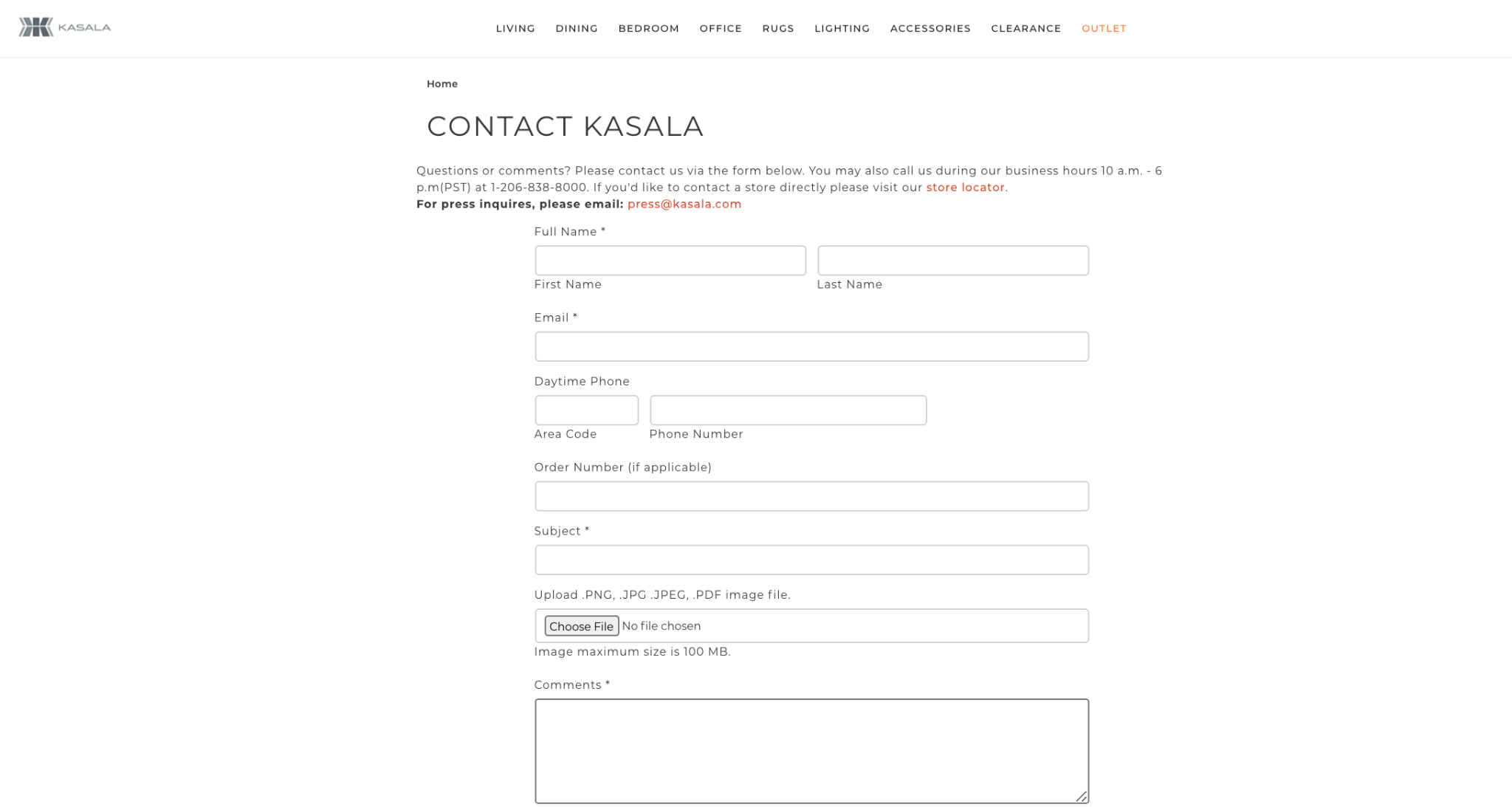
Similarly, Kasala, a furniture retail company in Seattle, Washington, makes it easy for customers to get in touch with them using a contact form.
The form is multi-purpose, meaning that customers can use it for general inquiries, concerns, or issues with a product. There’s even a section for them to upload a photo of their order if necessary. Contact forms like these are a great way to make it easy for a customer to get in touch with you! Add one to your website where it’s relevant, like on a contact page.
Provide product reviews to earn new customers’ trust
New customers and website visitors are going to want proof that your products and services are as high-quality and good as you say they are. So, you should add positive customer reviews to your website to boost sales and build trust.
You can collect product reviews by sending out email surveys or simply asking your customers to leave you a review once they’ve made a purchase. If you offer a small discount in exchange for a review, people will be more likely to give you their time and feedback. If you are a service-based business, consider reaching out to your clients to see if they would be willing to conduct a short interview with you or offer you a quote.
Let’s look at a few examples of businesses that showcase customer testimonials well on their websites to give you some inspiration.

For instance, Aerial Wakeboarding, a watersports equipment company, uses reviews well on their category page for wakeboard towers.
Below their product video, they have both a star rating and a quote from one of their customers. Because they offer products, a star rating is a great way to get an average review that website viewers can see — by attaching a quote, the viewer can also get a bit more detail about why the product is so great. On your website, don’t be afraid to quote your customers if they leave you a review! Word of mouth advertising is very effective.
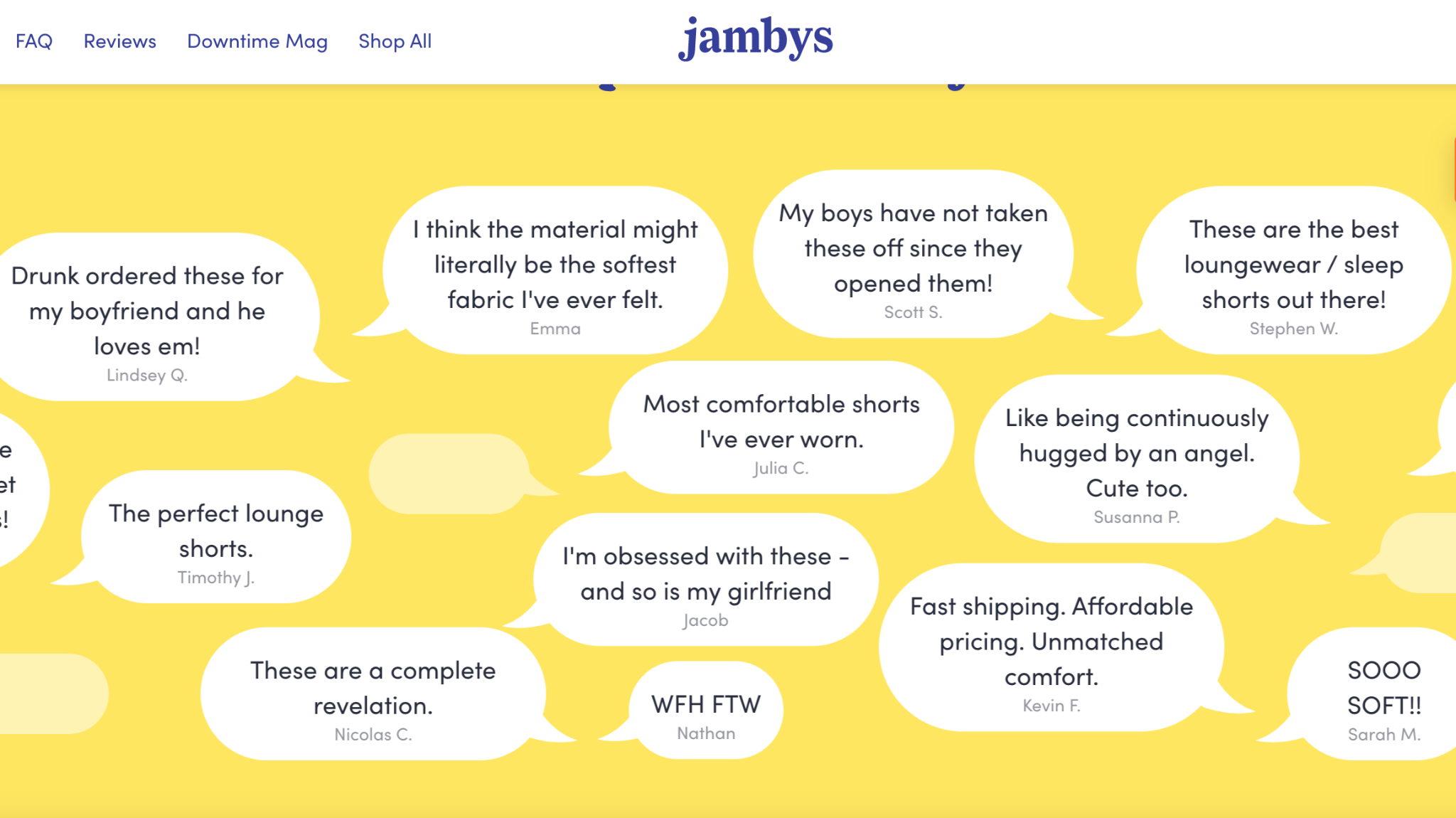
Jamby’s, an athleisurewear retailer, uses product reviews in a particularly unique way. On their homepage, you can see a series of chat bubbles highlighting some of the things Jambys’ customers had to say about the products.
It’s a moving image and tells the viewer that many of Jambys’ customers love their products. On your website, don’t be afraid to get creative with your reviews. It will help you stand out from the crowd and provide an enjoyable experience for people who visit your website.
Make sure you always use high-quality product images
The quality of your product images can often make or break a sale, so you’ll need to put plenty of time and effort into getting them right.
Here are a few tips outlining the best practices for eCommerce product images — these are the standards that Amazon requires!
- Use JPEG, GIF, or PNG formatting
- Make sure image pixel dimensions are 1000+ in either height or width
- Use sRGB or CMYK color mode
Additionally, it’s important that you optimize your file names and add alt text — both should succinctly describe the image and be searchable phrases. Furthermore, don’t forget to compress your images so they don’t slow down the loading speed of your web pages.
Let’s look at an example of a business that has excellent product images for inspiration.
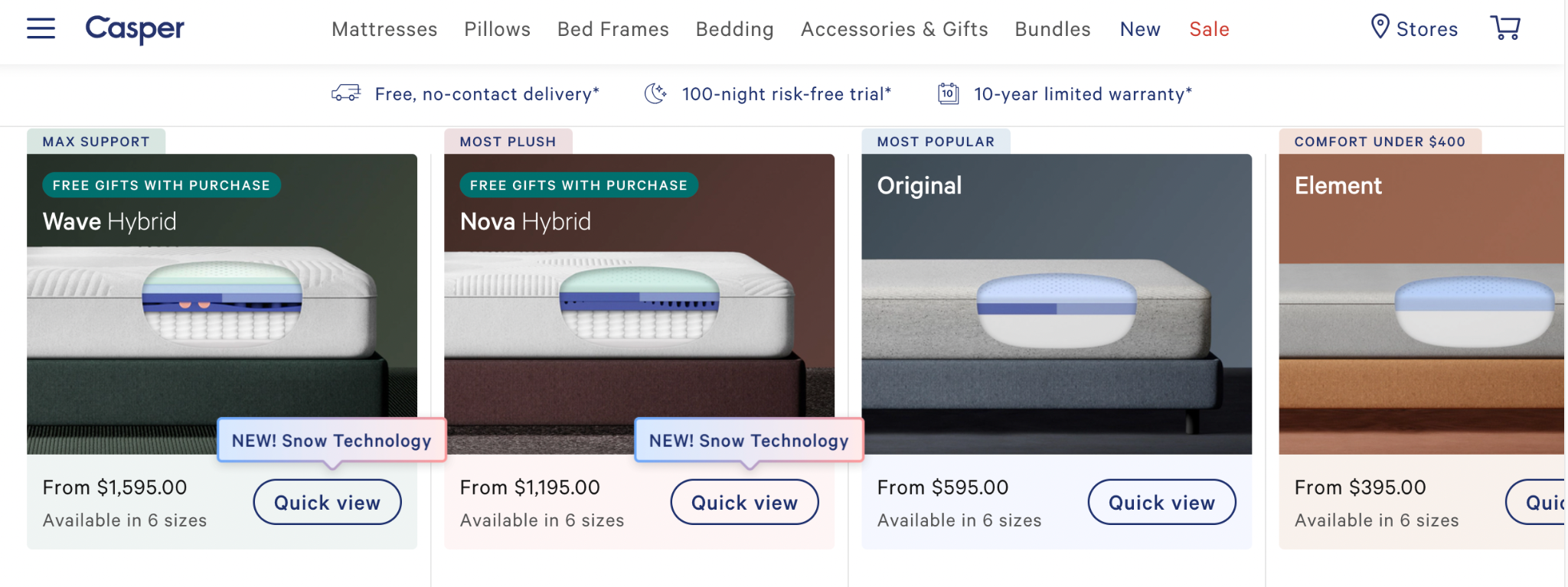
Casper, a mattress retailer, has a series of clean product images on the page for their different memory foam mattresses.
By and large, mattresses look the same from the outside so, to help show the differences between their products and the technology that is used in them, Casper shows the customer what the inside of their mattresses looks like too. This is particularly important for Casper’s target audience, as people have a lot of different preferences when it comes to their sleep.
When you’re planning the product photography for your business, always think about which features and benefits your audience are going to be interested in. Then make sure these are reflected well in your imagery.
Add a blog to your website
If you’re running an online business in 2021, you need to have a blog for your website. Blog content can help you boost your SEO, provide free value to your customers, earn your audience’s trust, and give you somewhere to promote your newest products.
When adding a blog to your website, you want to ensure that it’s helpful, easy to read, and relevant to your audience. Be sure that you only write about topics that your audience is interested in, and publish content regularly to help your blog stay fresh and updated.
If you need more help increasing your visibility on the search engines, take a look at some of the SEO services Loganix has to offer. We can help you create a content strategy, build backlinks, and more.
Let’s look at a few different types of content you can post on your blog with examples for inspiration.
Ultimate guides
Ultimate guides are the best of the best — their goal is to tell the reader everything they would want to know about a particular topic. These should be thorough, informative and, most of all, helpful to your target audience. Think about what it is in your field that you know better than anyone else. Writing an ultimate guide on that subject is a great way to bring in new traffic. Let’s look at an example.
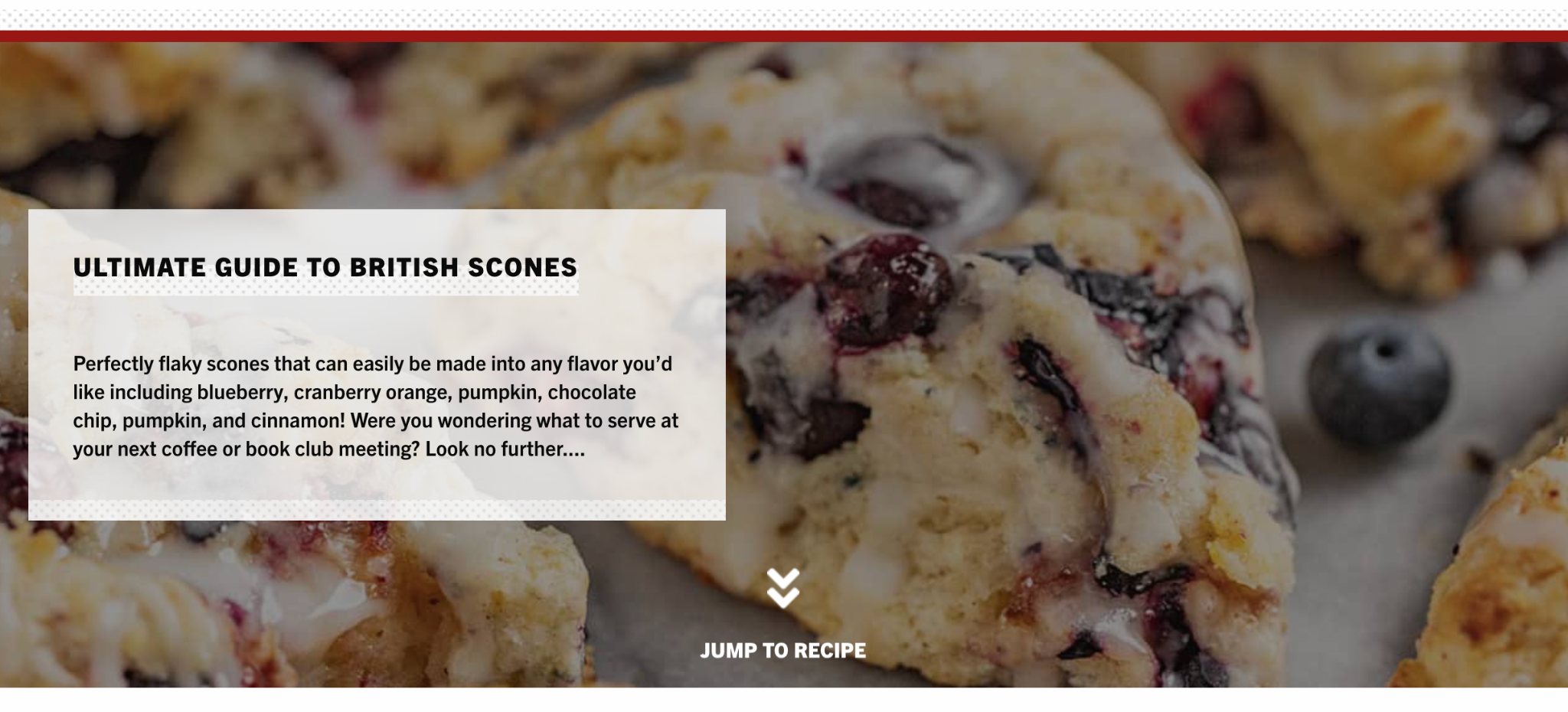
The Stay at Home Chef, a recipe and cooking website, has an ultimate guide to making British scones.
The guide covers personal recipe preferences, the difference between biscuits and scones, how to distribute butter in the mix, and more. Pastry making can be a tricky beast, so this article is particularly helpful as an ultimate guide.
In your ultimate guides, be sure to answer different questions your audience have, as Stay at Home Chef has — this is helpful to the viewer and can make your page more visible on search engines.
Buying guides and comparison pieces
Buying guides and comparison pieces help the reader determine what kind of product or service is best for their needs. Buying guides outline everything the reader wants to know about a particular product, while comparison pieces outline a series of different products directly with their benefits and features.
Here is an example of a buying guide for inspiration.
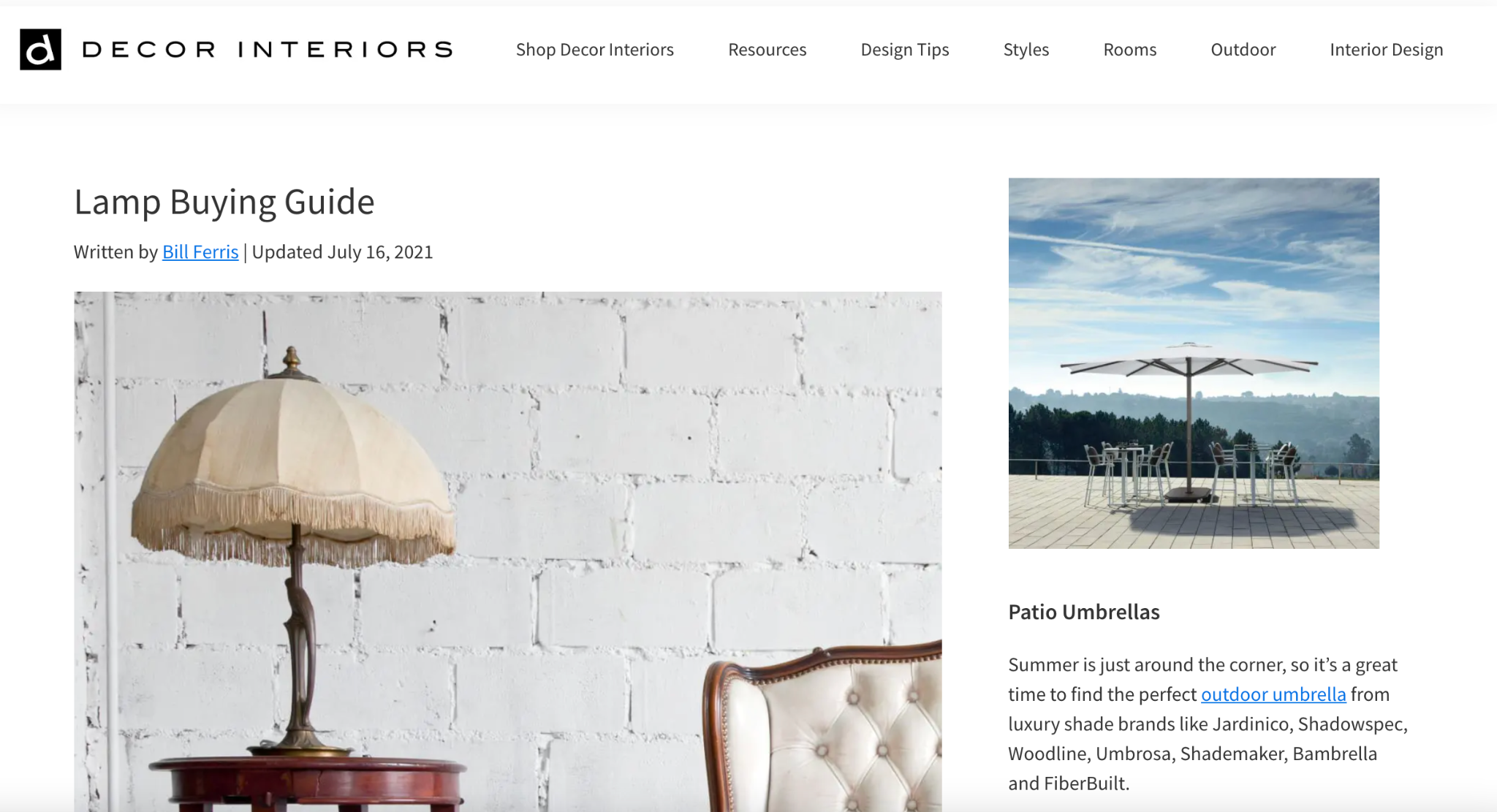
Decor Interiors, an interior design website, has a very helpful lamp buying guide. The article covers different types of lighting, how to achieve a certain mood in a room, different types of lamps, and so much more.
Lighting your home might seem like a straightforward task, but Decor Interior’s buying guide shows that the way a room is lit is just as important as the rest of your interior design. On your website, think outside of the box. Your buying guides don’t have to be written about your most popular products, but they should help your prospective customers to make the best buying decisions to suit their needs.
How-to guides
How-to guides are exactly what they sound like: they help the reader better understand and execute a particular process. When coming up with ideas for how-to guides, check in with your customer service team. If there is a question that they frequently get asked, see if it would be feasible to outline the process in a how-to guide. This will help build trust with customers!
Let’s take a look at an example.

Podcast Insights has a how-to guide on starting a podcast that is useful to their target audience.
Because Podcast Insights aims to grow the podcasts of their customers, writing a guide that helps them get started is a great way to draw people in. The guide covers how to choose a topic, a co-host, a name, and more. On your website, consider using a how-to guide to introduce people to your products or services — this can help you attract more customers to your website.
Industry news articles
Industry news articles offer a great way to show your website visitors that you are up-to-date on the latest happenings in your industry — this will show that you are a leader in your field. Writing about different trends or events and relating them back to your business is a great way to build trust and showcase your expertise.
Let’s take a look at this strategy in action.
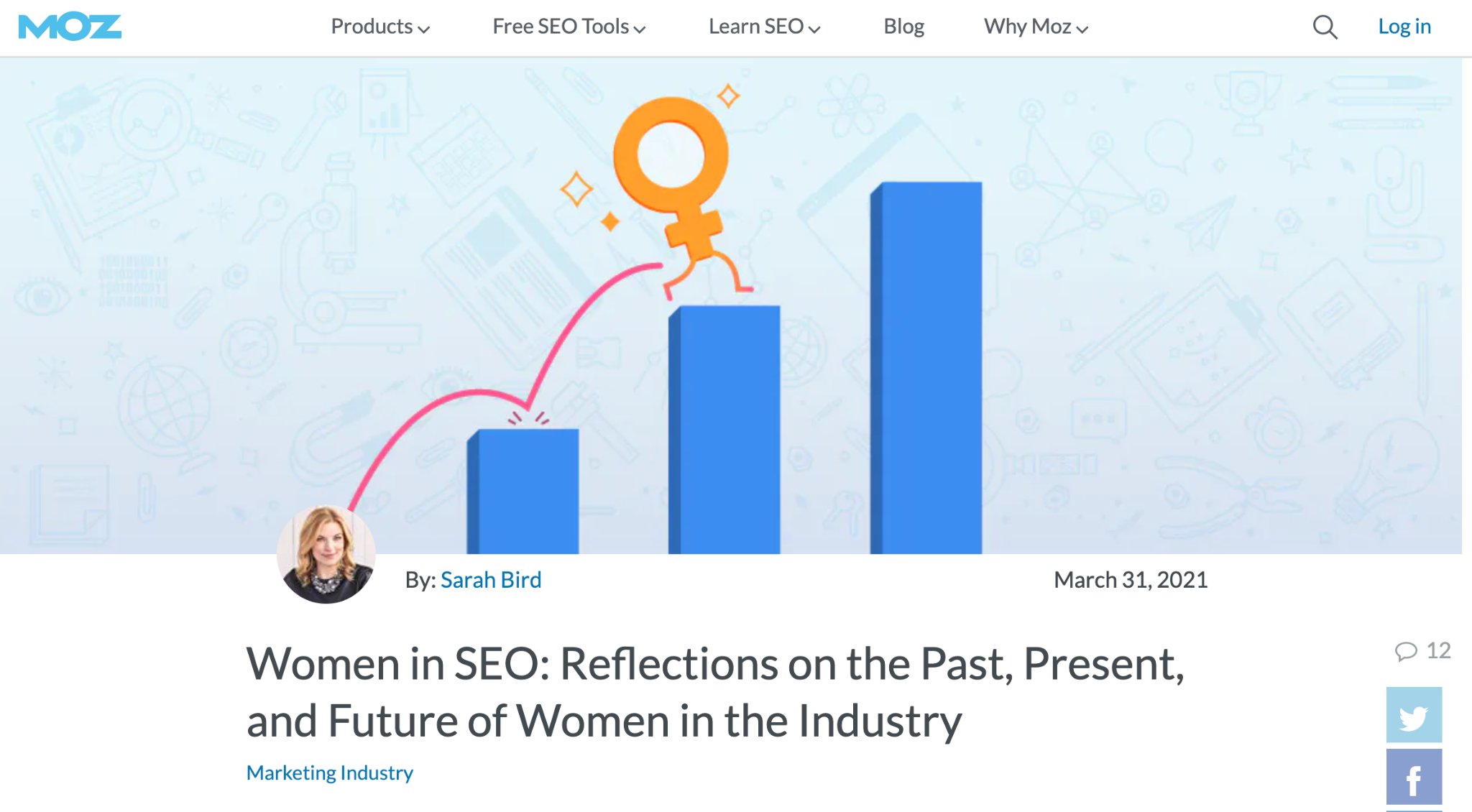
Moz, a digital marketing expert, has an article reflecting on women in SEO. They acknowledge that SEO tends to be a male-dominated field, then go on to outline the lasting impact of women in the industry and address where we can go from here.
Feminism in tech is a very big topic right now so, by discussing this in an article, Moz shows that they are aware of changes in their industry and are willing to welcome them. On your website, articles like this that show you’re accepting of new changes and trends in your industry can show that you are a leader in your field, and will help you earn the trust of your ideal customers.
Summary
There’s a lot that goes into running an eCommerce website in 2021. In this article, we outlined how you can build a successful one, including creating blog content, having top-notch product images, showcasing customer reviews, and more. No matter where you are in your eCommerce journey, there’s work to be done!
Need more tips for mastering the world of eCommerce? Take a look at some of the online business articles from PowerHomebiz.com. They can help you learn about your competitors, increase your sales, and so much more.