

Below is an excerpt from the book The Maui Millionaires for Business: The Five Secrets to Get on the Millionaire Fast Track 


There are five Wealth Factors that cumulatively determine your real financial wealth. Let’s walk through each of these five Wealth Factors in turn and see how you can use this understanding to speed you on your way to becoming a Maui Millionaire.
Wealth Factor One: Cash Flow
Cash flow is the money that flows to you. This could be a paycheck, an owner s draw, a check at the closing when you sell a property, or a quarterly distribution from a passive partnership. The distinguishing feature to this form of wealth is that it is liquid money — cash — that comes to you.
There are three main types of cash flow that we’re interested in at the moment:
- Earned income, also known as active cash flow.
- Passive cash flow.
- Passive residual cash flow.
Earned Income:
Earned income is active cash flow that you work for day after day. Most people s main source of wealth comes from earned income, whether this be wages or salary they earn from working a job or net profit they generate from running a business. Please understand one very important fact. You will almost never become wealthy from earned income alone. Why not? Because the way our culture works is that the more you work and earn in the form of earned income, the harder it is for you to become financially free just from this source of income alone.
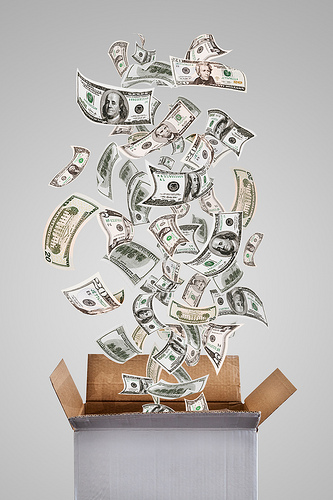 Earned income is like sugar. It gives you a jolt of energy but leaves you feeling empty and tired. Earned income comes in and out of your life so quickly that it often makes it harder to become wealthy. We know this is counterintuitive, but still we’ve observed this in the lives of many of the people who’ve come to us for coaching to become wealthy.
Here is the sad cycle we’ve observed build up and repeat in so many people s lives. They focus on getting the right job or profession so that they can earn a good salary (earned income.) As they start to earn more they begin to spend more. In fact, not only do they spend on those nice little extras like a trip here or a meal out there, but they also spend on things that create a higher fixed cost of living. They buy a bigger house; they make payments on two or three nicer cars; they send their kids to expensive private schools. These are the things that have payments due month after month, year after year. Once they acquire these things it is very difficult to ever stop paying for them. The higher their cost of living goes up, especially their fixed cost of living, the more they feel trapped in the rat race of working to support their lifestyle. They are forced to work long hours just to keep from falling too far behind.
We want you to imagine that earned income is like sugar. It tastes sweet but burns fast. It doesn’t last. And in its wake it leaves you craving more. To get your next sugar fix, you re forced to go back to a job you don t love, to spend 8 to 12 hours with people you may not enjoy, come home tired and stressed, so that the next morning you can wake up and repeat the process.
Most people are addicted to sugar and living their life on a treadmill chasing after their next month’s sugar.
And, if you can imagine its possible, things are actually even worse for those people who live off the sugar of earned income. It is the heaviest taxed form of income! This means that for every dollar you earn of earned income you are paying from 15 to 50 percent more tax than if it was another form of income. This means you have to work even harder just to keep from flying off the back end of the treadmill. Is it any wonder so many people feel that the harder they work the further and further they are falling behind?
Think about the average high earner for a moment. They may earn $200,000 to $500,000 or more in income, but they end up paying 45 to 55 percent or more of this in taxes at the state and federal level. They tend to spend more than they earn supporting a lifestyle that has little or no enduring value, but has high fixed costs to maintain. They spend on things like big houses and fancy cars and impressive vacations. They live a life of instant gratification (also know as a fast high) where they live in a peer group of other spenders (also known as environmental pressure to use) where day by day they have to work harder and harder to maintain the lifestyle they no longer feel they have the time or energy to enjoy. Welcome to the rat race!
Remember, active income is just like sugar. It provides calories, but these are empty calories, that sustain people but don’t nourish them. And like sugar, active income burns fast and is highly addictive. And as with any addictive substance, we start to build a tolerance for it — and continually spend more and more. Once the cycle can no longer be maintained, when a person no longer has the active income to support a lifestyle habit, there are massive withdrawal pains.
When you’re living on the edge, addicted to sugar, scared to get off the treadmill for fear it will all come crashing down, you are caught in the rat race. If you’re poor, then you struggle to survive, to just get through the day. If you’re middle income, then you struggle to make ends meet each month. And if you’re a high earner, you may the king rat, but you have a hidden struggle to keep up appearances.
Understand this. If you must work to feed your lifestyle then you are still in the rat race. There is a simple test to see where you currently stand. If you stopped working for income, would you still have the passive, residual cash flow to support your lifestyle? If the answer is no, then you are running in the rat race.
There is nothing wrong with the rat race. All Maui Millionaires started out there, but they all made a conscious commitment to escape as quickly as possible. And you can do the same thing. So what s the way out of the rat race? To invest and grow the other four wealth factors, and to cultivate healthier types of cash flow (aka passive cash flow and passive residual cash flow.)
Maui Millionaires know how important it is to use active income to invest in accumulating the assets that generate the passive, residual income they need to support their lifestyle in a healthy way.
Here’s the bottom line — Maui Millionaires know that earned income is only one of the five wealth factors, and in fact it is the least important. We hope you find this encouraging if you are on the front end of your wealth building.
Passive Cash Flow
It s time to talk about the next type of cash flow — passive cash flow. Passive cash flow is money that flows to you without your having to actively work to get it. Now with any investment it takes some time to set it up and to oversee it, so we have created the litmus test for whether or not a specific stream of income is passive or active. Passive cash flow is income that flows to you with your having to work less than 10 hours per month to maintain that income stream.
While that 10-hour limitation is arbitrary (we could have chosen 12 hours or 8 hours) it has come out of our personal experiences building wealth and coaching other people to build great wealth.
Your goal is to generate enough passive cash flow so that you never have to work again. When you reach this place you now are financially free. Chances are you’ll still work, but you’ll do this out of choice and freedom not out of constraint and desperation.
A Simple Story That Explains the Fundamental Secret of the World’s Wealthiest People
Most of you will remember the old folk tale of the goose that laid the golden egg. It seems there was this farmer who one morning made the incredible discovery that one of his geese had laid a golden egg. He took in his precious discovery to show his wife who hovered over him as they weighed their valuable egg. To the delight of both of them, the next morning their amazing goose produced another golden egg.
Well, this grew to be a regular occurrence, with the goose producing one single golden egg each morning. Finally the farmer’s wife grew upset over waiting for that stingy goose to only give them one egg each day. So she convinced her husband to butcher the goose and get all the golden eggs in one fell swoop. And reaching for his ax, that is exactly what the farmer did. Only to his and his wife s dismay, they found that once the deed was done that there were no more eggs inside the goose at all. We like to think of this as a metaphor describing one of the key lessons for wealth builders: If you are investing solely for capital gains, then you are investing by fattening up and slaughtering your goose. This may work to eat well for one fine meal, but to eat over the long term you would do better to gather the eggs month after month, year after year.
So what is the difference between investing for capital gains and investing for residual cash flow? Well, capital gains comes when you sell an asset you own. And as you can figure out, once you sell something you no longer are able to sell it again or use it to earn ongoing income. Residual cash flow, on the other hand, are things like quarterly disbursements of profits from a business partnership, or monthly cash flow from an investment property. It is something you get again and again and again, provided the goose (read asset) is properly fed and cared for. One way to see your role in building wealth is that of a breeder and caretaker of golden geese.
Why It Isn’t Enough to Create Passive Income
The key point is that forced appreciation takes time and energy to realize. It is the foundation of most great fortunes. But it should not be the stopping point.
Passive, Residual Cash Flow
We’ve already talked about the need to create passive cash flow if you want to be financially free, but now we need to drill down even deeper. You can make passive cash flow in the form of a lump sum payment you receive when you sell off an asset you own but didn’t take more than 10 hours per month to oversee. But while this money may be passive, it still is just a one time payment and not a secure income stream. Going back to our folk tale, it’s a slaughtered goose and not the daily golden eggs. No matter how delicious that goose may be, it still won’t feed you forever.
This is why Maui Millionaires know that they need to create not just passive cash flow, but more importantly, passive residual cash flow. Passive, residual cash flow is money that flows to you each month or quarter, year after year. It is out of passive, residual cash flow that true financial freedom is built.
So which is better, capital gains or residual cash flow? The answer is that you need both! Early on in your wealth building you will be investing for what is called forced appreciation. This is where you buy or build an asset and put in energy and work to vastly increase the value of that asset. For example, you might buy a foreclosure house for a 40 percent discount in price, fix it up, then resell it for a large profit. The house you paid $300,000 for was worth $500,000 when you sold it. This is an example of forced appreciation. You forced the asset to be $200,000 more valuable because you both fixed it up and you changed the circumstances of the person owning it. Now that you have created this equity you might tap into it by selling (capital gain) and buying an even bigger property.
Another example of forced appreciation comes when you grow a business. In the early years you put in sweat equity to grow the market and your business s share of that market, knowing that if you are successful, you will be rewarded hundreds of times over for your time and effort. Many Maui Millionaires made their first fortune by starting and building a successful business of their own. For example, Stephanie and Jack, two Maui Millionaires from California, invested 17 years to build their thriving manufacturing business. Today that business is worth well over $15 million.
Once you reach a certain point you need to transition your wealth focus from forced appreciation to creating passive, residual cash flow.

Very informative article, i am regular reader of your website. I noticed that your site is outranked by many other websites in Google’s search results. You deserve to be in top ten.